
Trip Hazard in Your Shop? Fast Commercial Floor Fixes
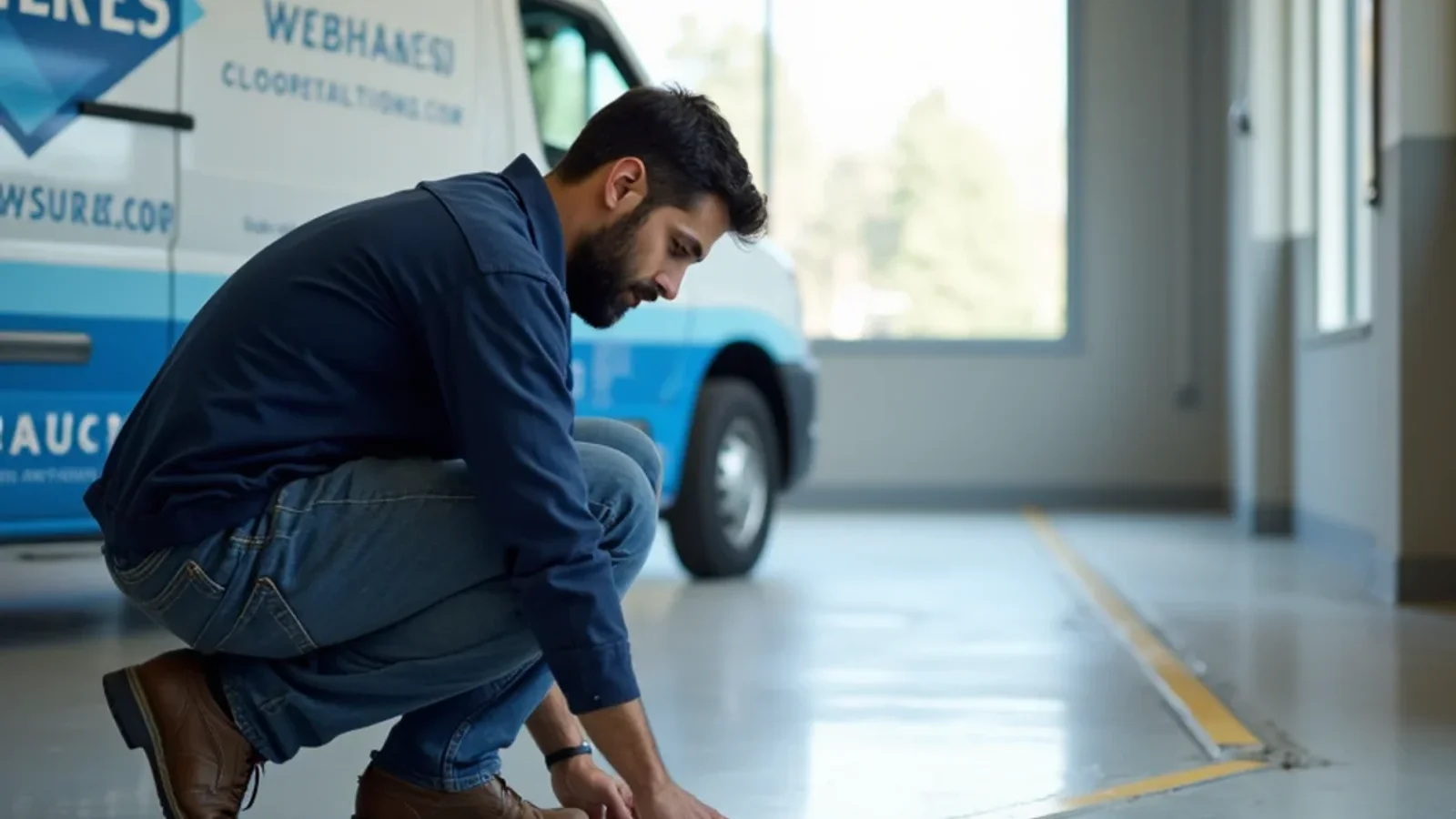
Slip, trip, and fall incidents represent one of the single greatest liability exposures for commercial facility owners, retail managers, and warehouse operators across metro Atlanta. According to the National Safety Council and Bureau of Labor Statistics, walking surface irregularities account for over 65% of all fall-related commercial workers’ compensation claims, with average direct litigation expenses exceeding $40,000 per occurrence. Beyond private premises liability lawsuits, uneven walking surfaces trigger immediate federal OSHA citations under 29 CFR 1910.22 (Walking-Working Surfaces) and federal accessibility violations under Title III of the Americans with Disabilities Act (ADA).
From high-throughput logistics hubs in Forest Park, South Fulton, and Gillem Logistics Center to bustling restaurant kitchens in Midtown and medical practices in Sandy Springs, daily mechanical vibrations, heavy rolling cart loads, and thermal shock relentlessly degrade floor transitions. Resolving these hazards does not require multi-week shutdowns or catastrophic business disruption. Utilizing rapid-curing semi-rigid polyurea polymers, dustless diamond shaving, and engineered transition profiles, commercial floor hazards can be permanently eliminated overnight.
Get a Free On-Site Flooring Consultation
Speak directly with Pedro and the Diamond Epoxy Pros crew. We inspect your subfloor or concrete slab, test moisture levels, and provide a clear, itemized quote in writing.
- 5★ on Google (22 reviews)
- Fully Insured
- Free Written Estimates
- Lifetime Delamination Warranty
- Employees Only (No Subcontractors)
- Serving Metro Atlanta since 2023
Regulatory Compliance: ADA Title III and OSHA 29 CFR 1910.22 Benchmarks
The 1/4-Inch Threshold: Vertical Lippage vs. Beveled Slopes
Both federal accessibility standards and municipal building codes enforce strict geometric thresholds governing allowable vertical elevation changes on commercial walkways. Under Section 303 of the ADA Accessibility Guidelines (ADAAG), any abrupt vertical change in floor level up to 1/4 inch (6.4 mm) may remain vertical without edge treatment. However, any elevation change between 1/4 inch and 1/2 inch (6.4 mm to 12.7 mm) must be beveled with a slope no steeper than 1:2 (50% slope).
Vertical offsets exceeding 1/2 inch cannot be resolved with a simple bevel; they legally constitute a curb or step that requires a fully engineered ramp with a maximum slope of 1:12 (8.3% grade), accompanied by handrails if total rise exceeds 6 inches. In busy retail aisles or restaurant corridors, an un-beveled 3/8-inch transition between polished concrete and ceramic tile constitutes a prima facie ADA violation that leaves the facility defenseless in personal injury litigation.
OSHA Walking-Working Surfaces and Safety Audits
OSHA standard 29 CFR 1910.22(a)(3) mandates that employers maintain all walking-working surfaces in a clean, orderly, and sanitary condition, completely free of hazards such as sharp protrusions, loose boards, corrosion, leaks, spills, and tripping hazards. During safety inspections across Georgia industrial sites, OSHA compliance officers routinely inspect forklift aisles, dock leveler transitions, and pedestrian walkways using laser level gauges. Unrepaired spalled concrete or sunken floor drains invite repeat citations with penalties exceeding $16,000 per violation.
Regulatory Standards for Commercial Floor Transitions and Surface Deviations
| Vertical Elevation Offset | ADA Title III Standard | OSHA Safety Hazard Level | Engineered Remediation Protocol | Typical Repair Downtime |
|---|---|---|---|---|
| 0 to 1/4 inch (0–6.4 mm) | Permitted vertical flush transition | Low trip risk; requires regular monitoring | Micro-grind flush or fill micro-fissure with polyurea | 30 to 45 minutes |
| 1/4 to 1/2 inch (6.4–12.7 mm) | Mandatory beveled edge (max 1:2 slope) | High slip/trip hazard; shopping carts and pallet jacks catch | Diamond-blade ramp shave or ADA tapered aluminum transition profile | 1 to 2 hours |
| Greater than 1/2 inch (>12.7 mm) | Requires full architectural ramp (max 1:12 slope) | Severe structural trip hazard; non-compliant step liability | Polymer self-leveling mortar transition pour or structural steel plate | 3 to 5 hours |
| Spalled Forklift Joint (1–4" wide) | Must maintain smooth wheel rollover | Forklift mast tipping; operator spinal impact; wheel chunking | Deep saw-cut routing, semi-rigid polyurea injection, razor flush shave | 1 hour to traffic |
| Fractured Quarry Tile Cavity | Unsanitary depression; bacterial ponding | Heel trap for kitchen staff; sanitation inspection failure | Chisel tile, fast-setting urethane slurry mortar, relay tile | 2 to 4 hours |
Top 4 Commercial Flooring Trip Hazards in Active Atlanta Facilities
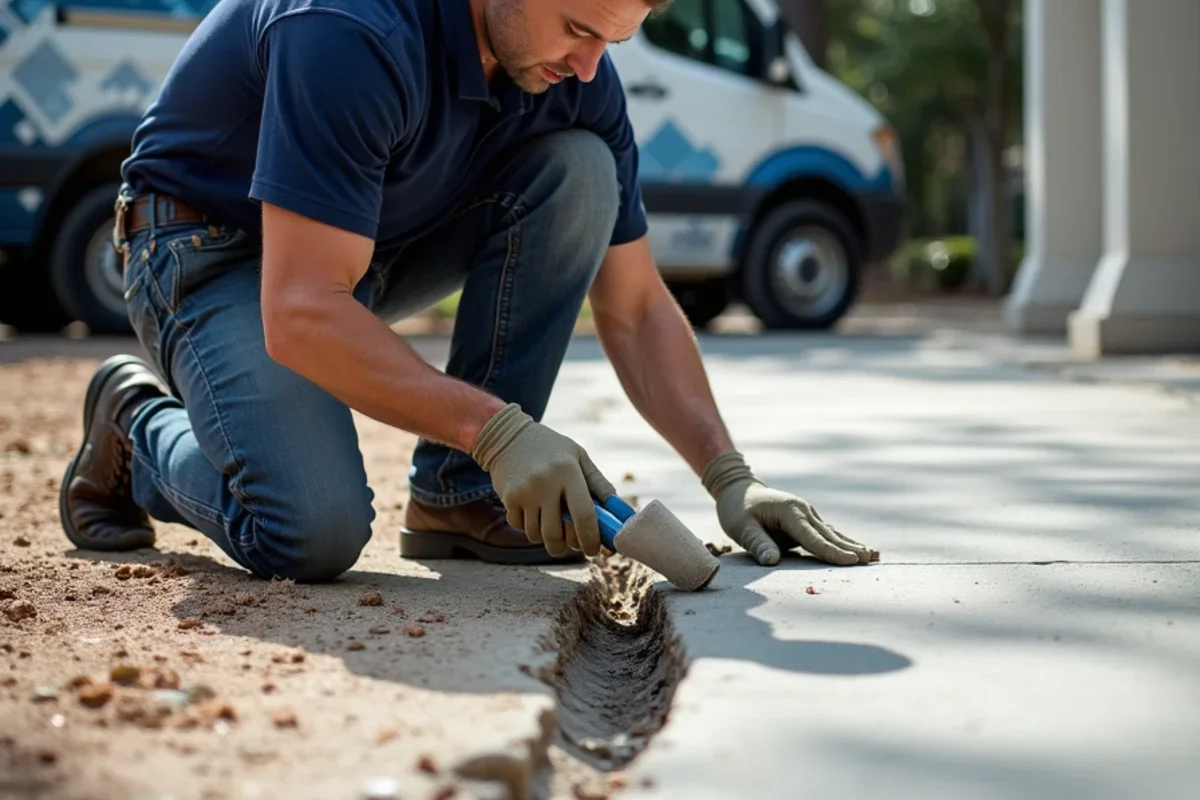
Commercial facilities experience continuous structural and dynamic stress. In our field inspections throughout Fulton, Gwinnett, and Cobb counties, commercial trip hazards consistently stem from four distinct structural breakdown modes.
Forklift Joint Spalling and Slab Curling in Warehouses and Docks
In high-velocity distribution centers and manufacturing plants, concrete expansion and saw-cut control joints undergo extreme point-load stress. Heavy counterbalanced forklifts and narrow-aisle reach trucks equipped with hard polyurethane or steel wheels transfer thousands of pounds of pressure onto unbacked joint shoulders. As wheels roll across unsealed or deteriorated joints, the impact shears off the brittle concrete edges, creating jagged trenches known as spalled joints.
Additionally, concrete slabs cure unevenly due to moisture differentials between the top surface and the bottom of the slab, causing the edges to curl upward (slab curling). When two adjoining slab panels curl at different rates, a vertical fault line develops that rattles forklift operators, damages pallet inventory, and poses a severe tripping hazard for order pickers.
Cracked Commercial Quarry Tile and Loose VCT in Kitchens and Retail
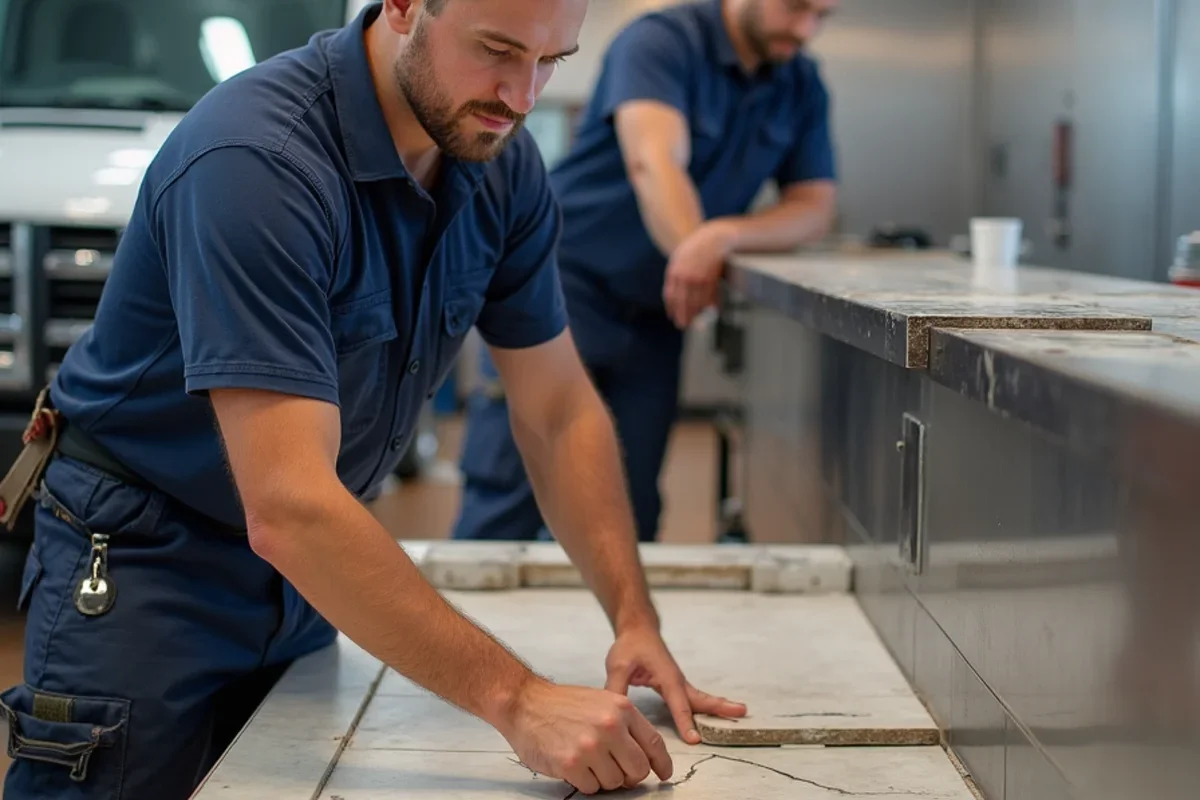
Commercial restaurant kitchens and food processing facilities rely heavily on 6x6 quarry tile. Constant thermal cycling from hot oil fryers, dishwashers, and harsh caustic degreasers relentlessly breaks down cementitious grout and thin-set mortar beds. When water and grease penetrate beneath the tile, hydrostatic vapor and grease hydrolysis hollow out the bond coat.
Tiles begin rocking under foot traffic before fracturing entirely under heavy wire storage carts. The resulting broken tile fragments create sharp 1/2-inch vertical depressions that snag chef clogs and trap biological food waste, inviting health department reprimands. Similarly, in retail stores, brittle Vinyl Composition Tile (VCT) tiles crack along high-traffic display corners, creating jagged vinyl edges that catch shoe soles.
Coating Delamination, Blistering, and Transition Lippage
Thin roll-applied floor paints and substandard DIY epoxy coatings frequently blister and peel due to moisture vapor pressure or improper surface diamond grinding. These delaminated coating flakes curl upward, catching small cart casters and creating sudden friction changes that cause slips. Furthermore, un-beveled transitions where concrete meets carpet tiles or wood laminate produce dangerous lip edges that cause frequent trip accidents.
Engineering Solutions: Rapid-Cure Polyurea, Diamond Grinding, and Mortars
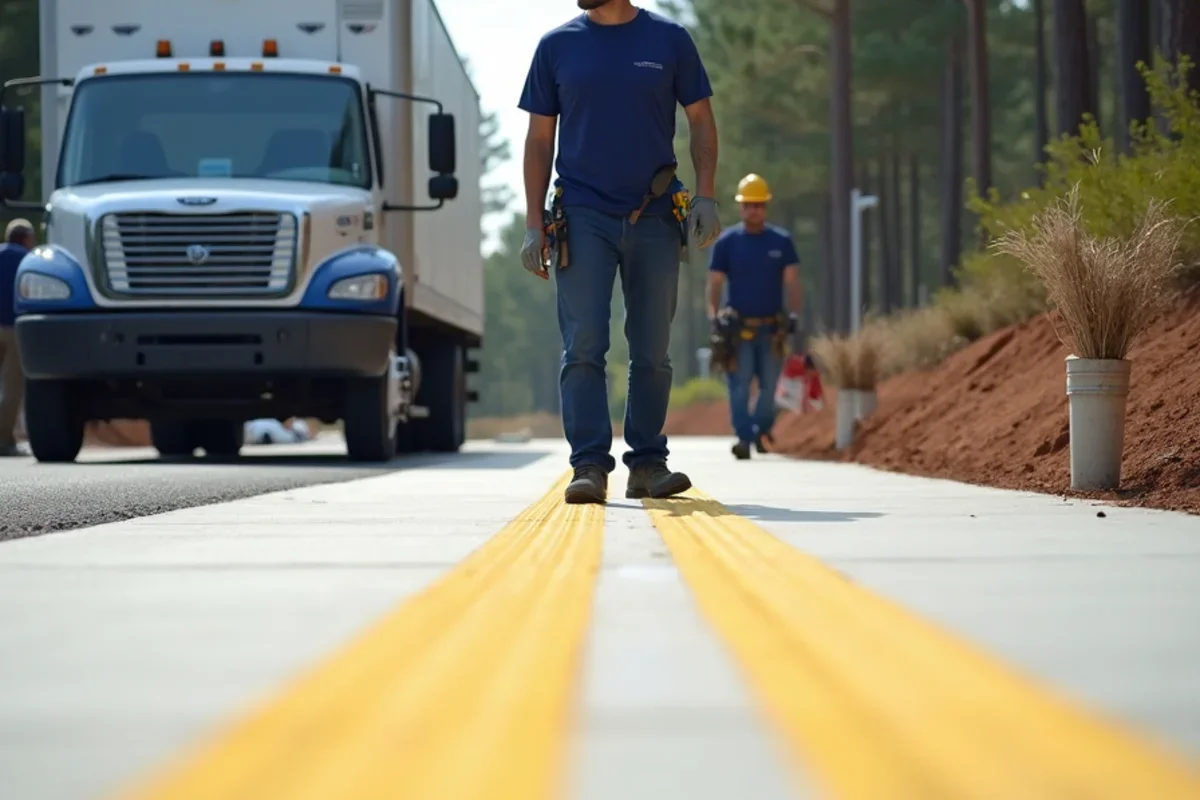
Resolving industrial trip hazards requires heavy-duty industrial chemistries engineered specifically to endure extreme mechanical impact without brittle failure.
Semi-Rigid Polyurea Joint Reconstruction (Shore 85D Hardness)
Traditional elastomeric polyurethane caulk is too soft to support forklift wheels; under point load, wheels depress the caulk and smash the adjacent concrete edges. At Diamond Epoxy Pros, we utilize heavy-duty 100% solids semi-rigid polyurea joint fillers (such as Metzger/McGuire MM-80 or Spal-Pro RS 88). Formulated to an 85 Shore D hardness rating, this chemistry provides structural wheel support across the joint while maintaining 10% to 15% tensile flexibility to accommodate slab thermal movement.
Our technicians clean the joint using diamond crack-chasing blades mounted on dust-controlled vacuums, remove old silicone or failed backer rod, and pump the self-leveling polyurea at a 1:1 ratio. The joint is overfilled crowned, allowed to gel for 45 minutes, and then shaved perfectly flush with the concrete surface using a razor floor scraper, delivering a completely seamless transition.
Dustless Planetary Diamond Shaving and HEPA Containment
To resolve curled slab edges and uneven concrete transitions, our crews deploy three-phase 480V planetary diamond grinders equipped with aggressive metal-bond diamond segments (16/20 grit). Guided by digital straightedges, grinders shave down high spots at a gentle 1:2 to 1:12 slope to achieve strict ADA compliance.
All grinding equipment is connected directly to OSHA Table 1 compliant pulse-jet HEPA dust extractors moving over 400 CFM of airflow. This negative-pressure extraction captures 99.97% of airborne respirable crystalline silica dust at the cutting head, permitting grinding in active retail or warehouse facilities without contaminating retail merchandise or triggering building smoke alarms.
Rapid-Set Polymer-Modified Urethane Mortars for Quarry Tile Repairs
For restaurant kitchen emergencies, broken quarry tiles are chiseled out, and the exposed concrete is treated with fast-setting polyurethane cement slurries or rapid-set polymer mortars. New matching quarry tiles are embedded and grouted with 100% solids chemical-resistant epoxy grout. The repair cures to full thermal and chemical washdown resistance within 2 to 4 hours, allowing the morning kitchen crew to open without disruption.
Zero-Downtime Facility Execution: Overnight and Weekend Shifts
60-Minute Fast-Cure Chemistries for Active Operating Logistics
We understand that 24/7 logistics centers, grocery supermarkets, and healthcare facilities cannot halt operations during normal business hours. Our rapid repair systems are engineered specifically for zero downtime. Fast-curing polyurea joint menders cure tack-free in 15 minutes and accept full heavy forklift and pallet jack traffic within 60 minutes of placement.
OSHA-Compliant Barricading and Positive Air Flow Containment
Work is performed in discrete 50-linear-foot rolling zones between 10:00 PM and 6:00 AM. Crews establish OSHA-compliant high-visibility safety barriers, deploy portable air scrubbers, and hand the floor back to morning facility supervisors completely swept, vacuumed, and ready for operational traffic with zero residual odors.
Long-Term Prevention: Heavy-Duty Transition Profiles and Safety Striping
ADA-Compliant Anodized Aluminum Reducer Profiles
Where distinct flooring materials intersect—such as thick quarry tile transitioning into low-profile polished concrete—surface grinding alone may not suffice. We mechanically anchor heavy-gauge fluted anodized aluminum reducer ramps directly into the concrete subfloor using countersunk stainless-steel anchors. The fluted profile provides anti-slip traction under wet conditions while the tapered edge guarantees smooth wheelchair and rolling cart passage.
OSHA High-Visibility Safety Yellow Floor Striping
To complete the safety enhancement, our team applies OSHA Safety Yellow 100% solids epoxy line striping with embedded aluminum oxide anti-slip media along repaired expansion joints, pedestrian crossings, and grade changes. This visual cue alerts employees and guests to elevation changes, dramatically lowering incident rates and reinforcing your facility safety compliance record.
Frequently Asked Questions
- Most commercial floor repairs are completed overnight or over weekends between 10 PM and 6 AM. Utilizing rapid-setting semi-rigid polyurea joint fillers and fast-curing polymer mortars, repaired surfaces reach full load-bearing strength in 60 to 90 minutes. Facilities can resume heavy forklift traffic, pallet jack movement, and customer foot traffic immediately the following morning with zero operational downtime.