
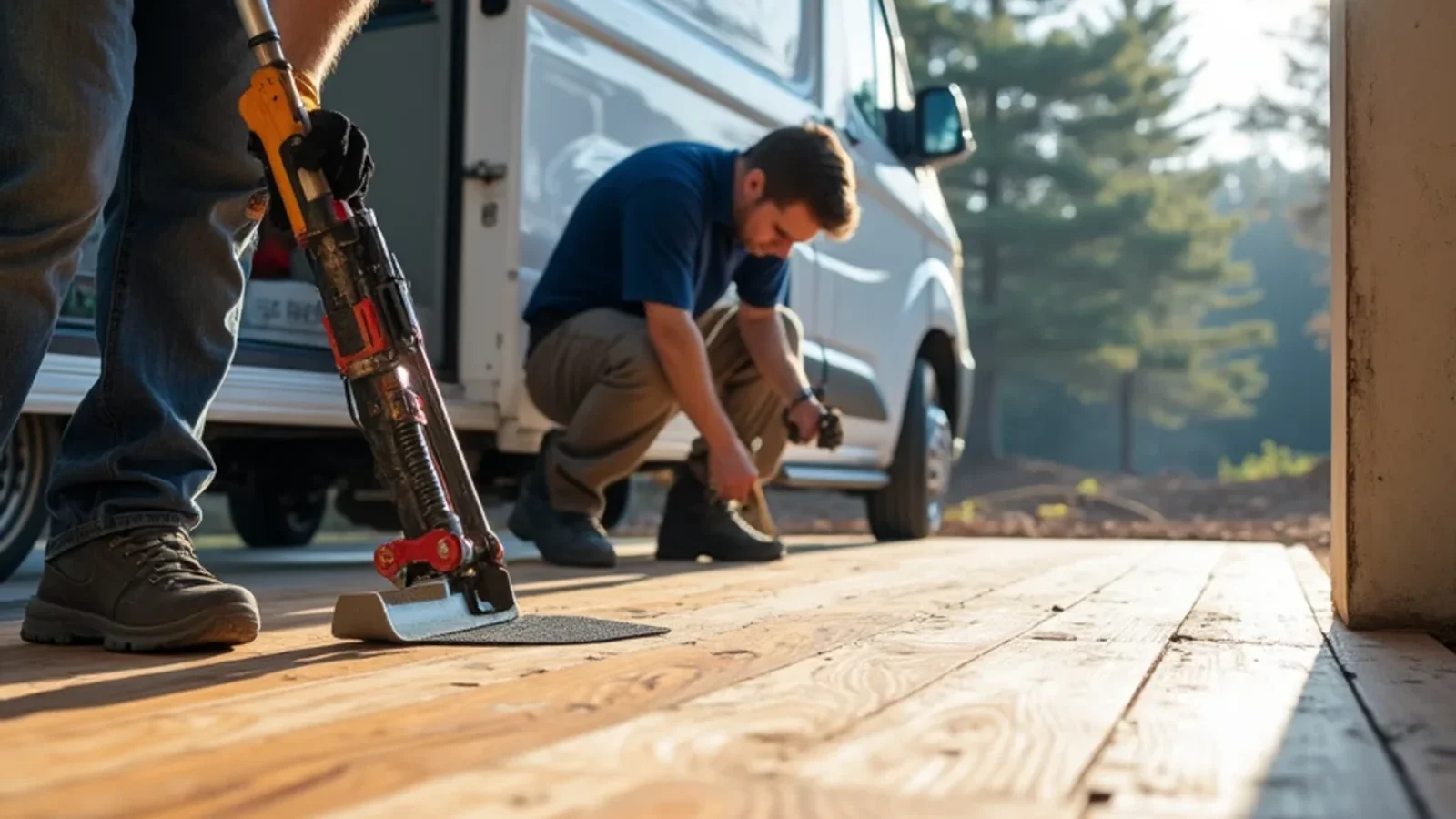
Atlanta’s prevailing residential architecture includes hundreds of thousands of homes built on concrete slab-on-grade foundations or cut into sloping terrain with finished daylight basements. Solid timber installed directly over these concrete slabs frequently cups and buckles because moisture vapor steadily wicks upward from the damp Georgia ground. Engineered hardwood resolves this physical vulnerability through cross-laminated structural plies that counteract natural seasonal expansion and contraction.
At Diamond Epoxy Pros, our lead installer Pedro and crew specialize in high-performance engineered hardwood assemblies. We never lay planks over unprepared or unverified slabs. We evaluate slab moisture emissions using ASTM F2170 relative humidity probes, grind concrete level with heavy planetary diamond tooling, and apply elastomeric moisture-suppressing urethane adhesives to create a silent, permanent bond that outlasts seasonal weather extremes.
Get a Free On-Site Flooring Consultation
Speak directly with Pedro and the Diamond Epoxy Pros crew. We inspect your subfloor or concrete slab, test moisture levels, and provide a clear, itemized quote in writing.
- 5★ on Google (22 reviews)
- Fully Insured
- Free Written Estimates
- Lifetime Delamination Warranty
- Employees Only (No Subcontractors)
- Serving Metro Atlanta since 2023
What Our Atlanta Engineered Hardwood Service Includes
Our comprehensive engineered hardwood installation service provides complete turnkey management, eliminating the risks of premature floor failure, hollow clicking sounds, or condo association compliance disputes:
- Pre-Installation Slab Diagnostics: Quantitative moisture testing via ASTM F2170 in-situ relative humidity probes and calcium chloride testing to verify slab drying rates before selecting adhesives.
- Substrate Planing & Leveling: Diamond cup wheel grinding to eliminate concrete high ridges and application of polymer-modified self-leveling cement to achieve strict 3/16-inch flatness tolerances.
- Elastomeric Adhesive & Vapor Mitigation: Full-trowel application of commercial-grade silane or urethane adhesives (such as Bostik Best or Bona R851) with built-in vapor retarders.
- Acoustic Membrane Integration: Precision installation of high-density acoustic underlayment meeting strict HOA bylaws (IIC 50+ and STC 50+ ratings) in Buckhead and Midtown high-rises.
- Precision Layout & Board Staggering: Strategic board racking to randomize natural wood hues, ensuring end-joint offsets of at least 8 to 10 inches for optimal structural strength.
- Architectural Millwork & Trim Completion: Custom-matched stair treads, flush transition reducers, T-moldings, and perimeter shoe mouldings with full HEPA-filtered cleanups.
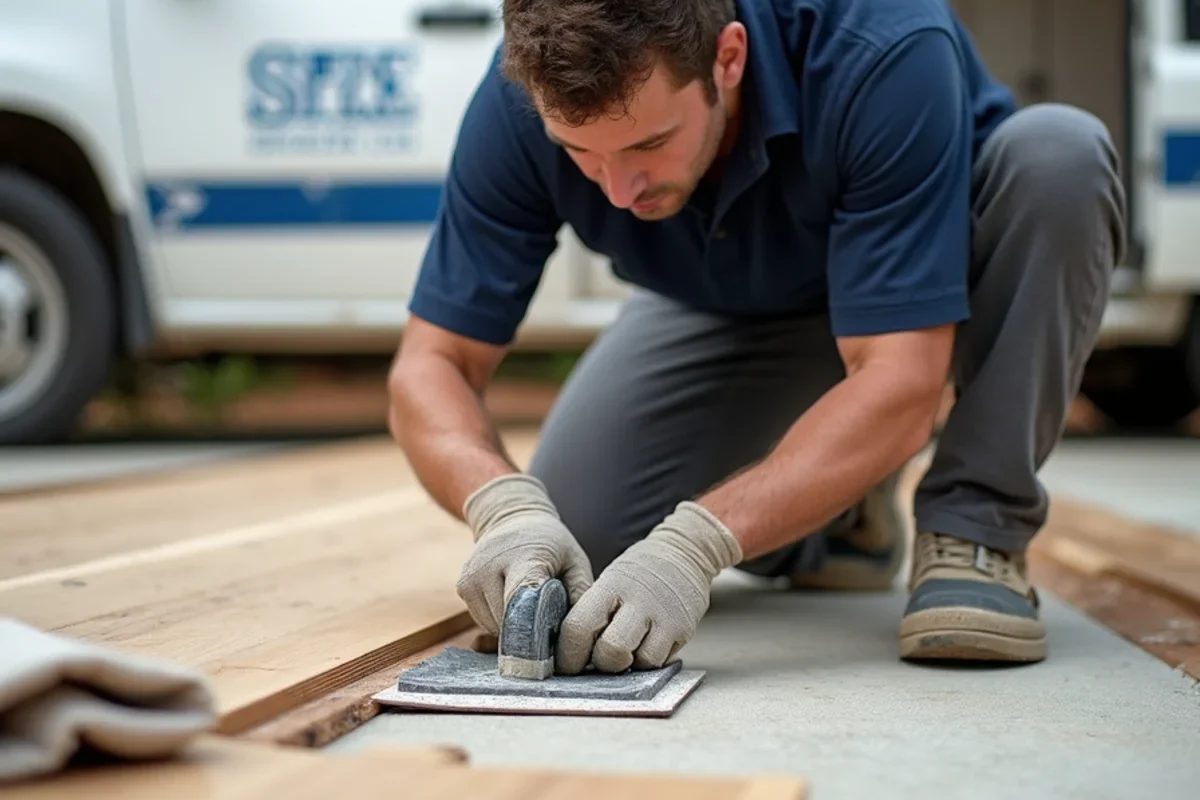
Why Atlanta Slabs, Basements & Condos Require Engineered Wood
Unlike historic intown neighborhoods like Inman Park or Grant Park where homes rest on vented crawlspaces with wooden floor joists, modern neighborhoods across North Fulton, Cobb, Gwinnett, and South Fulton rely heavily on concrete slab construction. Concrete is porous; throughout Georgia’s humid summer months, moisture vapor pressure drives dampness up through the concrete slab into conditioned interior rooms. Solid 3/4-inch wood absorbs this bottom-side moisture, expanding across its cellular grain and cupping severely.
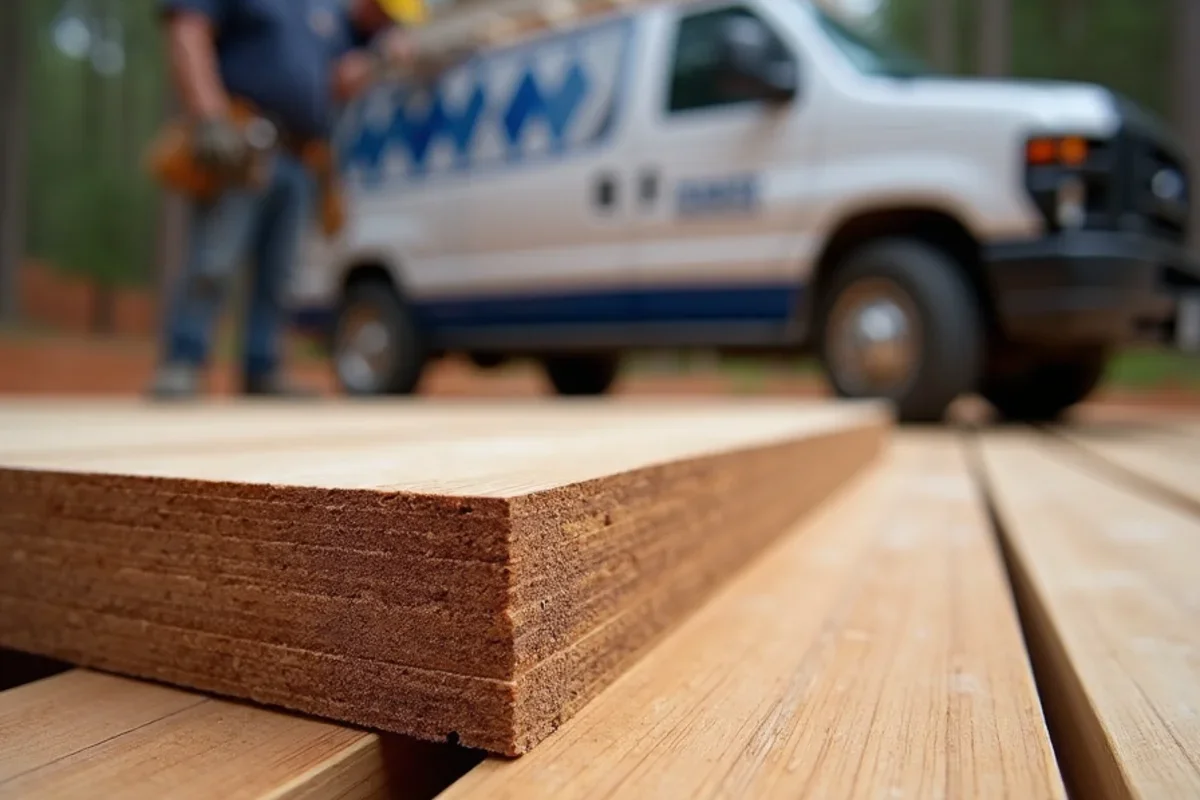
Engineered hardwood solves this challenge by alternating grain direction 90 degrees across 5 to 9 structural layers of Baltic birch or high-density timber. Each layer physically restricts the adjacent ply from expanding or contracting. This engineering makes engineered hardwood the only natural wood flooring approved by the National Wood Flooring Association for below-grade walkout basements and direct adhesion to slab-on-grade concrete foundations.
Installation Methods: Full-Spread Glue-Down vs. Floating
Our crew configures the exact fastening methodology based on your building structure, subfloor moisture levels, and acoustic bylaws:
- Full-Spread Glue-Down: We trowel a 100% solids, elastomeric urethane adhesive containing integrated moisture barrier polymers. This creates an unyielding bond directly to the concrete. The floor feels exceptionally solid, walks silently without hollow resonance, and allows future mechanical refinishing without plank deflection.
- Floating Click-Lock / Tongue-and-Groove: Planks lock together over a resilient acoustic foam underlayment with sealed 6-mil poly vapor seams. This approach is highly effective in below-grade basements with minor slab irregularities or high-rise condos where glued installations are restricted by building rules.
- Cleat Fastening with Glue-Assist: On second-story wooden subfloors or traditional framing, wider engineered planks (6 inches to 10 inches) are blind-nailed with 18-gauge cleats alongside serpentine elastomeric adhesive beads to guarantee squeak-free service.
Understanding Wear Layers, Plies & Refinishing Capacity
The longevity and future refinishing potential of an engineered floor depend entirely on the thickness and milling cut of its top hardwood veneer (the wear layer):
- 1.2mm–2mm Rotary-Peeled Veneer
- Entry-level builder grade manufactured by peeling logs on a lathe. Exhibits exaggerated cathedral graining. Cannot be mechanically sanded, but can be maintained with non-abrasive screen-and-recoat applications every 5 to 7 years.
- 3mm–4mm Sawn-Cut Wear Layer
- Mid-to-high architectural grade cut from solid timber lumber faces. Displays authentic natural grain orientation identical to solid lumber. Can be completely sanded and re-stained 1 to 2 times, offering a 30 to 50 year usable life.
- 5mm–6mm Dry-Sawn Hardwood Face
- Ultra-premium timber craftsmanship mounted on multi-ply Baltic birch. Possesses equal sandable depth to traditional 3/4-inch solid hardwood above the tongue line, permitting 3 to 4 complete refinishing cycles over 75+ years.
Flooring Systems on Atlanta Concrete Slabs: Performance Comparison
| System Attribute | Engineered Hardwood | Solid Hardwood (on slab) | Luxury Vinyl Plank (SPC) |
|---|---|---|---|
| Subfloor Suitability | Direct to slab with moisture barrier | Requires plywood sub-sleeper system | Direct to slab over vapor underlayment |
| Moisture Vapor Tolerance | High (cross-ply core resists movement) | Very Low (high cupping risk) | Complete (100% waterproof synthetic) |
| Appraisal Equity Value | High (Genuine wood real estate asset) | High (but installation cost on slab is extreme) | Moderate (functional & modern, but synthetic) |
| Underfoot Feel & Sound | Solid, warm, natural acoustic dampening | Solid (if nailed to sleepers) | Slightly firmer, requires acoustic backing |
| Refinishing Potential | 1 to 3 times (sawn wear layers) | 4 to 6 times | None (wear layer cannot be sanded) |
Our 6-Step Engineered Hardwood Installation Process
- 1
Digital Moisture Diagnostics
We measure concrete slab relative humidity using Wagner in-situ probes and verify ambient temperature and dew point to ensure the room meets adhesive manufacturer curing windows.
- 2
Mechanical Slab Profiling
We grind down high spots and ridges using diamond-tooled floor preparation grinders equipped with HEPA vacuums, then patch low depressions with rapid-setting polymer leveling cement.
- 3
Vapor Barrier & Adhesive Troweling
For glue-down installations, we apply elastomeric urethane moisture-barrier adhesive using manufacturer-specified V-notch or square-notch trowels to guarantee 100% continuous coverage.
- 4
Material Conditioning & Staggered Racking
Engineered cartons rest in conditioned indoor air for 48 to 72 hours. We open multiple cartons simultaneously to distribute grain and color variations while maintaining an 8-inch minimum end-joint offset.
- 5
Plank Placement & Compression
Planks are set firmly into the wet adhesive bed using non-marring dead-blow mallets and ratchet strap clamps, ensuring completely closed seams and eliminate air pockets.
- 6
Perimeter Clearance & Trim Detailing
We maintain a 3/8-inch expansion gap around all drywall walls and cabinetry, concealed with new baseboards and matching shoe mouldings, followed by HEPA cleanup and a client walkthrough.
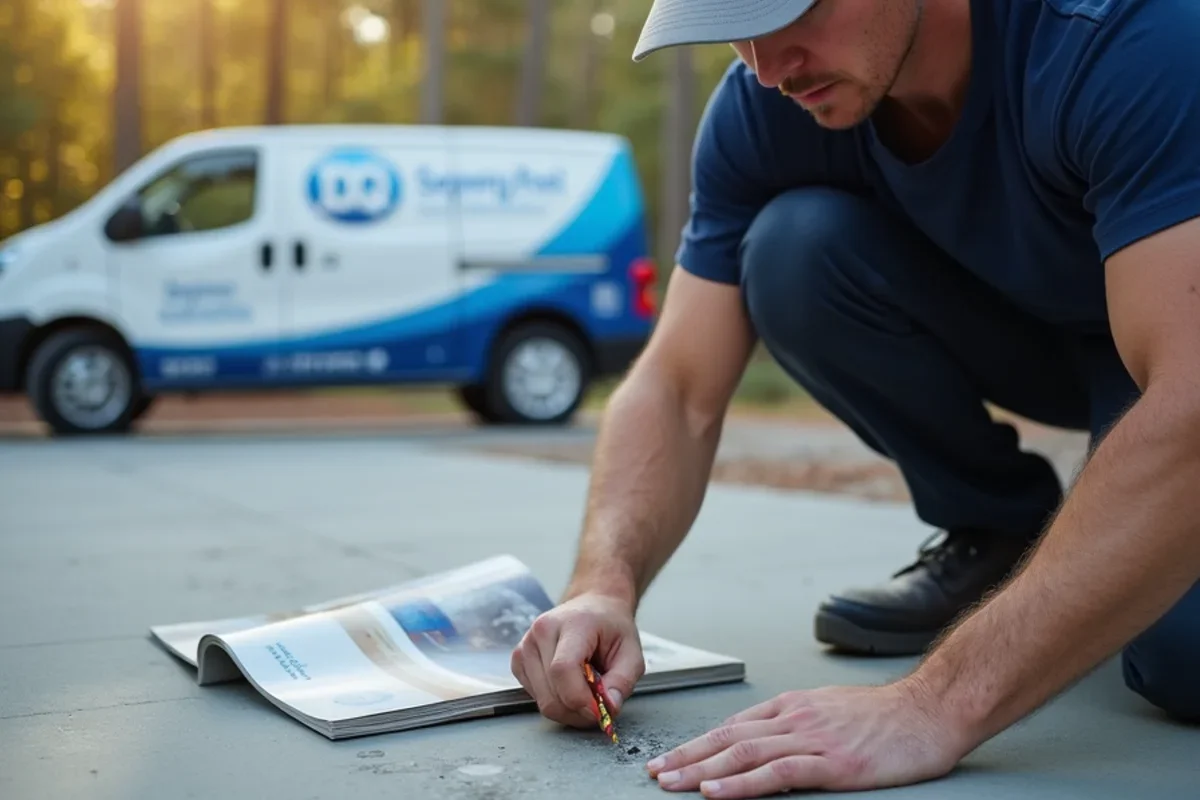
Engineered Hardwood Installation Cost Factors in Atlanta
Investing in engineered hardwood flooring across metro Atlanta is shaped by project-specific technical variables rather than a simple square-foot baseline. Core price drivers include:
- Veneer Milling & Core Construction: Rotary-peeled planks with HDF cores are economical, whereas sawn-cut European White Oak, Hickory, or Walnut veneers on 9-ply Baltic birch represent higher lumber investments.
- Plank Width & Length Specifications: Narrow 3-inch to 5-inch planks with random lengths up to 4 feet require standard handling, whereas wide 7-inch to 10-inch planks with 8-foot lengths require specialized handling and enhanced adhesive coverage.
- Concrete Surface Remediation: Slabs with heavy dips, high crown ridges, or leftover black cutback adhesive require diamond grinding and self-leveling cement to achieve strict NWFA flatness standards.
- Adhesive & Membrane Chemistry: Commercial moisture-suppressing urethane adhesives that block unlimited moisture vapor emissions add premium chemical costs compared to basic latex glues.
- Multi-Story & High-Rise Logistics: Mid-rise and high-rise condominiums in Midtown or Buckhead with dedicated freight elevator booking windows, parking restrictions, and HOA protection protocols require additional logistical planning.
Georgia Building Codes, HOA Acoustic Standards & NWFA Guidelines
In Georgia, specialty flooring installations must comply with the Georgia State Minimum Standard Construction Codes (International Residential Code with Georgia Amendments). When installations involve multi-family dwellings, high-rise condominiums, or mixed-use townhomes, projects must also adhere strictly to the building’s proprietary Homeowners Association (HOA) architectural covenants.
At Diamond Epoxy Pros, our installation practices conform strictly to the technical standards published by the National Wood Flooring Association (NWFA) and the International Concrete Repair Institute (ICRI). We provide complete acoustic test certificates, adhesive technical data sheets, and moisture inspection logs required for HOA approvals before installation begins.
Why Atlanta Property Owners Trust Diamond Epoxy Pros
Diamond Epoxy Pros is an owner-operated flooring contractor founded and run by craftsmen. Unlike large retail box stores or national sales franchises that subcontract installation labor to the lowest bidder, owner Pedro and crew specialist Marco handle your engineered hardwood installation personally. Our team completed a rigorous 1,000-hour commercial apprenticeship and holds advanced CTM surface mechanics certification, bringing commercial-grade discipline to residential flooring.
We never compromise on moisture testing, slab leveling, or adhesive coverage, and we back all our installation craftsmanship with an ironclad lifetime warranty against installation delamination. With 22 verified 5.0-star Google reviews and direct owner communication, you receive dependable, transparent craftsmanship from your initial consultation through final inspection.
Engineered Hardwood Installation — Frequently Asked Questions
- Yes. Engineered hardwood’s multi-ply cross-grain core resists the moisture vapor that naturally migrates through Georgia concrete slabs, preventing the cupping, crowning, and buckling common in solid wood installed on slab.