
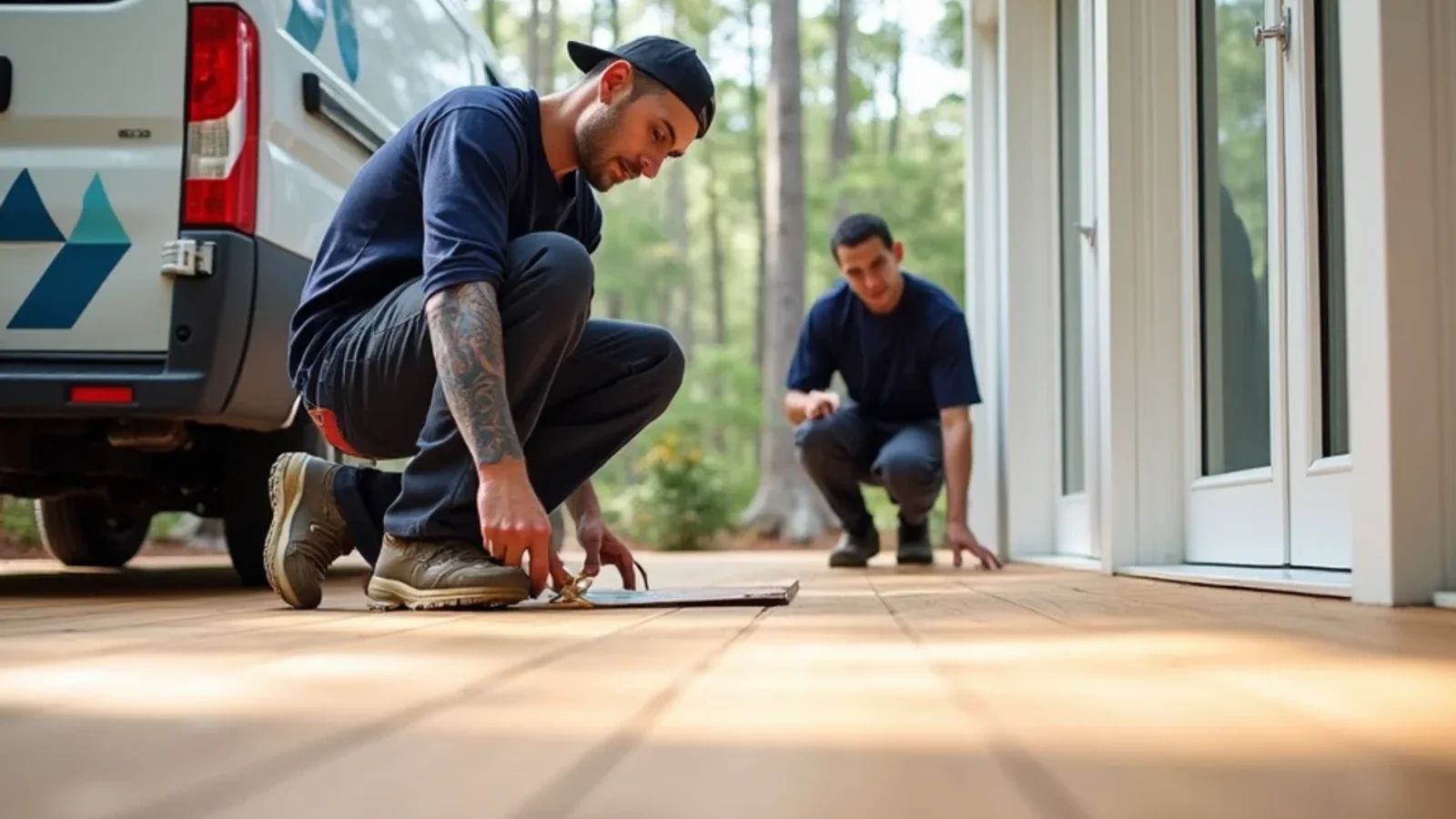
Modern sustainable flooring has advanced far beyond the brittle horizontal bamboo and spongy sheet cork products of the 1990s. Today, ultra-dense strand-woven bamboo ranks among the hardest, most scratch-resistant architectural surfaces available, while multi-layer engineered cork planks provide superior impact absorption and thermal insulation over cold Georgia concrete foundations.
Both materials provide an environmentally responsible alternative to traditional hardwood without sacrificing durability. Bamboo reaches harvest maturity in just five years, and cork is sustainably harvested by hand-stripping the outer bark of living Mediterranean cork oak trees every nine years without cutting down the tree. For homeowners throughout Metro Atlanta looking to combine modern design aesthetics with superior indoor environmental quality, these rapid-renewal materials offer exceptional longevity when installed by certified flooring mechanics.
Comprehensive Bamboo & Cork Installation Scope
At Diamond Epoxy Pros, our sustainable flooring installation service covers every phase of your project from digital moisture mapping through precision finish carpentry. We handle every step in-house without subcontracting:
- Subfloor moisture mapping using Wagner and Delmhorst pinless digital meters across concrete slabs and plywood subflooring
- Precision subfloor leveling and high-spot grinding to eliminate hollow voids, clicks, and joint deflection
- Supply and installation of ultra-dense strand-woven bamboo flooring (floating click-lock or full-spread low-VOC adhesive glue-down)
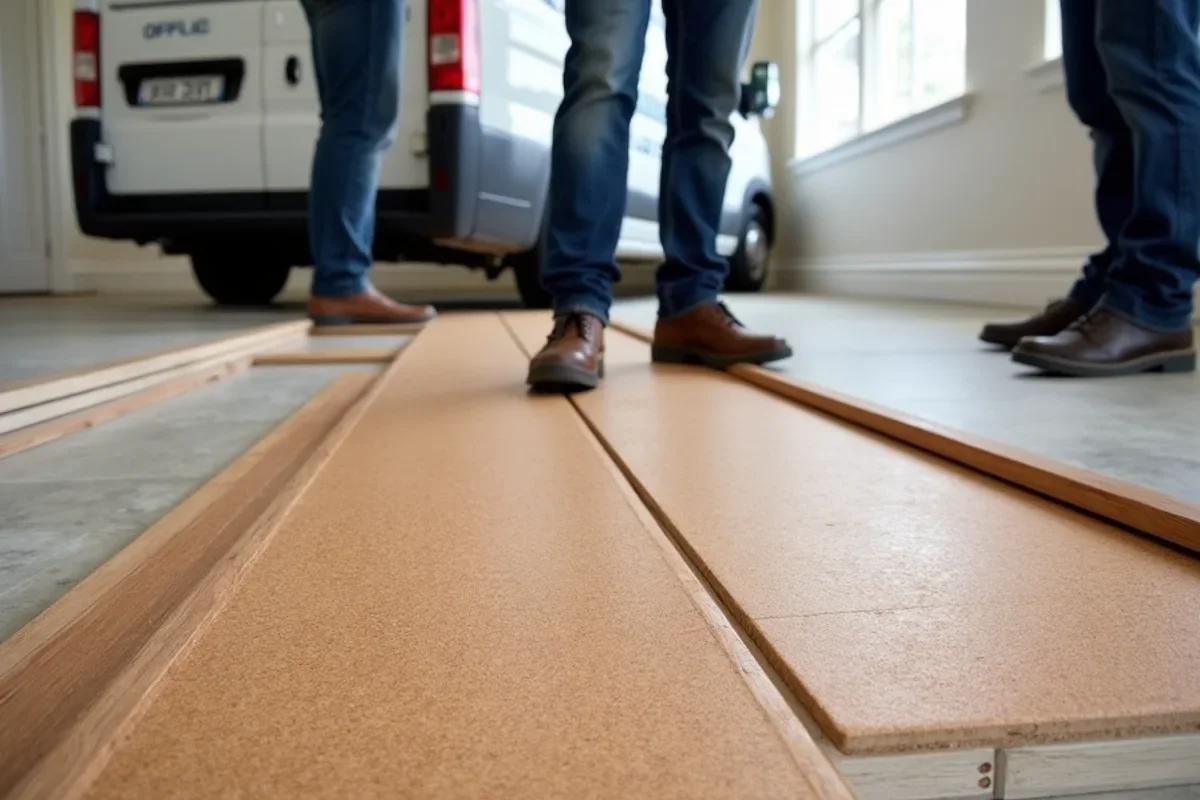
- Supply and installation of natural cork planks with integrated moisture-resistant cores and pre-attached acoustic backings
- Glue-down architectural cork tile installation with low-odor zero-VOC water-based contact adhesives for studios and basements
- Application of 100% moisture vapor barrier underlayments specifically engineered for ground-contact concrete slabs
- Custom finish trim carpentry including matching flush bamboo stair nosings, T-moldings, reducers, and perimeter quarter-round
Common Reasons Atlanta Homeowners Choose Bamboo & Cork
Atlanta homes present unique living challenges where traditional flooring materials often fall short. Hard tile floors cause joint strain, wall-to-wall carpeting traps severe spring pollen, and domestic softwoods scratch easily under active household traffic. Homeowners routinely upgrade to bamboo and cork to solve these specific environmental challenges:
- Severe joint and lower-back fatigue: Cooking on unforgiving porcelain tile or walking on bare concrete slabs creates physical strain that cork’s cellular honeycomb structure immediately relieves.
- Cold, uninviting daylight basements: Uninsulated concrete subfloors draw warmth out of rooms; cork provides a natural thermal break that keeps ground-level spaces comfortable year-round.
- Acoustic reverberation and multi-story footfall: Modern open-concept living rooms and two-story townhomes suffer from echo; cork absorbs up to 70% of impact sound transmission.
- Deep pet claw gouges: Active dogs easily scratch soft oak and pine; strand-woven bamboo withstands heavy canine traffic without denting or splintering.
- Seasonal allergy flare-ups: Atlanta’s severe tree and grass pollen seasons worsen when carpets harbor dust mites and allergens; naturally hypoallergenic bamboo and cork clean effortlessly.
Get a Free On-Site Flooring Consultation
Speak directly with Pedro and the Diamond Epoxy Pros crew. We inspect your subfloor or concrete slab, test moisture levels, and provide a clear, itemized quote in writing.
- 5★ on Google (22 reviews)
- Fully Insured
- Free Written Estimates
- Lifetime Delamination Warranty
- Employees Only (No Subcontractors)
- Serving Metro Atlanta since 2023
Strand-Woven Bamboo vs. Cork: Performance Comparison
Selecting the right sustainable flooring depends on your room’s primary traffic patterns, moisture exposure, and comfort priorities. The technical comparison table below details how these two renewable surfaces compare to conventional flooring in North Georgia homes:
Performance Comparison: Sustainable Flooring vs. Traditional Options
| Material | Janka Hardness Rating | Acoustic Sound Deadening | Thermal Insulation Factor | Ideal Atlanta Applications |
|---|---|---|---|---|
| Strand-Woven Bamboo | 3,000+ (Extreme Hardness) | Moderate (Dense cellular mass) | Standard (R-0.70) | High-traffic foyers, busy kitchens, living rooms with large dogs |
| Engineered Cork Planks | 400 - 600 (Resilient Cushion) | Superior (ΔIIC 20-22 dB reduction) | Exceptional (R-1.12 thermal barrier) | Daylight basements, home offices, nurseries, yoga studios |
| Traditional Red Oak | 1,290 (Industry Benchmark) | Moderate (Standard reverberation) | Standard (R-0.64) | Formal dining rooms, second-story bedrooms, hallways |
| Rigid Core SPC Vinyl | Non-rated composite stone | Good (with attached foam pad) | Low to Moderate | Full bathrooms, laundry rooms, mudrooms prone to standing water |
6-Step Precision Bamboo & Cork Installation Process
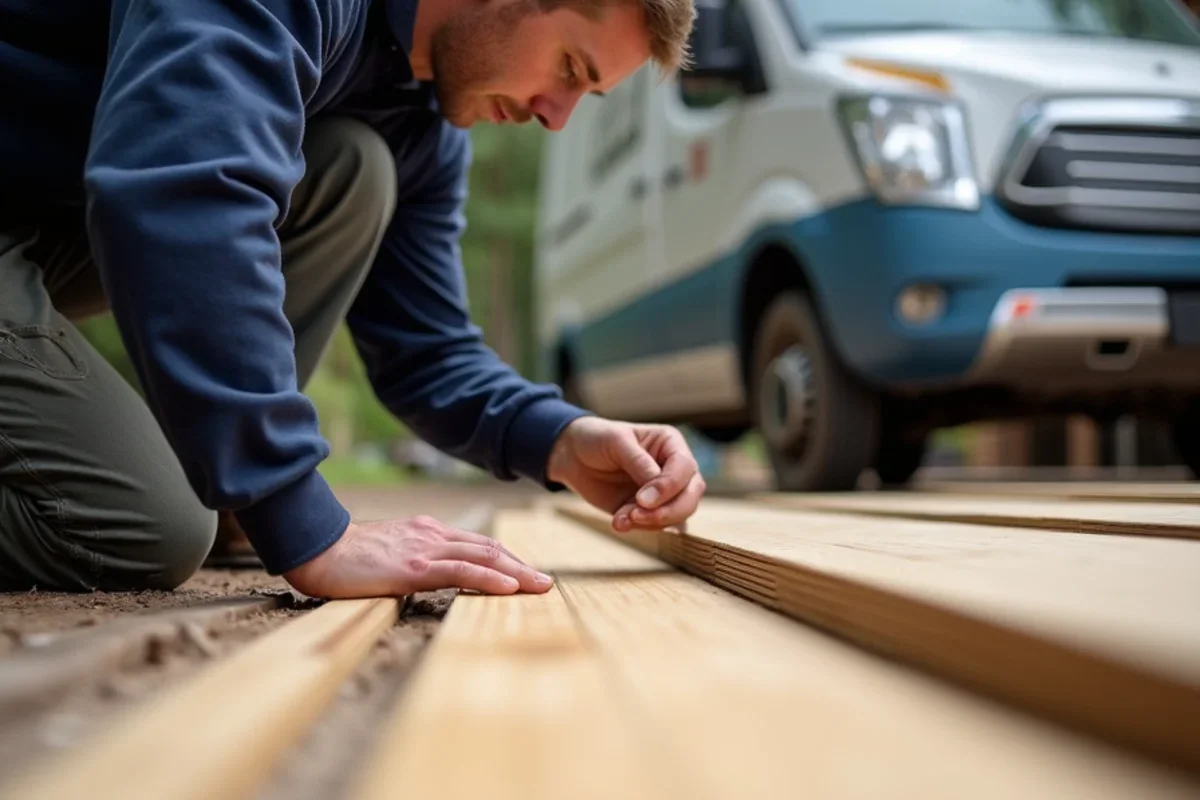
Because natural bamboo and cork respond dynamically to ambient indoor conditions, haphazard installation guarantees edge peaking or buckling. At Diamond Epoxy Pros, our CTM-certified technicians execute a rigorous six-step installation protocol on every project:
- 1
Subfloor Moisture & Humidity Mapping
We assess both subfloor concrete and wood framing using Delmhorst dual-depth pin meters and Wagner Rapid RH in-situ concrete probes, ensuring moisture vapor emission rates (MVER) stay well below manufacturer thresholds.
- 2
Mechanical Subfloor Preparation & Flattening
Using industrial planetary grinders connected to HEPA dust extractors, we grind down concrete ridges and fill low depressions with rapid-setting polymer cement, guaranteeing subfloor flatness within 3/16 inch across any 10-foot span.
- 3
72-Hour Climate Acclimation
We cross-stack bamboo and cork planks inside your fully conditioned residence for 48 to 72 hours, running HVAC equipment between 35% and 55% relative humidity so planks reach equilibrium moisture content prior to fastening.
- 4
Acoustic & Moisture Underlayment Placement
For floating assemblies on concrete, we lay down a continuous 6-mil polyethylene vapor barrier with taped 8-inch overlaps and install high-density sound-dampening underlayment to absorb structural vibration.
- 5
Precision Board Layout & Expansion Spacing
Planks are installed with staggered end joints separated by at least 12 inches. We maintain a full 1/2-inch perimeter expansion gap along all walls, door thresholds, and vertical columns to allow natural seasonal expansion without binding.
- 6
Custom Trim Carpentry & Final Walkthrough
We install matching solid transition profiles, color-coordinated quarter-round molding, and vacuum the entire workspace. Pedro inspects every seam with you to ensure immaculate alignment before sign-off.
Cost Factors for Cork & Bamboo Flooring in Atlanta
Every Atlanta home features unique structural and architectural requirements that influence the final cost of installing bamboo or cork flooring. Rather than relying on inaccurate flat-rate online calculators, we evaluate several key variables during your on-site estimate:
- Material Density & Engineering: High-density strand-woven bamboo with drop-lock milled joints commands a higher material cost than standard horizontal cuts but delivers double the structural lifespan. Cork pricing varies based on wear-layer thickness and multi-ply cork backing density.
- Subfloor Leveling Needs: Older Atlanta homes frequently exhibit sagging joists or unlevel concrete slabs requiring self-leveling underlayment pours or mechanical diamond grinding prior to installation.
- Fastening Method: Floating click-lock installation requires less labor and adhesive cost than full-spread direct glue-down assemblies using premium zero-VOC elastomeric acoustic bonding agents.
- Acoustic Insulation Requirements: Condominium buildings in Buckhead, Midtown, and Downtown Atlanta often enforce strict HOA sound ratings requiring specialized sound-deadening underlayment membranes rated at IIC 55+.
- Architectural Complexity: Intricate floor plans featuring multiple custom angled cuts, radius transitions, closets, and integrated staircase steps require additional carpenter hours.
Local Building Standards & Environmental Compliance
In Georgia, residential flooring installations must satisfy building performance standards established by the Georgia Secretary of State residential contractor rules and the 2018 International Residential Code (IRC). Floor assemblies must maintain sound structural integrity, adequate expansion tolerances, and proper transition heights to prevent trip hazards.
Our installation crews strictly adhere to National Wood Flooring Association (NWFA) installation guidelines and ASTM F2170 relative humidity standards for concrete slabs. We also comply with Atlanta condominium association acoustic bylaws, providing certified Impact Insulation Class (IIC) documentation so your project passes HOA architectural reviews effortlessly.
Why Metro Atlanta Homeowners Choose Diamond Epoxy Pros
Diamond Epoxy Pros is an owner-operated local specialty contractor committed to uncompromising floor craftsmanship. Unlike national home improvement retail chains that farm installation projects out to third-party sub-crews, business owner Pedro and lead specialist Marco manage your project directly on-site. Our crew brings commercial-grade rigor to residential homes, backed by a rigorous 1,000-hour commercial apprenticeship and formal CTM surface mechanics certification.
We never cut corners on moisture verification, substrate leveling, or acclimation times, and we stand behind our workmanship with an ironclad lifetime craftsmanship warranty against installation delamination. With 22 verified 5.0-star Google reviews and direct owner communication, you receive dependable, transparent service from your initial consultation through final inspection.
Bamboo & Cork Flooring — Frequently Asked Questions
- Yes, provided you choose strand-woven engineered bamboo rather than cheap vertical-cut planks. Strand-woven bamboo is saturated with cross-linking resins under intense pressure, giving it superior dimensional stability during humid Atlanta summers when indoor relative humidity is maintained between 35% and 55%.