
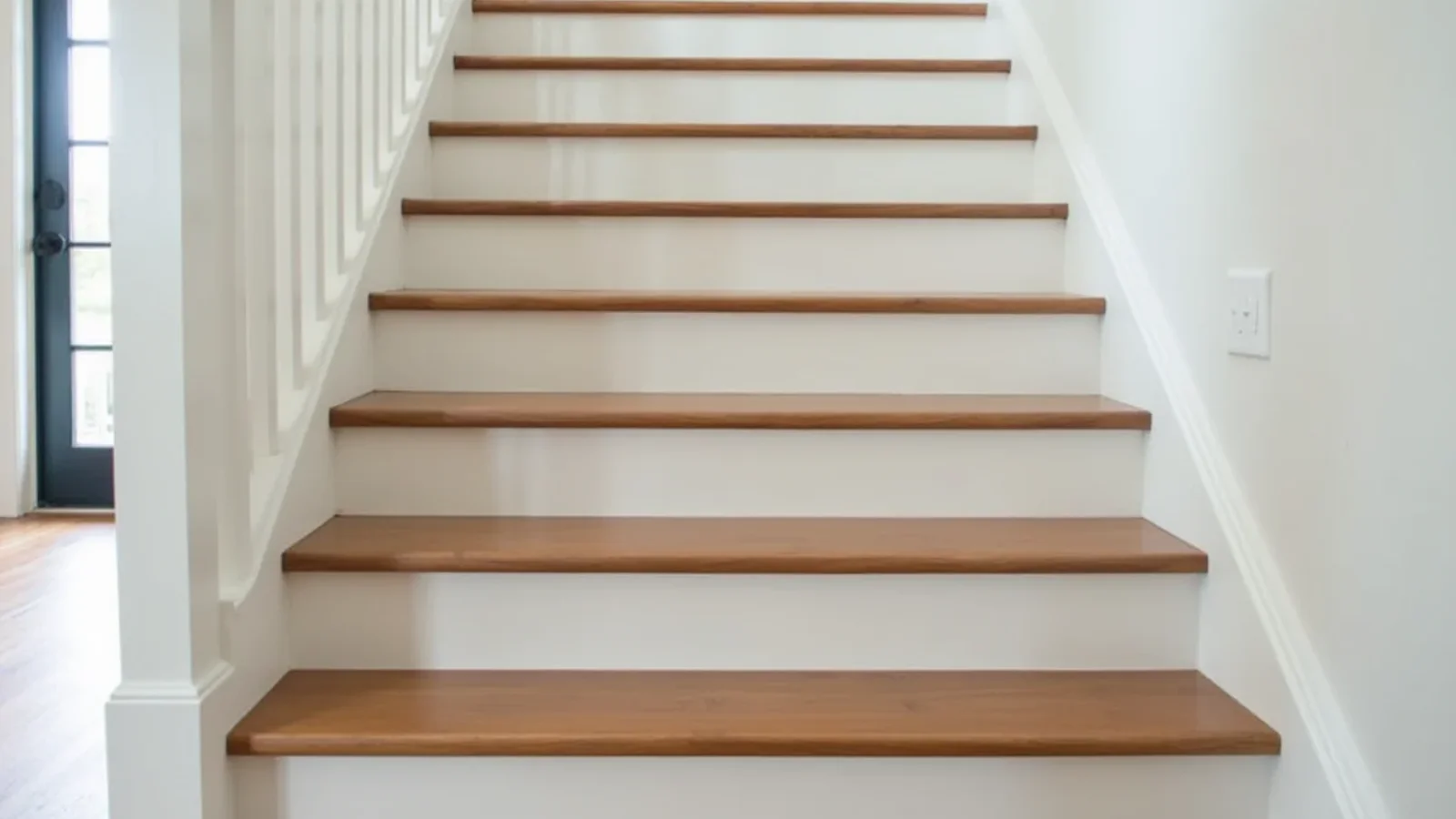
In hundreds of two-story residential subdivisions built throughout the 1980s, 1990s, and 2000s across Marietta, Alpharetta, Sandy Springs, Roswell, and South Fulton, developers installed builder-grade carpet over rough construction framing lumber on primary staircases. While wall-to-wall carpeting concealed out-of-square framing during initial construction, over time it frays along tread nosings, absorbs stubborn pet odors, and squeaks loudly with every step.
Converting a staircase from carpet to natural hardwood requires precision finish carpentry that goes far beyond standard floor laying. Stair stringers settle unevenly over decades, walls shift out of plumb, and skirtboards are rarely parallel. At Diamond Epoxy Pros, our lead installer Pedro and crew hand-scribe every individual tread using precision mechanical stair gauges, bed each tread in heavy-duty structural polyurethane adhesive, and blind-nail them to eliminate deflection and squeaking permanently.
Get a Free On-Site Flooring Consultation
Speak directly with Pedro and the Diamond Epoxy Pros crew. We inspect your subfloor or concrete slab, test moisture levels, and provide a clear, itemized quote in writing.
- 5★ on Google (22 reviews)
- Fully Insured
- Free Written Estimates
- Lifetime Delamination Warranty
- Employees Only (No Subcontractors)
- Serving Metro Atlanta since 2023
What Our Atlanta Hardwood Stair Remodeling Includes
Our staircase remodeling service provides complete end-to-end transformation, turning rough structural framing into a custom, furniture-grade architectural staircase:
- Carpet & Fastener Demolition: Thorough removal of old carpet, padding, perimeter tack strips, and hundreds of buried construction staples down to the bare framing lumber.
- Stringer Leveling & Structural Reinforcement: Shaving warped rough framing lumber, reinforcing deflected stringers, and driving heavy-duty structural screws to eliminate framework squeaks.
- Precision Mechanical Tread Scribing: Using Collins mechanical stair tread gauges to transfer the exact irregular angles and widths of your skirtboards onto raw hardwood treads.
- Polyurethane Structural Bonding: Applying heavy-duty polyurethane construction adhesive (PL Premium) across all three stringer contact points, combined with 15-gauge blind finish nailing.
- Custom Risers & Landing Nosings: Installing primed white poplar risers or stain-matched oak risers, along with custom flush bullnose nosings for intermediate landings.
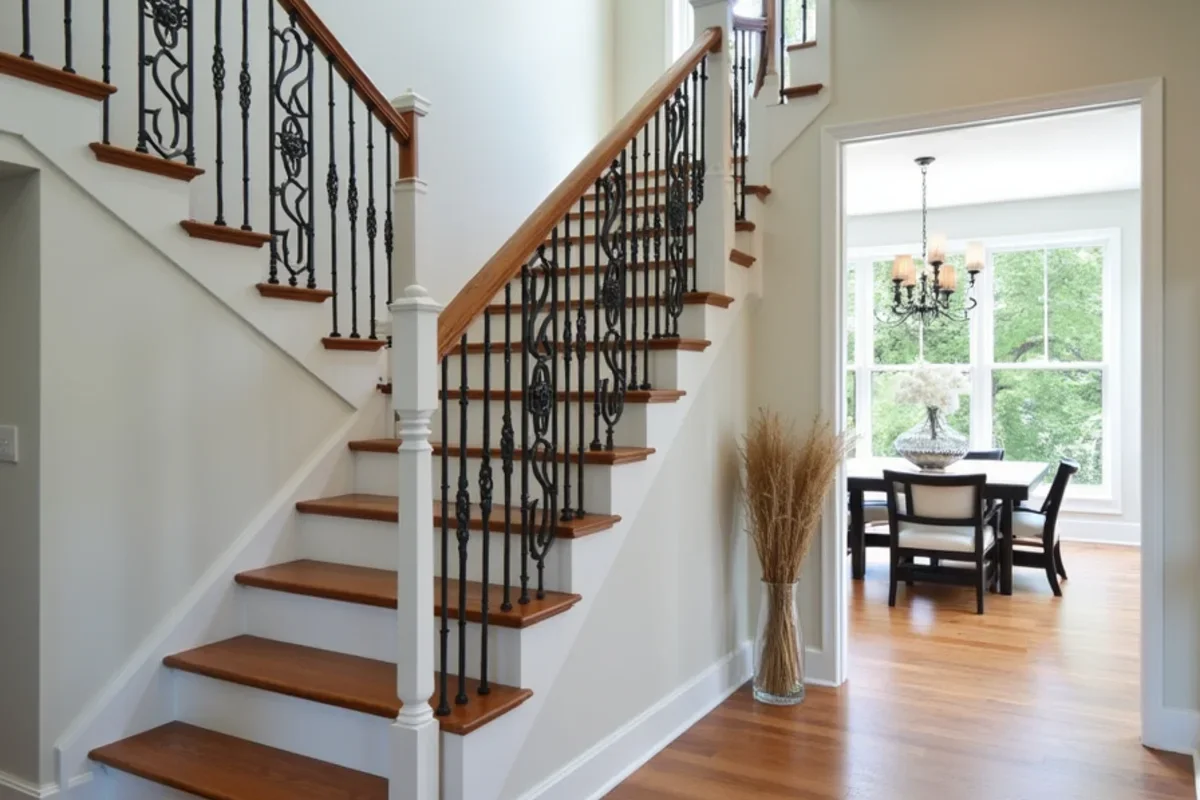
- Iron Baluster & Railing Modernization: Replacing dated wooden balusters with powder-coated satin black wrought iron spindles featuring modern twist, basket, or knuckle profiles.
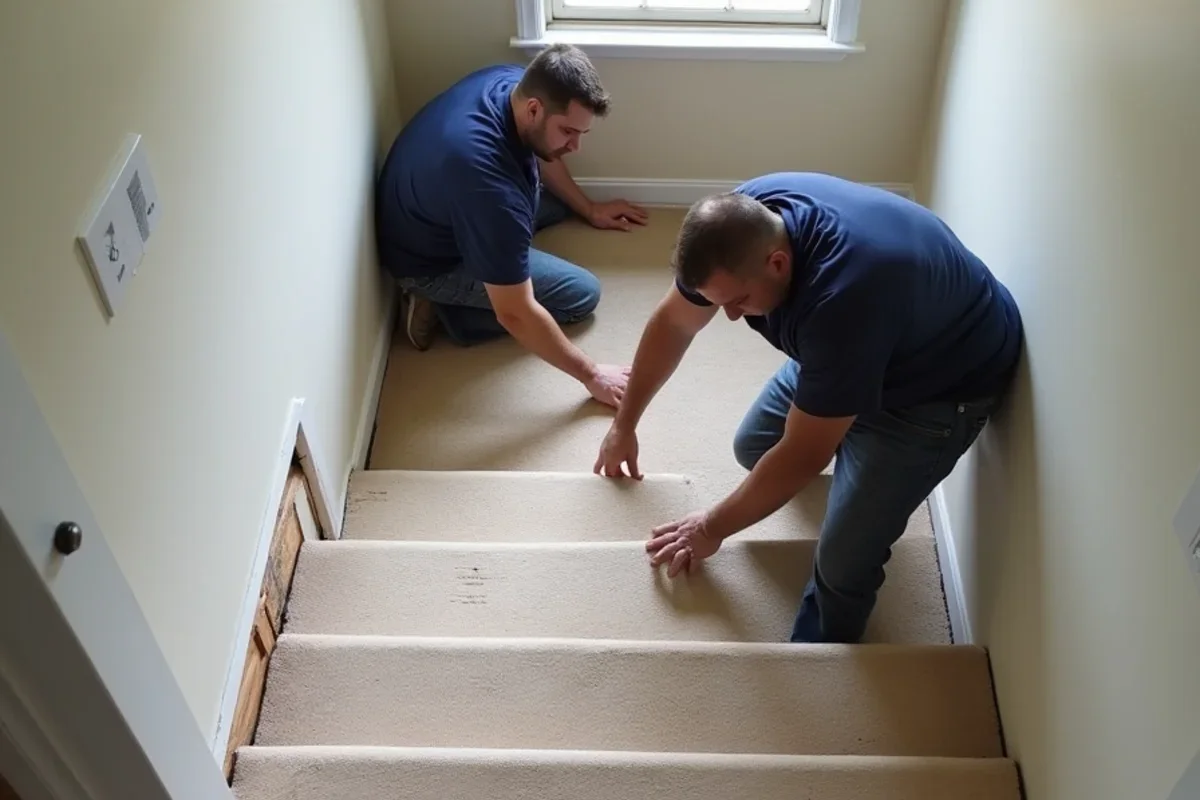
Signs Your Atlanta Home Is Ready for a Staircase Remodel
Staircases experience more concentrated physical impact per square inch than any other surface in your home. Homeowners across north Georgia frequently reach out to our team when experiencing these common failure points:
- High-Traffic Carpet Matting & Staining: Carpet fibers along tread nosings become compressed, shiny, and impossible to vacuum clean, creating an unsightly focal point right inside your front entryway.
- Chronic Squeaks & Creaks: As seasonal humidity swings cause rough construction lumber to shrink, nails loosen and rub against plywood, generating loud creaking on every step.
- Flooring Disconnect: After upgrading downstairs living areas from carpet to hardwood or luxury vinyl plank, carpeted stairs look mismatched, dated, and uncoordinated.
- Allergen & Red Clay Accumulation: Carpeted stair treads act as giant dust filters that trap Georgia red clay soil, dander, and pollen that circulate through the HVAC return air.
Stair Remodeling Systems: Full Solid Treads vs. Retrofit Caps
Depending on your existing staircase framing and vertical height clearances, we recommend the ideal structural assembly:
- Full 1-1/16-Inch Solid Oak Treads: The gold standard in staircase craftsmanship. We cut off the rough 2x10 lumber overhang and install solid red or white oak hardwood treads. They provide lifetime durability, solid acoustics underfoot, and can be sanded and refinished multiple times.
- Retrofit Hardwood Cap Systems: Engineered hardwood cap treads with integrated bullnoses designed to slip over existing structural plywood steps. Ideal for staircases where removing the rough framing would disrupt drywall or where vertical clearance is tightly constrained.
- Bright White Poplar Risers: High-grade painted white risers that create crisp visual contrast against dark or natural hardwood treads, giving entryways an elegant, airy southern colonial or modern farmhouse look.
- Stained Hardwood Matching Risers: Matching solid oak risers stained in the exact tone as the treads, creating a dramatic, continuous monolithic wood ribbon up the staircase.
Stair Renovation Options & Material Specifications
| Component | Material Options | Structural Function | Aesthetic & Longevity Benefit |
|---|---|---|---|
| Stair Treads | 1-1/16" Solid White or Red Oak | Primary load-bearing walking surface | Can be refinished 4–6x; zero flex; lifetime durability |
| Stair Risers | 3/4" Primed Poplar or Solid Oak | Vertical closure between tread steps | Resists shoe scuffs; painted white or stain-matched |
| Landing Nosing | Milled Bullnose Hardwood | Transition between stair flight and floor | Locks directly into adjoining tongue-and-groove flooring |
| Balusters | Hollow wrought iron or solid oak | Fall-protection guardrail infill | Modern satin black finishes with zero rattle |
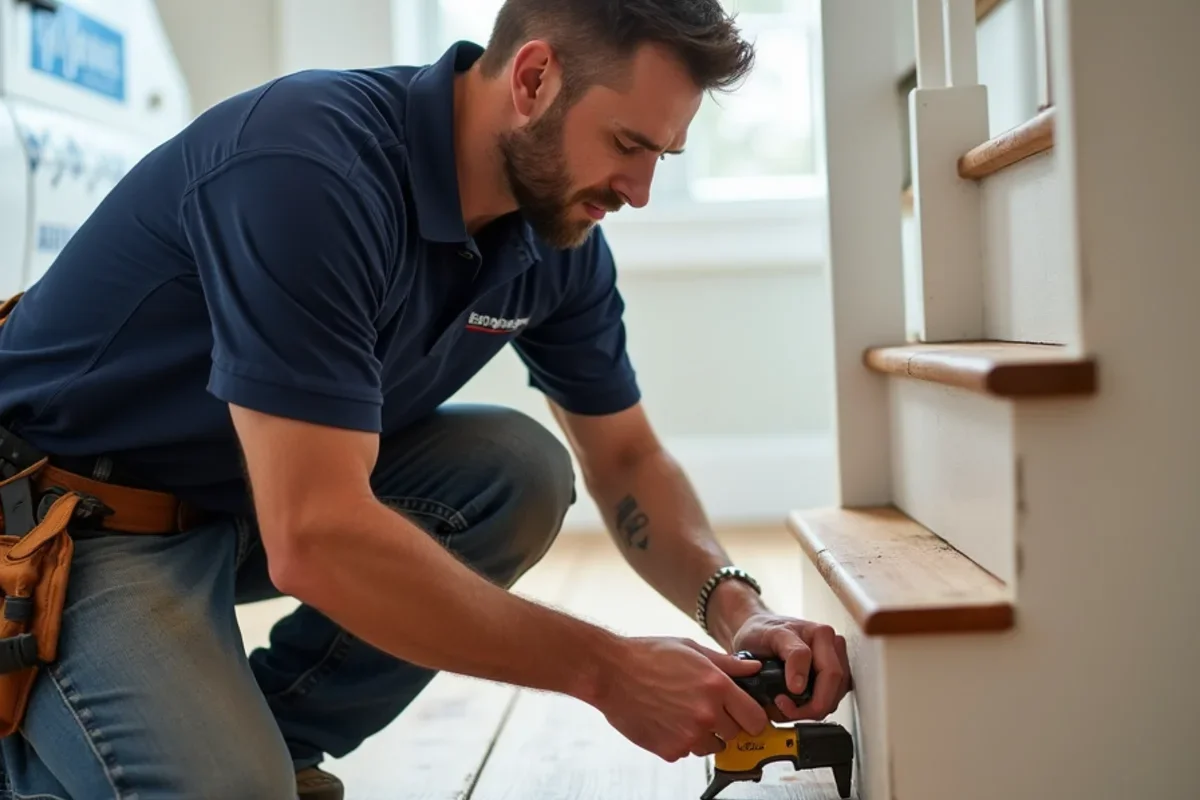
Our 6-Step Squeak-Free Stair Installation Process
- 1
Demolition & Staple Extraction
We remove all carpeting, carpet pad, and perimeter tack strips, meticulously pulling every framing staple and checking structural stringers for sound attachment.
- 2
Nosing Cutback & Framing Stiffening
We trim off rough 2x10 overhangs flush with the framing using reciprocating saws, and secure loose stringers with 3-inch structural GRK framing screws.
- 3
Precision Scribing with Collins Gauges
Every stair step is unique. We place mechanical stair tread template tools against the left and right skirtboards to capture exact out-of-square angles, transferring marks directly onto raw oak treads.
- 4
Compound Miter Saw Cutting
Using fine-tooth blade Festool Kapex miter saws, our craftsmen cut treads and risers to millimeter precision, eliminating unsightly gaps along the skirtboards.
- 5
Dual Fastening with Polyurethane Adhesive
We run heavy beads of elastomeric PL Premium polyurethane structural adhesive across all stringer contact points and secure treads with 15-gauge blind finish nails to prevent friction squeaks.
- 6
Stain Blending, Topcoating & Railing Trim
On site-finished stairs, we apply custom stain blends on raw oak to achieve seamless color parity with adjacent floors, topped with commercial slip-resistant polyurethane.
Hardwood Stair Remodeling Cost Factors in Metro Atlanta
The investment required to convert or remodel a residential staircase in metro Atlanta depends on specific architectural geometry and design choices:
- Stairway Architecture & Step Count: A standard straight run of 13 to 15 boxed steps requires straightforward scribing, whereas L-shaped staircases with intermediate landings or curved pie-shaped winder steps require complex custom templating.
- Boxed vs. Open-Ended Stringers: Closed stairs with walls on both sides require scribing against skirtboards. Open-sided stairs require returns on one or both sides with mitered return nosings and baluster mortises, which increases finish carpentry hours.
- Wood Species & Milling Profile: Domestic Red Oak is cost-effective, while European White Oak wide treads or custom rift-sawn lumber reflect higher hardwood milling costs.
- Baluster & Handrail Upgrades: Retaining existing handrails while replacing wood balusters with wrought iron spindles and decorative shoes is straightforward; replacing newel posts and continuous handrail volutes adds custom joinery time.
- Site-Finished vs. Prefinished Treads: Prefinished treads accelerate installation time, whereas site-finished treads allow custom on-floor stain blending to match existing flooring precisely.
Georgia Safety Codes, Graspability & Railing Standards
Staircase renovation must balance aesthetic luxury with uncompromising life-safety standards. Under Georgia residential building codes, handrails must be continuous the full length of the flight, provide approved graspable cross-sections (Type I or Type II profiles), and sit between 34 and 38 inches measured vertically from the leading edge of the stair nosing.
Furthermore, balusters and guardrail infill must be spaced so that a 4-inch sphere cannot pass through any opening. At Diamond Epoxy Pros, our craftsmen verify every dimension against Georgia code standards, ensuring your new staircase is as safe for toddlers and elders as it is visually breathtaking.
Why Atlanta Homeowners Choose Diamond Epoxy Pros
Stair remodeling is specialized fine millwork that general flooring installers often avoid or execute poorly with caulked gaps and bouncy treads. At Diamond Epoxy Pros, owner Pedro and craftsman Marco handle your staircase renovation personally. With advanced CTM commercial apprenticeship certification, our team approaches wood joinery with unmatched technical precision.
We never subcontract stair work to unvetted crews. We use only premium 1-1/16-inch solid hardwood lumber, polyurethane structural bonding, and custom on-site stain matching. We back our stair craftsmanship with a lifetime structural warranty against tread loosening and squeaking, supported by 22 verified 5.0-star Google customer reviews.
Hardwood Stairs & Treads — Frequently Asked Questions
- Yes. In the vast majority of Atlanta homes, the existing structural 2x12 stringers are in solid condition. We remove the carpet, trim back rough construction overhangs, reinforce stringers with structural screws, and install new solid hardwood treads and risers directly over the framing.