
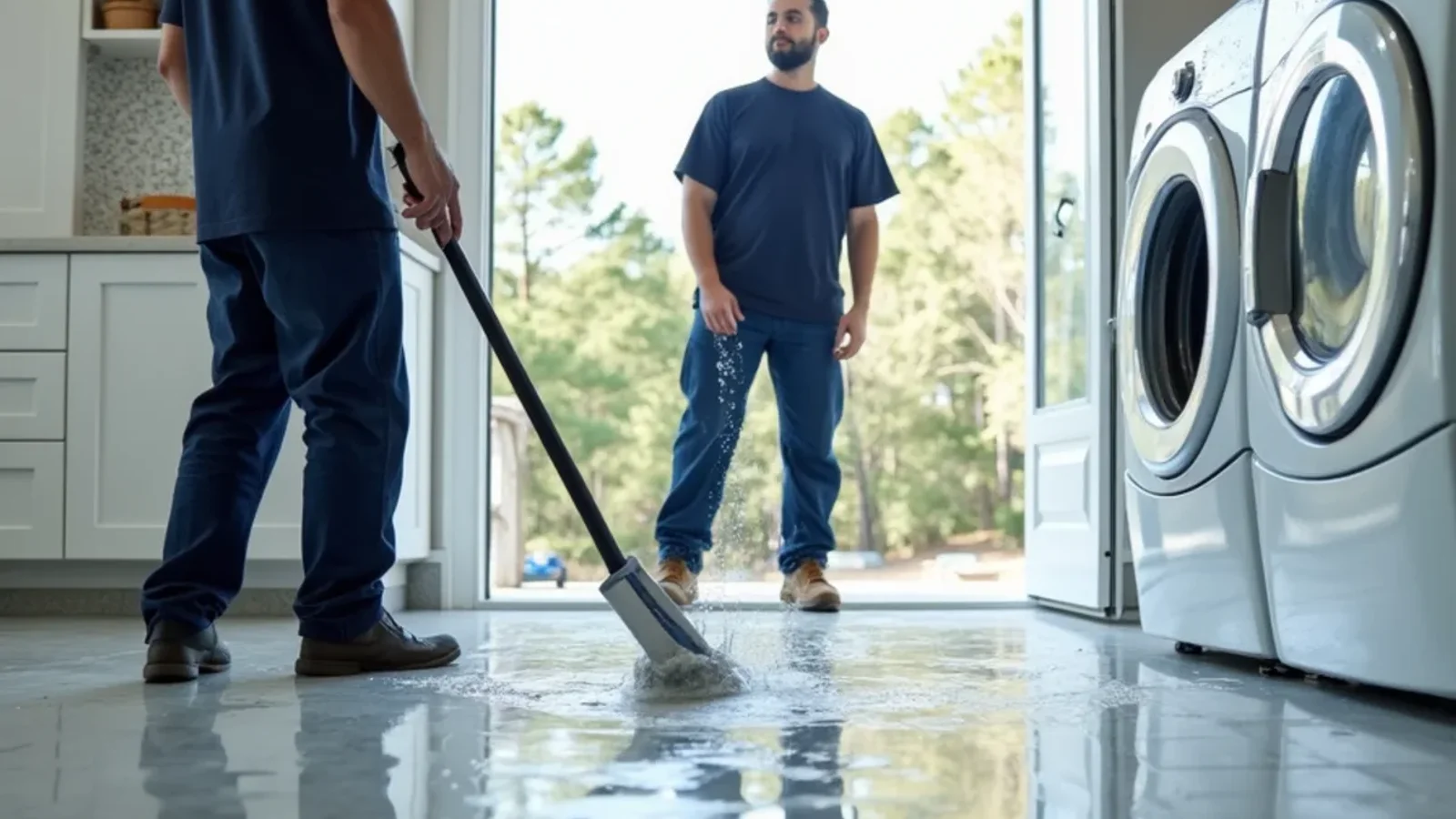
In Metro Atlanta’s humid subtropical climate, moisture is the single greatest threat to residential flooring investments. Uninsulated concrete slab foundations emit ground vapor, seasonal thunderstorms drive moisture into daylight basements, and appliance leaks quickly destroy standard wood or laminate flooring. Homeowners frequently confuse "water-resistant" marketing claims with true "waterproof" engineering, only to suffer buckled floors when water pools for more than a few hours.
True waterproof flooring performance requires an integrated system: an inherently non-porous plank core, airtight tongue-and-groove locking joints, a certified substrate vapor barrier, and sealed perimeter expansion gaps. At Diamond Epoxy Pros, our CTM-certified mechanics design and install total waterproof assemblies that withstand standing spills, pet accidents, and subfloor hydrostatic pressure without swelling, peeling, or cultivating mold.
Complete Waterproof Flooring Installation Scope
Our waterproof flooring installation service provides end-to-end moisture defense tailored to high-risk wet zones throughout your Atlanta property. We handle every technical detail in-house without third-party subcontractors:
- Pre-installation concrete slab relative humidity (RH) testing using Wagner in-situ probes and Delmhorst pinless meters
- Subfloor leveling, joint flattening, and high-spot diamond grinding to ensure flawless joint engagement and prevent seam deflection
- Application of 100% continuous vapor retarder membranes and moisture-mitigating primers engineered for below-grade concrete slabs
- Supply and precision installation of 100% waterproof stone polymer composite (SPC) rigid-core planks with dense limestone cores
- Installation of commercial porcelain and ceramic tile using waterproof uncoupling membranes (Schluter-DITRA system)
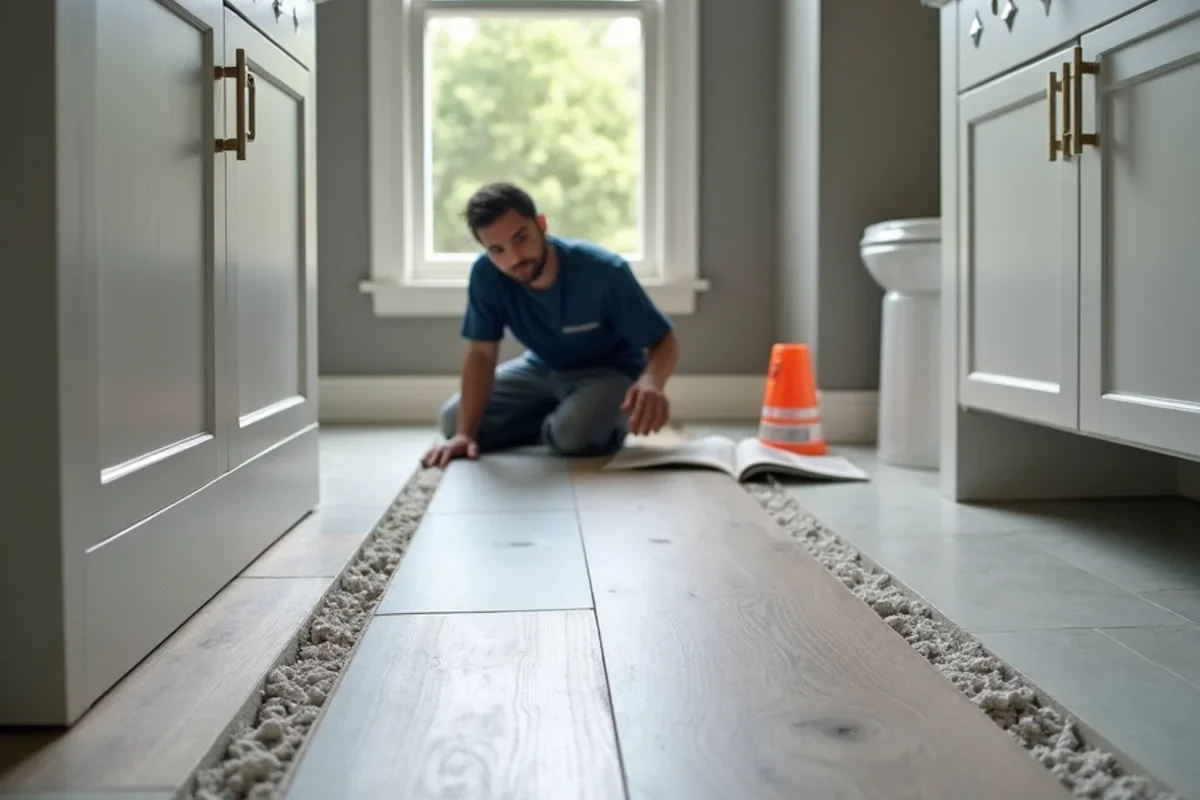
- Perimeter expansion waterproofing utilizing closed-cell foam backer rods and 100% mildew-resistant silicone sealants
- Custom waterproof finish carpentry including 100% PVC waterproof quarter-round, flush stair nosings, and watertight threshold transitions
Common Reasons Atlanta Homes Require 100% Waterproof Flooring
Water intrusion can originate from plumbing failures above or hydrostatic soil moisture from below. If your Atlanta residence experiences any of the following moisture challenges, investing in true waterproof flooring is essential:
- Daylight and walkout basement dampness: Concrete slabs built into Georgia red clay hillsides in Sandy Springs, Mableton, and North Druid Hills experience continuous moisture vapor migration that ruins organic timber floors.
- Kitchen plumbing and appliance leaks: Dishwasher supply lines, refrigerator ice-maker valves, and sink sprayers are among the most frequent sources of catastrophic home water damage; waterproof floors survive complete submersion.
- Bathroom shower overspray and high steam: Bathrooms subject floors to standing puddles and intense steam cycling; waterproof rigid core and porcelain tile will never warp, rot, or absorb mildew odors.
- Laundry and mudroom splash zones: High-capacity washing machine hoses and laundry tubs can overflow unexpectedly, while mudrooms endure wet shoes, dripping umbrellas, and muddy pet paws.
- Active indoor pets and house-training: Pet urine contains acidic salts that permanently stain and swell wood fiber; non-porous waterproof surfaces allow complete sanitization with zero odor retention.
Get a Free On-Site Flooring Consultation
Speak directly with Pedro and the Diamond Epoxy Pros crew. We inspect your subfloor or concrete slab, test moisture levels, and provide a clear, itemized quote in writing.
- 5★ on Google (22 reviews)
- Fully Insured
- Free Written Estimates
- Lifetime Delamination Warranty
- Employees Only (No Subcontractors)
- Serving Metro Atlanta since 2023
Waterproof Flooring Systems Compared
Not all waterproof flooring materials function the same way under real-world household conditions. The performance comparison table below details how various waterproof flooring systems perform across Metro Atlanta properties:
Waterproof Flooring Material & Performance Comparison
| Flooring System | Core Composition | Water Submersion Tolerance | Subfloor Vapor Protection | Best Atlanta Application |
|---|---|---|---|---|
| Rigid Core SPC Vinyl | 60-70% Crushed Limestone + PVC | 100% Impervious (Zero swell after 72+ hours) | Superior (with 6-mil poly vapor barrier) | Kitchens, basements, laundry rooms, busy living rooms with pets |
| Porcelain Floor Tile | Dense vitrified ceramic clay (< 0.5% absorption) | Completely impervious to liquid and steam | Total barrier when installed over uncoupling membrane | Master bathrooms, walk-in showers, high-splash laundry rooms |
| Polyaspartic / Epoxy Coatings | Seamless 100% solids polymer coating | 100% Seamless chemical & moisture barrier | Hermetic seal directly bonded to concrete substrate | Basement slabs, garage workshops, utility mechanical rooms |
| Water-Resistant Laminate | High-density wood fiber with wax edge coating | Temporary resistance (Swells if wet over 24 hours) | Moderate; susceptible to subfloor moisture vapor | Dry formal living rooms, dining rooms, upper-level bedrooms |
Our 6-Step Engineered Waterproof Installation Process
A floor plank may be waterproof, but if the installation permits water to bypass edges and pool beneath the planks, your subfloor will cultivate black mold and wood rot. Pedro and Marco follow this stringent six-step waterproof protocol on every project:
- 1
Subfloor Moisture & Vapor Pressure Diagnostics
We measure subfloor relative humidity using Wagner in-situ probes and verify moisture vapor emission rates (MVER) to ensure the concrete slab is chemically ready for installation.
- 2
Subfloor Leveling & Diamond Grinding
Using planetary diamond grinders connected to HEPA vacuums, we eliminate humps and fill depressions with polymer-modified cement to guarantee subfloor flatness within 3/16 inch across 10 feet.
- 3
Continuous Vapor Barrier Underlayment
Over concrete slabs, we lay down a continuous 6-mil polyethylene moisture retarder, overlapping seams by 8 inches and sealing joints with moisture-resistant vapor tape.
- 4
Precision Drop-Lock Plank Laying
Planks are locked together using dead-blow mallets and specialized tapping blocks to achieve an airtight, leak-resistant seam seal while maintaining a 1/4-inch to 3/8-inch perimeter expansion gap.
- 5
Perimeter Waterproof Dam & Silicone Sealing
In kitchens, bathrooms, and laundry rooms, we install closed-cell foam backer rods in perimeter expansion gaps and inject 100% mildew-resistant silicone to prevent spills from running under the floor.
- 6
Watertight Transition Carpentry & Final Inspection
We install waterproof PVC shoe moldings and seamless transition profiles at all doorways, concluding with a comprehensive quality walkthrough with owner Pedro.
Cost Factors for Waterproof Flooring in Atlanta
Every waterproof flooring project involves distinct moisture risks and architectural layouts. Rather than providing generic estimates, Diamond Epoxy Pros evaluates several key project variables during your free on-site consultation:
- Moisture Exposure Level: Standard dry living areas require simple floating installation, while bathrooms, basements, and laundry rooms require perimeter backer rod silicone seals and continuous vapor barriers.
- Subfloor Leveling & Repair: Concrete slabs featuring severe height variations or old cracked ceramic tile requiring diamond grinding or self-leveling cementitious pours will influence prep labor.
- Core Material & Wear Layer Grade: Premium 20-mil to 30-mil rigid-core SPC with ceramic-bead surface fortification carries a higher initial investment than 12-mil builder-grade products but offers double the lifespan.
- Plumbing Disconnect & Appliance Moving: Moving heavy washing machines, dryers, dishwashers, and toilets during floor installation requires careful coordination.
- Room Perimeter & Obstacle Count: Intricate bathrooms featuring toilet cutouts, vanity toe-kicks, shower curbs, and radiator pipes require meticulous hand-cutting and sealing.
Georgia Building Codes & ASTM Moisture Compliance
In Georgia, residential flooring installations must satisfy building performance standards governed by the Georgia Secretary of State residential contractor licensing board and the 2018 International Residential Code (IRC). Section R307 of the IRC mandates that flooring installed in bathrooms, laundry rooms, and kitchens must provide a durable, smooth, non-absorbent, water-resistant surface.
Our installation crews strictly adhere to ASTM F2170 relative humidity testing protocols for concrete subfloors and ASTM F710 surface preparation specifications. We also comply with Atlanta condominium acoustic bylaws, providing certified Impact Insulation Class (IIC 50+) documentation so your waterproof flooring passes HOA architectural reviews effortlessly.
Why Metro Atlanta Chooses Diamond Epoxy Pros for Waterproof Flooring
Diamond Epoxy Pros is an owner-operated local specialty flooring contractor that refuses to compromise on substrate mechanics or moisture engineering. Business owner Pedro and lead installer Marco manage every waterproof flooring project directly on-site. Backed by a rigorous 1,000-hour commercial apprenticeship and formal CTM surface mechanics certification, our crew brings commercial-grade moisture defense to residential homes.
We never farm out projects to unsupervised third-party subcontractors or day laborers. We test slab relative humidity before installation, seal all wet-room perimeter joints, and back our workmanship with an ironclad lifetime warranty against joint failure and installation delamination. With 22 verified 5.0-star Google reviews and clear direct communication, you receive bulletproof water defense for your home.
Waterproof Flooring — Frequently Asked Questions
- Stone polymer composite (SPC) rigid-core vinyl, porcelain tile, and seamless epoxy coatings are 100% waterproof because their core materials are entirely non-porous and contain zero organic fibers. Water-resistant laminate and engineered wood contain wood pulp cores that will swell and buckle if water stands for more than 24 hours.