
Water Under Your LVP? Signs, Risks and Fixes
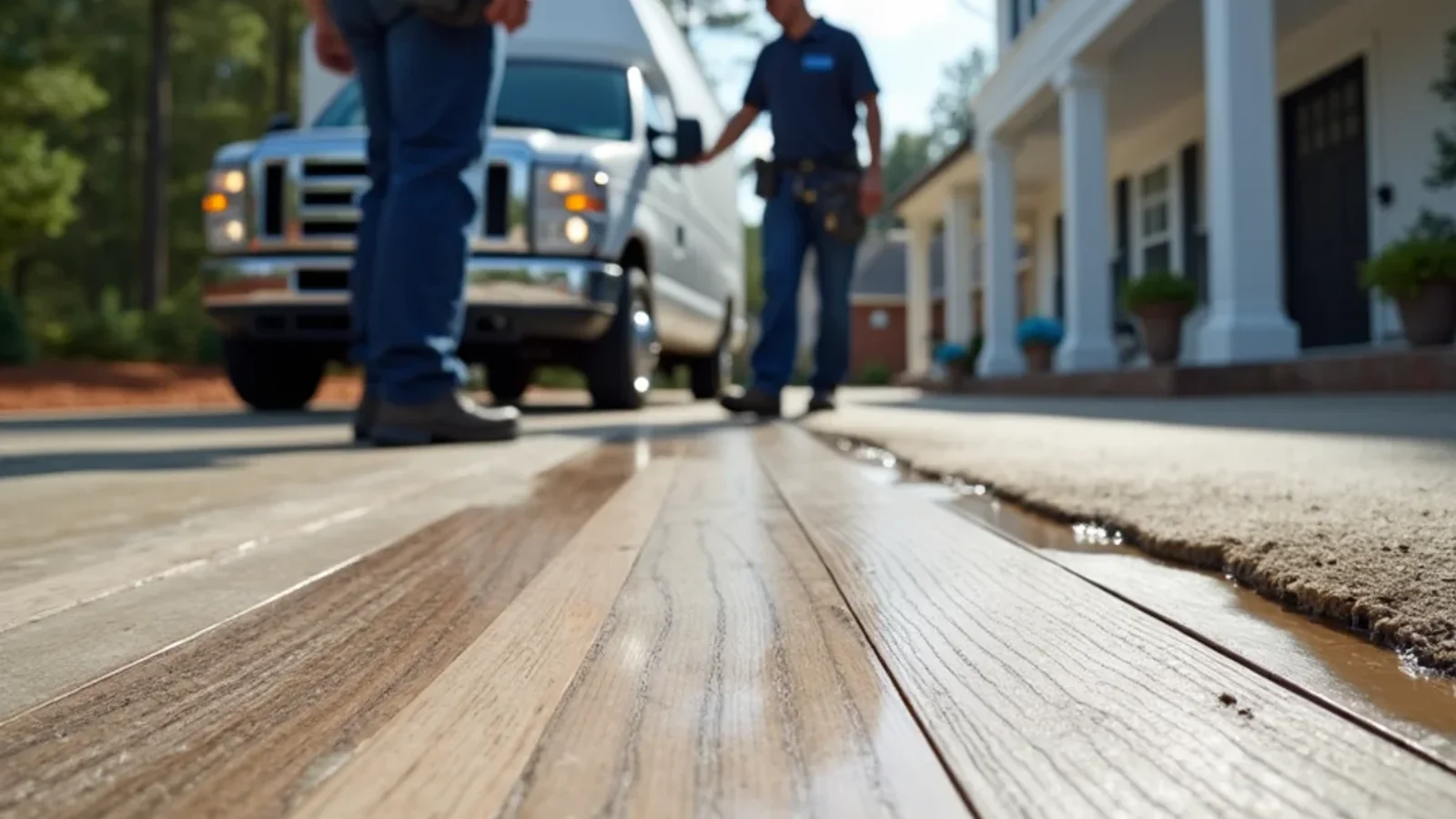
The single most pervasive marketing myth in modern residential remodeling is that "waterproof flooring makes a waterproof room." While Stone Polymer Composite (SPC) and Wood Plastic Composite (WPC) luxury vinyl planks are chemically impervious to liquid and will never cup or rot from moisture, the floating floor assembly itself is not a hermetic basin. When an appliance line leaks, a toilet overflows, or basement concrete emits heavy vapor, water slips between micro-bevel click seams and perimeter expansion gaps, becoming trapped underneath.
Because luxury vinyl flooring acts as a non-porous vapor barrier, water pooled beneath it cannot evaporate upward into the room. Trapped against plywood, OSB, or a cold concrete slab, it transforms into an enclosed incubator for toxic mold, subfloor dry rot, and pungent odors. Understanding the warning signs of trapped moisture and initiating surgical remediation prevents costly structural reconstruction.
Get a Free On-Site Flooring Consultation
Speak directly with Pedro and the Diamond Epoxy Pros crew. We inspect your subfloor or concrete slab, test moisture levels, and provide a clear, itemized quote in writing.
- 5★ on Google (22 reviews)
- Fully Insured
- Free Written Estimates
- Lifetime Delamination Warranty
- Employees Only (No Subcontractors)
- Serving Metro Atlanta since 2023
How Water Gets Trapped Under "Waterproof" Luxury Vinyl Planks
The Anatomy of Click-Lock Seams and Perimeter Gaps
Modern click-lock floating LVP utilizes precision-milled tongues and grooves (such as Uniclic, Valinge 2G/5G, or I4F drop-lock profiles). While these mechanical joints lock planks tightly in tension, they lack elastomeric gaskets or chemical seals. Standing surface water resting along seams for even 15 to 30 minutes penetrates microscopic joint tolerances via capillary pressure. Once liquid passes the wear layer, it pools in the underlying acoustic pad or subfloor.
Furthermore, standard floating floor installations require a 1/4-inch to 3/8-inch expansion gap around all room perimeters, door jambs, and cabinetry to accommodate seasonal thermal expansion. Baseboards and quarter-round shoe moldings cover these gaps aesthetically but offer zero water resistance. Any spill, pet accident, or overflowing fixture that reaches the wall flows directly over the edge and cascades beneath the flooring assembly.
Common Water Intrusion Culprits Across Metro Atlanta
In homes across Fulton, Cobb, and DeKalb counties, trapped subfloor moisture under vinyl planks originates from three primary mechanisms:
- Appliance Pressurized Supply Failures: Pinhole punctures in braided stainless-steel refrigerator ice-maker lines, leaking dishwasher solenoid valves, and washing machine supply ruptures. Because these leaks often run behind cabinetry, thousands of gallons travel under the LVP before surfacing.
- Plumbing Fixture Overflow & Wax Ring Breakdown: Failed toilet wax rings on upper-level bathrooms allow wastewater to track along joist bays and leak into downstairs ceilings or seep under adjoining hallway vinyl.
- Subterranean Slab Moisture Vapor Emission: In below-grade daylight basements or slab-on-grade homes built over Georgia red clay, rising groundwater tables exert upward hydrostatic vapor pressure. If installed without a continuous 6-mil poly vapor barrier or moisture-mitigation epoxy primer, concrete vapor condenses into liquid water droplets against the cool underside of the vinyl planks.
4 Critical Signs of Trapped Moisture Beneath LVP
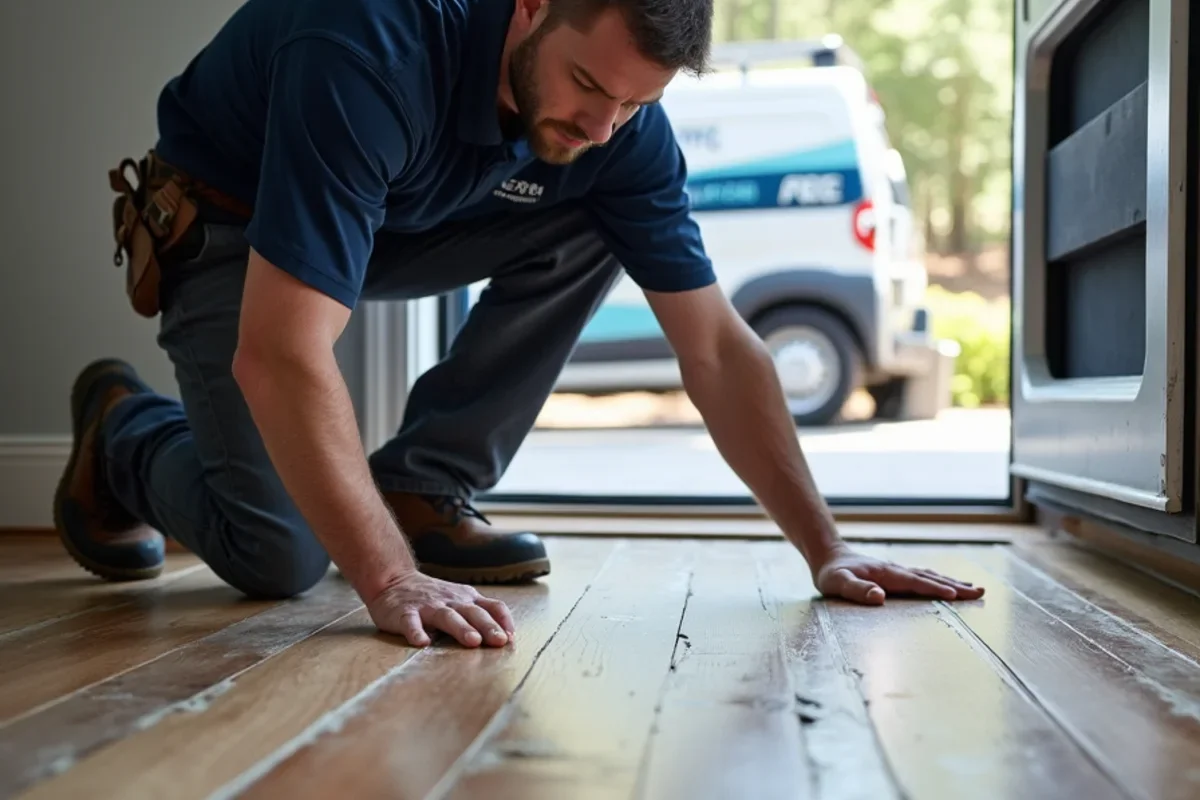
Because luxury vinyl planks do not visibly warp or buckle like hardwood, homeowners often live over saturated subfloors for weeks without noticing. Identifying the subtle physical cues of sub-surface moisture is vital to preventing catastrophic mold colonization.
The Squish and Joint Seepage Test
The most definitive tactile indicator of trapped subfloor water occurs when stepping firmly on plank joints. Saturated underlayment compresses under body weight, pressurizing the trapped water and forcing liquid droplets to bubble or ooze upward through the click-lock seams. If wiping the joint dry and stepping on it again produces fresh water bubbles, liquid is actively pooling beneath the planks.
Spongy Deflection, Hollow Sounds, and Musty Microbial Odors
Other unmistakable warning signs include:
- Spongy Floor Deflection: Floating LVP should feel firm and stable underfoot. When the pre-attached IXPE (irradiated cross-linked polyethylene) or EVA foam pad becomes waterlogged, the floor feels squishy, springy, or noticeably hollow when walked upon.
- Persistent Sour or Earthy Odors: A damp, musty stench resembling wet laundry or decaying organic earth that lingers despite surface cleaning with enzymatic soaps or bleach mops. The odor emanates from mold spores exhausting microbial volatile organic compounds (MVOCs) through perimeter baseboard gaps.
- Dark Discoloration Along Baseboards: Trapped water wicks upward into adjacent porous drywall and MDF baseboards through capillary action, creating bubbled paint, dark water stains, or visible fuzz mold along the floor-to-wall juncture.
Subfloor Destruction Risks: Plywood, OSB, and Concrete Slabs
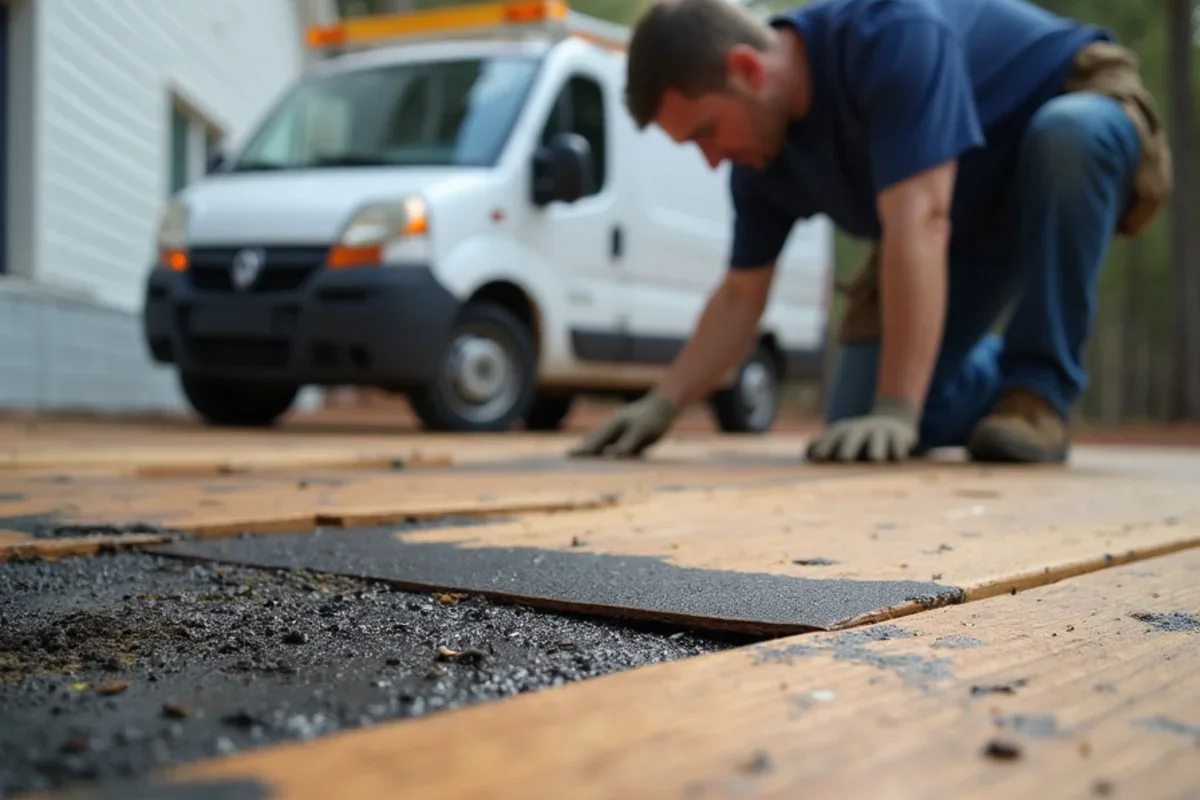
The structural damage caused by trapped moisture depends entirely on the underlying subfloor material. While concrete slabs handle moisture better than wood, neither substrate can tolerate stagnant water trapped beneath an airtight vinyl barrier.
OSB Edge Swelling vs. Plywood Delamination in Crawlspaces
Oriented Strand Board (OSB) is the most vulnerable subfloor material found in modern Atlanta suburban homes. OSB consists of compressed wood strands bonded with wax and resin adhesives. When water pools against OSB under vinyl, the cut edges of the panels absorb moisture ravenously, swelling permanently by up to 25% to 35% in thickness.
Unlike solid wood, swollen OSB edges never shrink back to their original profile once dried, creating permanent ridges under the floor that telegraph through thin vinyl planks and snap locking tongues. Traditional 3/4-inch CDX plywood subflooring is slightly more resilient, but prolonged saturation causes adhesive hydrolysis, separating the veneer plies, loosening ring-shank subfloor nails, and generating chronic floor squeaks.
Concrete Slab Efflorescence and Pad Degradation
When water traps against a poured concrete slab, moisture draws soluble calcium hydroxide salts from the concrete to the surface. As vapor escapes through joints, these minerals crystallize into white, abrasive efflorescence powder. This alkaline deposit degrades the adhesive backing on attached acoustic pads and grinds against the underside of planks, causing gritty crunching noises whenever anyone walks across the room.
Subfloor Moisture Vulnerability Matrix Under Vinyl Planks
| Subfloor Substrate | Primary Water Reaction | Time to Irreversible Harm | Mold Colonization Risk | Standard Remediation Protocol |
|---|---|---|---|---|
| OSB (Oriented Strand Board) | Permanent edge swelling, flake separation, structural softening | 48 to 72 hours | Extremely High (Glues feed mold) | Extract LVP, sand or cut out swollen OSB panels, install new tongue-and-groove decking |
| CDX Plywood Subfloor | Veneer ply delamination, subfloor nail pull, joist squeaks | 5 to 7 days | High (Spore growth in veneer plies) | Unclick planks, treat wood with botanical disinfectant, sand ridges, dry below 12% moisture |
| Concrete Slab (Below Grade) | Alkaline efflorescence, foam pad rot, adhesive chalking | 10 to 14 days | Moderate (Mold feeds on dust/pad) | Unclick LVP, scrub efflorescence salts, dry with LGR dehumidifier, seal with moisture primer |
| Ceramic Tile Underlayment | Grout line discoloration, foul odor accumulation | 14 to 21 days | Low to Moderate | Remove planks, deep-clean tile and grout lines with virucidal wash, dry surface, reinstall |
The Step-by-Step LVP Extraction, Sanitization, and Reinstallation Protocol
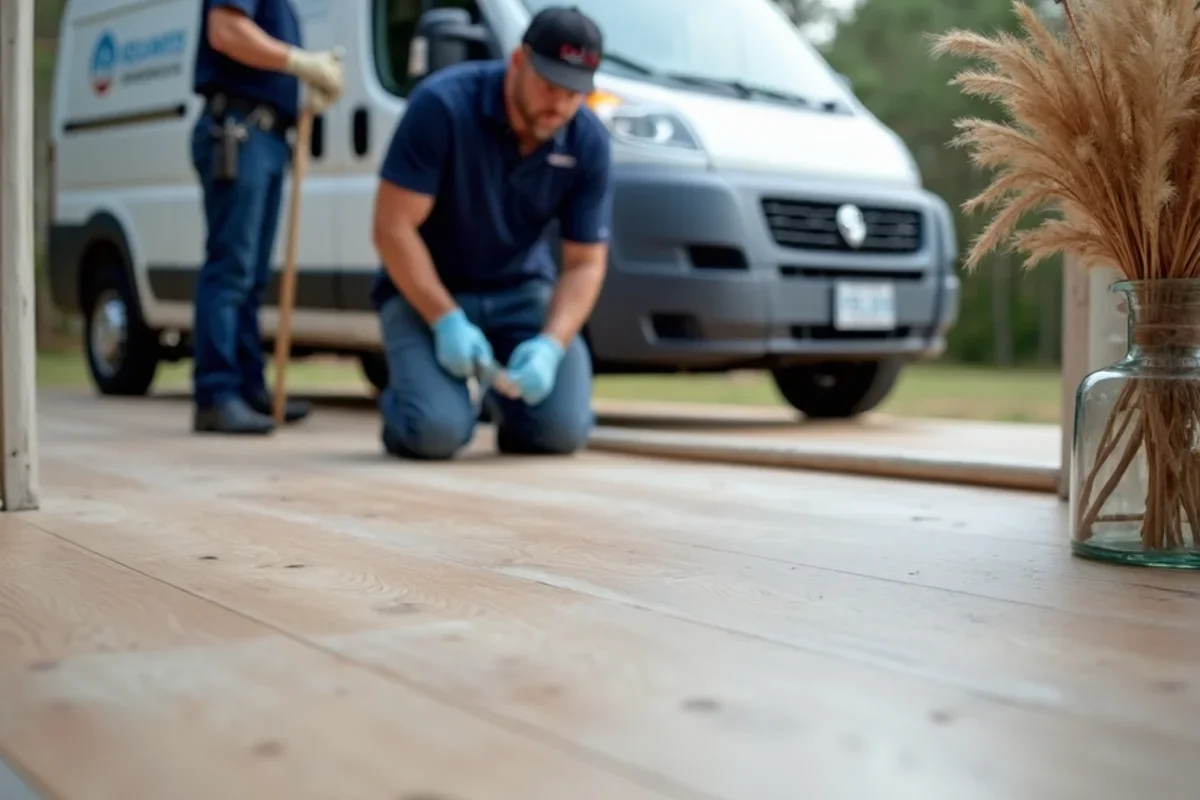
The greatest advantage of rigid core SPC vinyl plank flooring is salvageability. Unlike laminate or engineered wood that must be hauled to the landfill after water intrusion, SPC vinyl planks can almost always be saved and reinstalled if disassembled systematically before locking profiles break.
Surgical Perimeter Trim Removal and Sequential Plank Numbering
Begin by carefully detaching baseboards and shoe moldings using a wide-blade trim puller and pry bar to avoid gouging drywall. Identify the last row of planks installed (the row opposite the starting tongue-forward wall). Using a sharp pry bar and painter’s tape, lift planks along the short joint at a 20-to-30-degree angle to disengage the drop-lock mechanism without snapping the delicate tongue.
As each plank is removed, write its row and column coordinates on the back with chalk (e.g., "R4-C3"). Stacking planks in exact installation order ensures that end joints reassemble seamlessly without altering pattern stagger or re-cutting perimeter lengths during reinstallation.
Subfloor Decontamination and LGR Psychrometric Drying
- 1
Decontamination Wash
Spray raw plywood, OSB, or concrete with an EPA-registered hospital-grade botanical disinfectant (such as Benefect Decon 30). Allow 10 minutes of dwell time to kill active mold spores and neutralize microbial odors.
- 2
Mechanical Extraction & Air Movement
Extract standing surface water with a wet-dry vac. Position centrifugal air movers blowing across the subfloor at 45-degree angles to sweep away the moisture boundary layer.
- 3
LGR Dehumidification
Run commercial Low-Grain Refrigerant dehumidifiers continuously until wood moisture content drops below 12% (tested with a calibrated pin moisture meter) or concrete slab internal relative humidity reaches safe baseline.
Plank Sanitization and Locking Profile Inspection
While the subfloor dries, clean the unclicked vinyl planks. Wash the top wear layer and the attached IXPE foam pad with warm water and antimicrobial soap. Inspect the long and short locking tongues of every plank under bright work lights. Discard any planks with chipped, cracked, or missing locking teeth, as damaged tongues will lift and separate once reinstalled under foot traffic.
Prevention: Waterproof Perimeter Sealing and Moisture Barriers
Perimeter Backer Rod and Silicone Gasket Detailing
When reinstalling vinyl flooring in moisture-prone rooms like kitchens, bathrooms, laundry rooms, and basements, upgrade the perimeter detailing. Standard practice leaves the 1/4-inch expansion gap wide open beneath baseboards. In professional installations, insert closed-cell polyethylene foam backer rod into the perimeter gap, then tool a continuous bead of 100% mold-resistant silicone sealant over the backer rod before nailing baseboards.
This elastomeric gasket allows the floor to expand and contract freely while creating an impermeable tub-style barrier that blocks surface spills, pet messes, and appliance overflows from ever spilling over the edges into the subfloor.
Vapor Barrier Underlayment Selection for Concrete Slabs
For installations over concrete slabs, always lay a continuous 6-mil virgin polyethylene moisture barrier sheet with seams overlapped by 8 inches and taped with moisture-rated acrylic seam tape. In high-water-table basements, applying a 100% solids epoxy moisture mitigation primer directly to the concrete slab before underlayment provides permanent protection against hydrostatic vapor blisters.
Frequently Asked Questions
- No. Luxury vinyl planks are made of dense synthetic polymers (limestone and PVC) that act as an impermeable vapor barrier. Trapped water beneath the planks cannot evaporate upward into room air. Left alone, the trapped moisture sits stagnant against the subfloor, rotting plywood or OSB and creating toxic mold colonies within 48 to 72 hours. Planks must be unclicked to expose the subfloor for mechanical dehumidification.