
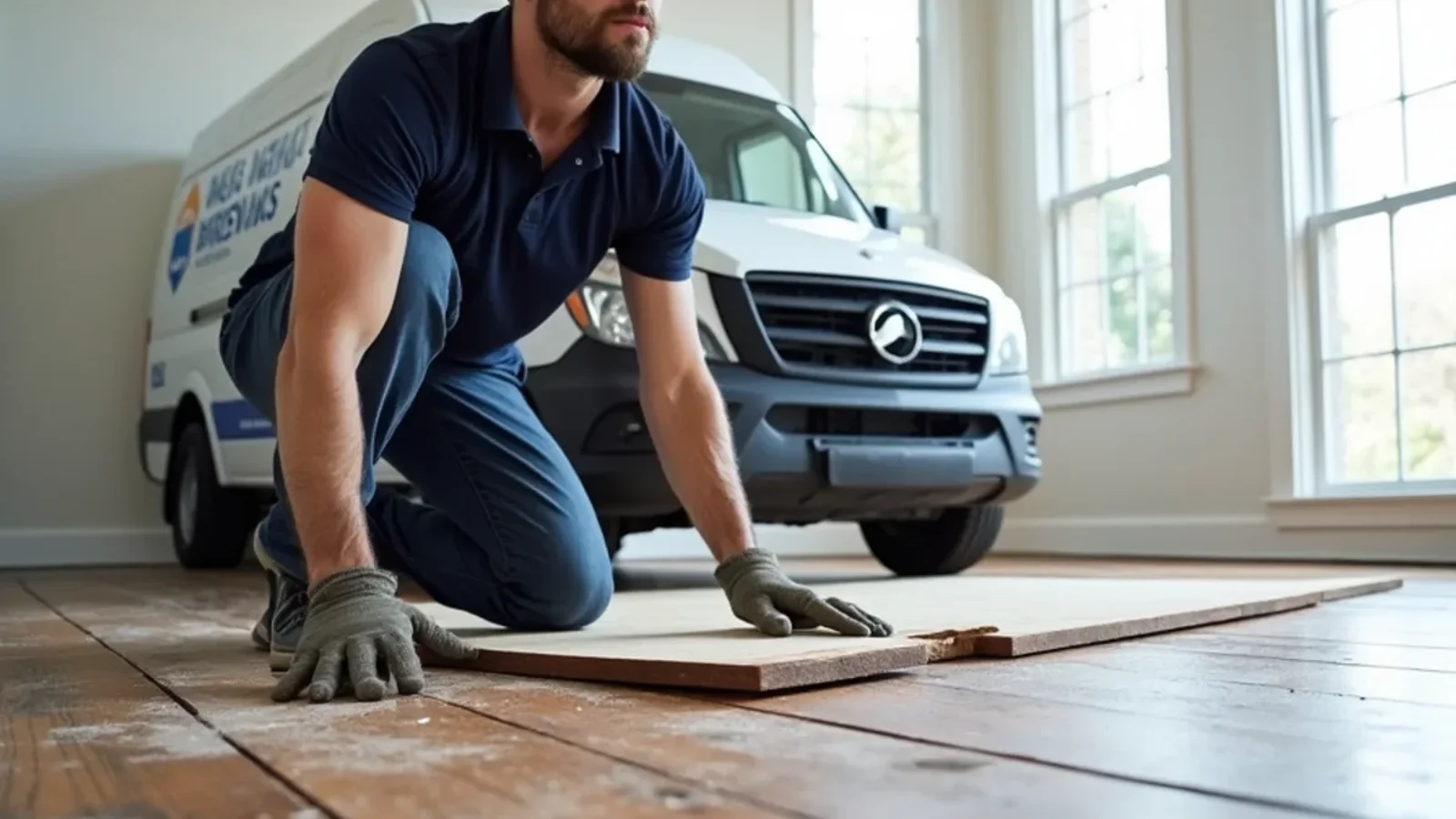
When indoor water disasters strike—whether from a ruptured water heater in a finished basement, a frozen pipe burst in an attic during an Atlanta winter hard freeze, or an overflowing dishwasher line—complete replacement is vital to protect structural framing and eliminate mold. Porous materials like laminate, engineered wood with soaked MDF cores, and waterlogged carpeting deteriorate rapidly, trapping moisture against subfloor framing.
At Diamond Epoxy Pros, founders Pedro and Marco manage water-damaged floor demolition, substrate sterilization, structural subfloor reconstruction, and precision flooring replacement across metro Atlanta. Using Delmhorst pin-depth moisture meters and FLIR thermal imaging, we verify structural subfloor dryness before seamlessly lacing in matching hardwoods or installing commercial waterproof SPC luxury vinyl planks that blend into adjacent rooms.
Get a Free On-Site Flooring Consultation
Speak directly with Pedro and the Diamond Epoxy Pros crew. We inspect your subfloor or concrete slab, test moisture levels, and provide a clear, itemized quote in writing.
- 5★ on Google (22 reviews)
- Fully Insured
- Free Written Estimates
- Lifetime Delamination Warranty
- Employees Only (No Subcontractors)
- Serving Metro Atlanta since 2023
Comprehensive Scope of Water-Damaged Floor Removal & Replacement
Replacing flood-damaged flooring requires meticulous dust containment, surgical demolition, and master carpentry to preserve healthy structural framing and match adjoining living areas. Our turnkey replacement scope encompasses:
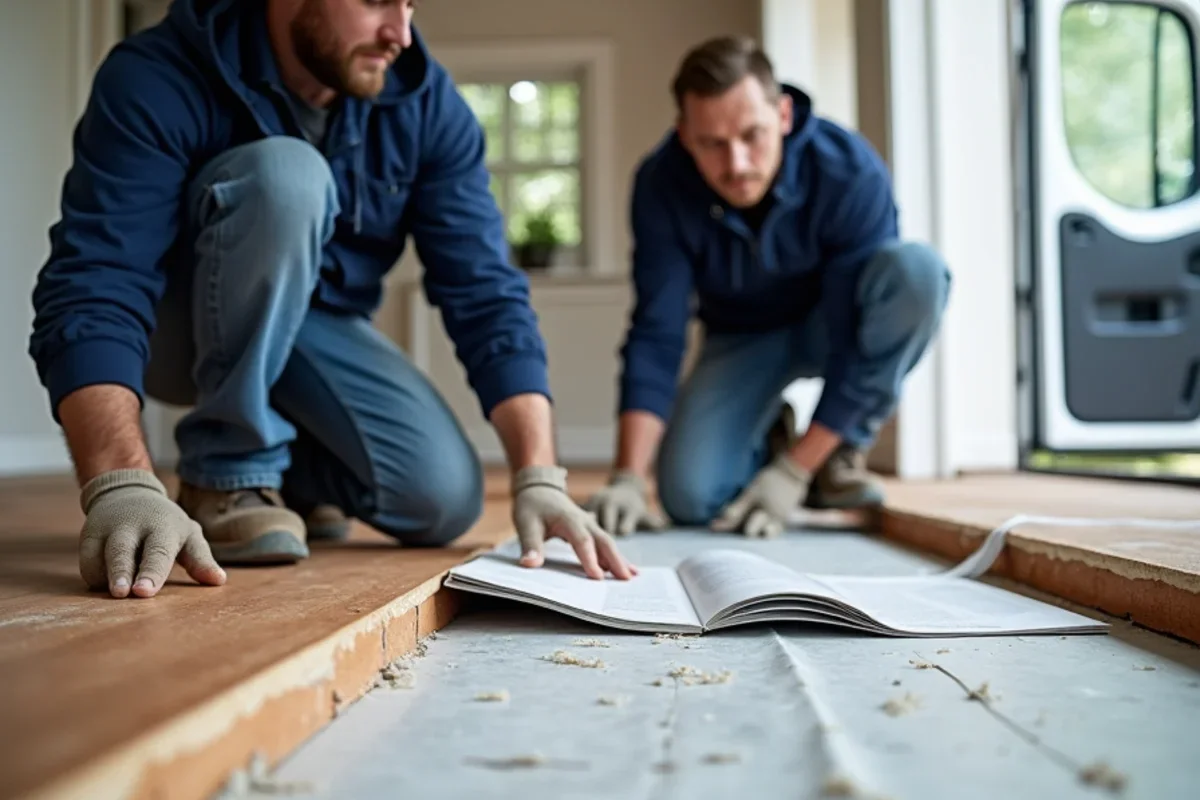
- Controlled Demolition & Dust Containment: Removing ruined hardwood, swollen laminate, or warped vinyl while sealing doorways with 6-mil poly containment barriers and running HEPA air scrubbers to isolate mold spores and particulates.
- Subfloor Moisture Auditing & Deflection Testing: Mapping moisture content across plywood subfloors and oriented strand board (OSB) with Delmhorst resistance meters to identify delaminated, sagging, or water-rotted sheathing.
- Joist Sistering & Framing Reconstruction: Reinforcing compromised floor joists with structural lumber and installing new 3/4-inch CDX plywood subflooring fastened with ring-shank nails and polyurethane construction adhesive.
- Hospital-Grade Antimicrobial Decontamination: Treating exposed joists, concrete slabs, and subfloor sheathing with EPA-registered botanical antimicrobials to eradicate active fungal spores and eliminate foul mildew odors.
- Artisan Hardwood Lacing & Species Matching: Hand-cutting damaged floorboards back to staggered joist seams and weaving new tongue-and-groove solid oak or maple planks into undamaged adjoining rooms for an invisible repair.
- High-Performance Moisture Barriers & Underlayments: Installing ASTM-compliant moisture vapor barriers, uncoupling membranes, or acoustic cork underlayments before installing new hardwood, tile, or waterproof SPC luxury vinyl plank.
Common Water Damage Causes & Subfloor Warning Signs in Atlanta
Metro Atlanta’s seasonal temperature swings, clay soil settlement, and aging residential plumbing systems frequently trigger sudden, catastrophic flooring saturation. Homeowners across Fulton, DeKalb, Cobb, and Gwinnett counties commonly experience:
- Winter Arctic Freeze Ruptures: Severe sub-freezing arctic blasts cause uninsulated water supply lines in attics, crawlspaces, and exterior walls to burst, sending hundreds of gallons cascading across hardwood floors and ceilings.
- Appliance Supply Line Blowouts: Aging pressurized flexible braided lines feeding refrigerators, dishwashers, and washing machines rupture silently, pooling water beneath cabinets and flooring before discovery.
- Subfloor Plywood Delamination: Plywood and OSB underlayment exposed to standing water swell along edges and lose internal adhesive bonds, creating soft spongy spots and structural deflection.
- Black Water Tannin Staining: Moisture absorbed by red or white oak reacts chemically with wood tannins and rust from flooring cleats, creating dark gray and pitch-black stains that penetrate too deeply for sanding.
- Musty Mildew Odors Under Planks: Trapped dampness between finished flooring and concrete or wood subfloors fosters active micro-fungal colonies that emit foul volatile organic compounds into indoor living spaces.
Flooring Salvageability & Replacement Decision Matrix
Determining whether saturated flooring can be dried in place or requires immediate replacement depends on material composition, water exposure duration, and subfloor saturation levels:
Material Assessment Matrix: Salvage Potential vs. Mandatory Replacement Following Water Intrusion
| Flooring Material | Water Exposure Limit | Subfloor Impact | Recommended Remediation Action |
|---|---|---|---|
| Solid Oak Hardwood | Up to 24–48 hours clean water | Moderate swelling / surface cupping | Dehumidification mats if caught early; lace-in board replacement and sand/refinish if permanently cupped or stained |
| Engineered Hardwood | Less than 24 hours clean water | High risk of veneer delamination | Tear out ruined planks; reinstall matching engineered wood; sand/refinish only if wear layer is at least 3mm |
| Laminate / Fiberboard Core | Any exposure to standing water | Complete core swelling and joint breakdown | Mandatory 100% replacement of affected room run and saturated foam underlayment down to bare subfloor |
| Rigid Core SPC Vinyl | Impervious to water saturation | Subfloor underneath remains damp | Carefully unclick and salvage planks; dry and sanitize subfloor before re-clicking existing or replacement planks |
| Porcelain & Ceramic Tile | Impervious to water absorption | Saturated mortar bed / subfloor movement | Retain sound tile; remove loose or hollow tiles, rebuild subfloor substrate, and reinstall matching tile |
Master Hardwood Lacing: The Science of Invisible Floor Blending
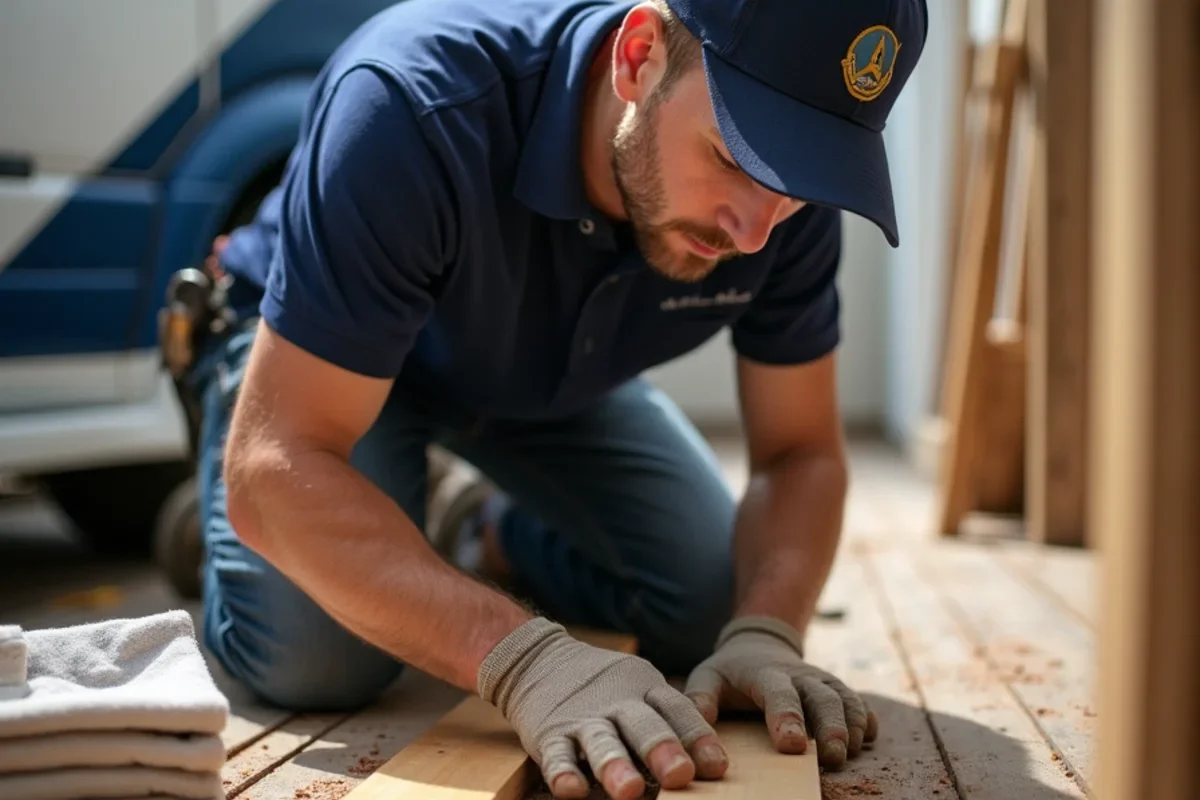
When water destroys half of a hardwood living room or kitchen, subpar contractors often cut an abrupt straight saw line across the room and install an unsightly transition strip, ruining the architectural flow and resale value of your home. At Diamond Epoxy Pros, our master carpenters practice the exacting discipline of hardwood lacing.
We cut out individual water-ruined floorboards along original tongue-and-groove joints, staggering cuts in random 6-inch to 18-inch intervals across adjacent joists. We weave new kiln-dried planks of identical wood species (Northern red oak or Appalachian white oak), grain cut, and milling profile directly into the pattern. Using our Clarke American Sanders and Bona planetary buffers, we sand the entire contiguous expanse to bare wood and apply custom stains, resulting in a continuous, flawless floor plane where the water damage boundary is completely undetectable.
Our 6-Step Water-Damaged Floor Replacement Protocol
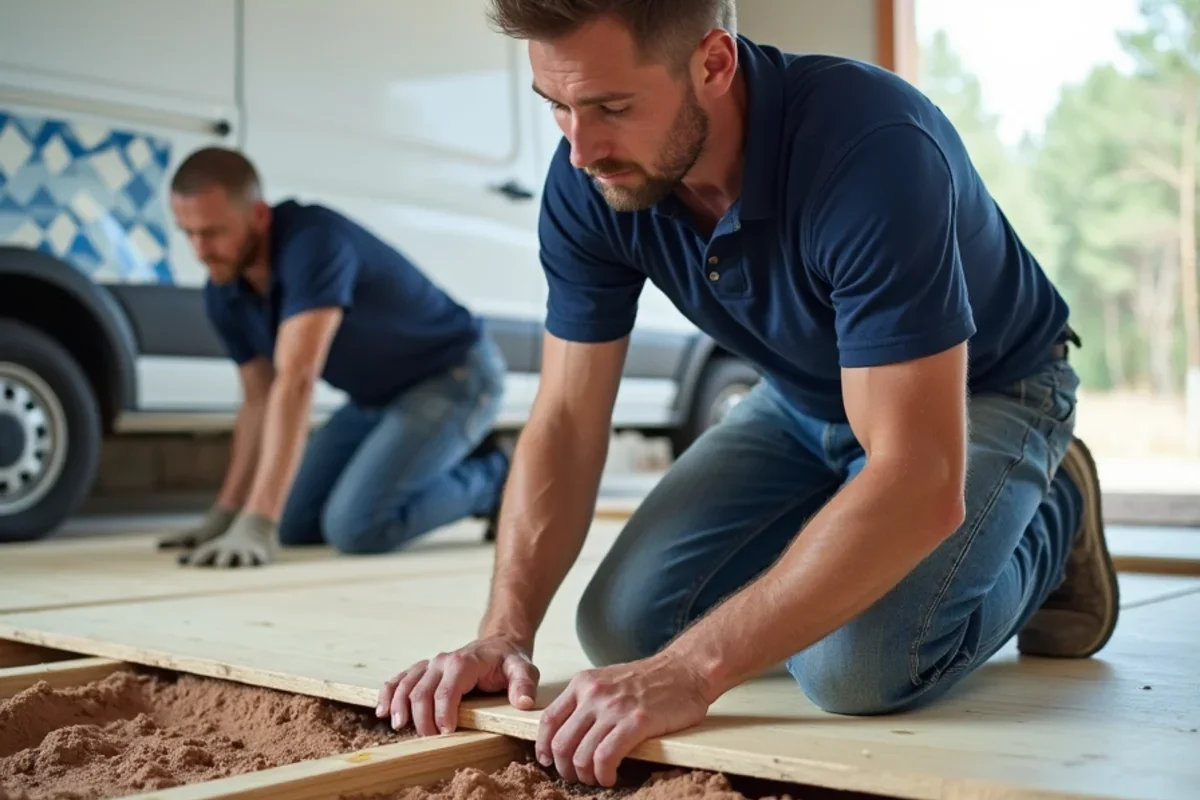
Restoring a water-saturated living space requires disciplined technical execution to guarantee structural safety, mold prevention, and warranty-backed longevity. Pedro and Marco enforce this systematic 6-step protocol on every project:
- 1
Precision Moisture Mapping
Establishing containment barriers with 6-mil poly and HEPA air scrubbers, then mapping moisture boundaries using FLIR thermal cameras and Delmhorst moisture meters before removing water-ruined floorboards.
- 2
Subfloor Demolition & Debris Extraction
Extracting waterlogged underlayments, swollen particleboard, and delaminated plywood down to structural joists, vacuuming all debris with OSHA-compliant HEPA dust extractors.
- 3
Structural Drying & Antimicrobial Fogging
Operating commercial LGR dehumidifiers and high-velocity axial fans until joists dry below 12% moisture content, then applying EPA-registered botanical antimicrobials.
- 4
Joist Sistering & Subfloor Reconstruction
Inspecting joists for rot or deflection, sistering compromised framing with Douglas fir, and fastening new 3/4-inch CDX plywood with polyurethane adhesive and ring-shank screws.
- 5
Substrate Leveling & Vapor Barrier Installation
Verifying subfloor flatness within 3/16-inch over 10 feet, grinding high seams, and installing high-performance ASTM-rated moisture vapor barriers or uncoupling underlayments.
- 6
Master Finish Installation & Blending
Installing replacement hardwood, waterproof SPC luxury vinyl, or designer tile, seamlessly lacing into adjoining rooms and reinstalling primed baseboards and shoe moulding.
Key Factors Influencing Water-Damaged Floor Replacement Costs
Transparent pricing allows property owners and insurance carriers to understand exact project requirements. Core cost variables in metro Atlanta include:
- Square Footage & Demolition Complexity: The physical size of the water loss, access logistics, and presence of built-in kitchen cabinetry or vanities requiring precision undercutting.
- Subfloor & Framing Damage: Minor water intrusions require surface drying, whereas prolonged standing water demands full 3/4-inch plywood replacement and structural floor joist sistering.
- Flooring Material Procurement: Sourcing matching select-grade solid white oak or specialty heart-pine involves different procurement costs than installing commercial 20-mil waterproof SPC vinyl plank.
- Adjoining Room Refinishing: Seamless hardwood lacing requires sanding and refinishing the entire continuous living area or hallway to guarantee consistent sheen and stain coloration.
- Water Category & Mold Triage: Clean water (Category 1) requires standard drying, whereas contaminated water (Category 2 or 3) demands containment barriers, antimicrobial sanitization, and specialized disposal protocols.
Georgia Building Codes, IICRC S500 Standards & Low-VOC Compliance
Diamond Epoxy Pros adheres strictly to the Institute of Inspection, Cleaning and Restoration Certification (IICRC) S500 Standard for Professional Water Damage Restoration. We maintain precise psychrometric drying logs and verify that structural wood substrates reach equilibrium moisture content (under 12% EMC) before installing new floor coverings, eliminating the risk of encapsulated mold growth or subfloor rot.
All framing repairs and subfloor rebuilds comply with the Georgia State Minimum Standard One and Two Family Dwelling Code (IRC) Section R503 for allowable subfloor deflection and span ratings. Diamond Epoxy Pros is a licensed and registered Georgia contractor (Secretary of State #24250262) with $2,000,000 in commercial liability coverage. Every adhesive, leveling compound, and protective finish we utilize satisfies South Coast Air Quality Management District (SCAQMD) Rule 1113 low-VOC standards and EPA Lead-Safe RRP protocols for pre-1978 Atlanta residences.
Why Metro Atlanta Residents Trust Diamond Epoxy Pros for Replacement
Recovering from a burst pipe or flooded home is stressful. When you hire Diamond Epoxy Pros, you work directly with company founders Pedro and Marco, experienced master craftsmen who personally manage moisture testing, framing carpentry, and finish floor installations. We do not dispatch inexperienced day laborers or subcontract your living room to third parties.
Backed by over 15 years of hands-on flooring experience, CTM commercial polymer certifications, and 22 verified 5.0-star Google reviews across metro Atlanta, we deliver transparent communication, fast turnaround, and museum-grade carpentry that turns unexpected disasters into stunning, long-lasting floors.
Verified Customer Reviews for Water-Damaged Floor Replacement
Real feedback from Atlanta homeowners who experienced sudden water leaks and floor replacement:
- “A failed refrigerator supply line flooded our kitchen and ruined the hardwood under our island while we were away for the weekend. Pedro came out immediately, documented the moisture levels for State Farm, and laced in new oak planks once the subfloor was dried. The stain match is 100% invisible—you cannot tell where the damage was. Exceptional craftsmanship!” — Daniel & Karen M., Buckhead / Atlanta, GA
- “When a burst pipe in the guest bathroom ruined our laminate flooring and soaked the subfloor, Diamond Epoxy Pros tore out the water-damaged floor, replaced the rotted plywood, and installed gorgeous waterproof vinyl plank throughout our hallway and bedrooms. Fast, clean, and completely stress-free during a disaster.” — Teresa L., Decatur, GA
Water-Damaged Flooring Replacement Across Metro Atlanta
We provide complete floor removal, subfloor reconstruction, and finish floor replacement across these Atlanta communities:
- Sandy Springs, GA: Burst pipe remediation, subfloor plywood replacement, and hardwood lacing in riverside estates along Powers Ferry Road.
- Brookhaven, GA: Dishwasher leak triage, structural subfloor reconstruction, and waterproof SPC vinyl plank installations near Peachtree Road.
- South Fulton, GA: Water heater flood extraction, joist sistering, and continuous hardwood repairs in Sandtown and Cascade communities.
- Smyrna, GA: Emergency subfloor drying, moisture barrier installation, and hardwood floor lacing near Smyrna Market Village.
- Mableton, GA: Kitchen supply line flood repairs, rotted subfloor sheeting replacement, and luxury vinyl plank installations.
- East Point, GA: Historic bungalow hardwood water damage restoration, heart-pine plank sourcing, and subfloor stabilization near Main Street.
- Decatur, GA: Frozen pipe water damage repair, artisan oak floor lacing, and emergency moisture mapping in Oakhurst.
- Fulton County, GA: Comprehensive water-damaged floor removal, joist reconstruction, and turnkey floor installation across North and South Fulton.
Water-Damaged Floor Replacement — Frequently Asked Questions
- Yes! If the water damage is localized to a section of the room (such as around a leaking dishwasher or water heater), our master carpenters lace in matching replacement boards. We cut out damaged planks in staggered intervals, weave new planks of the identical wood species and grain into the existing floor, and sand and refinish the continuous area so the repair is completely invisible.