
Burst Pipe Under Hardwood? What to Do in the First Hour
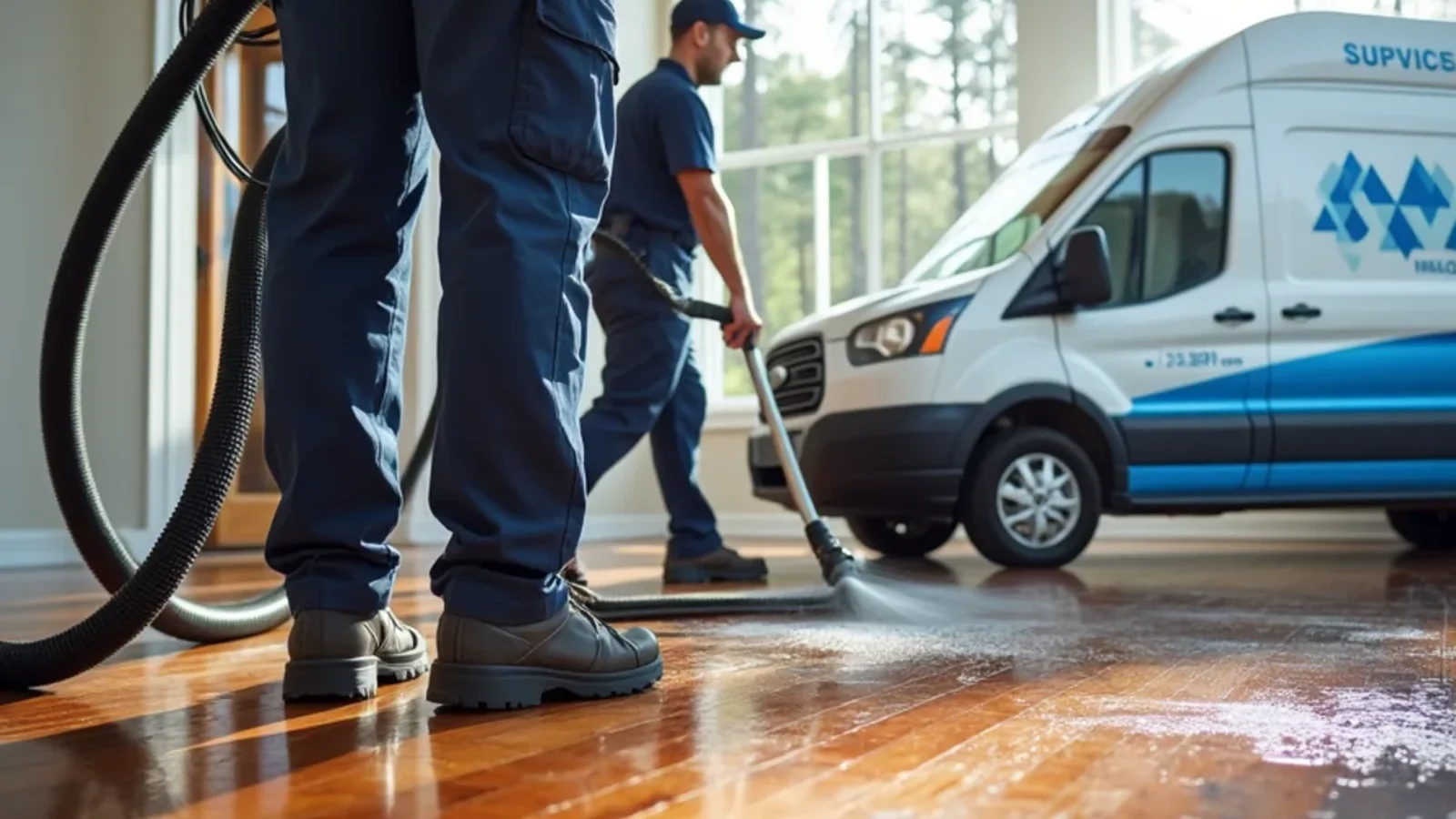
A burst plumbing pipe can discharge anywhere from 400 to more than 1,000 gallons of pressurized water every hour across your finished hardwood floors. In metro Atlanta—where sudden winter polar plunges send temperatures plunging into the single digits—copper supply lines inside exterior walls, PVC lines in unconditioned attics, and PEX fittings in vented crawlspaces frequently freeze, split, and unleash catastrophic flooding when the thaw arrives. What you do in the first sixty minutes determines whether your solid hardwood floors can be salvaged in place or must be completely demolished down to the bare floor joists.
Water moves through a hardwood floor system with astonishing speed. While homeowners frantically towel up surface puddles, thousands of droplets are being drawn downward through microscopic tongue-and-groove plank seams by capillary action. Beneath the floorboards, asphalt-saturated kraft paper or rosin paper traps that standing moisture directly against the plywood, OSB, or diagonal pine subfloor. Within twenty-four hours, the bottom edges of the planks swell, causing classic board cupping; within forty-eight hours, microbial spores germinate into dangerous mold colonies.
Get a Free On-Site Flooring Consultation
Speak directly with Pedro and the Diamond Epoxy Pros crew. We inspect your subfloor or concrete slab, test moisture levels, and provide a clear, itemized quote in writing.
- 5★ on Google (22 reviews)
- Fully Insured
- Free Written Estimates
- Lifetime Delamination Warranty
- Employees Only (No Subcontractors)
- Serving Metro Atlanta since 2023
The 60-Minute Emergency Action Plan: Minute-by-Minute Protocol
When water is actively flowing across your living room or kitchen, panic is your biggest enemy. Following a systematic, minute-by-minute protocol preserves life safety, satisfies homeowners insurance mitigation mandates, and gives your hardwood its highest statistical probability of full recovery.
Minutes 0 to 5: Main Water Valve Shut-Off & System De-Pressurization
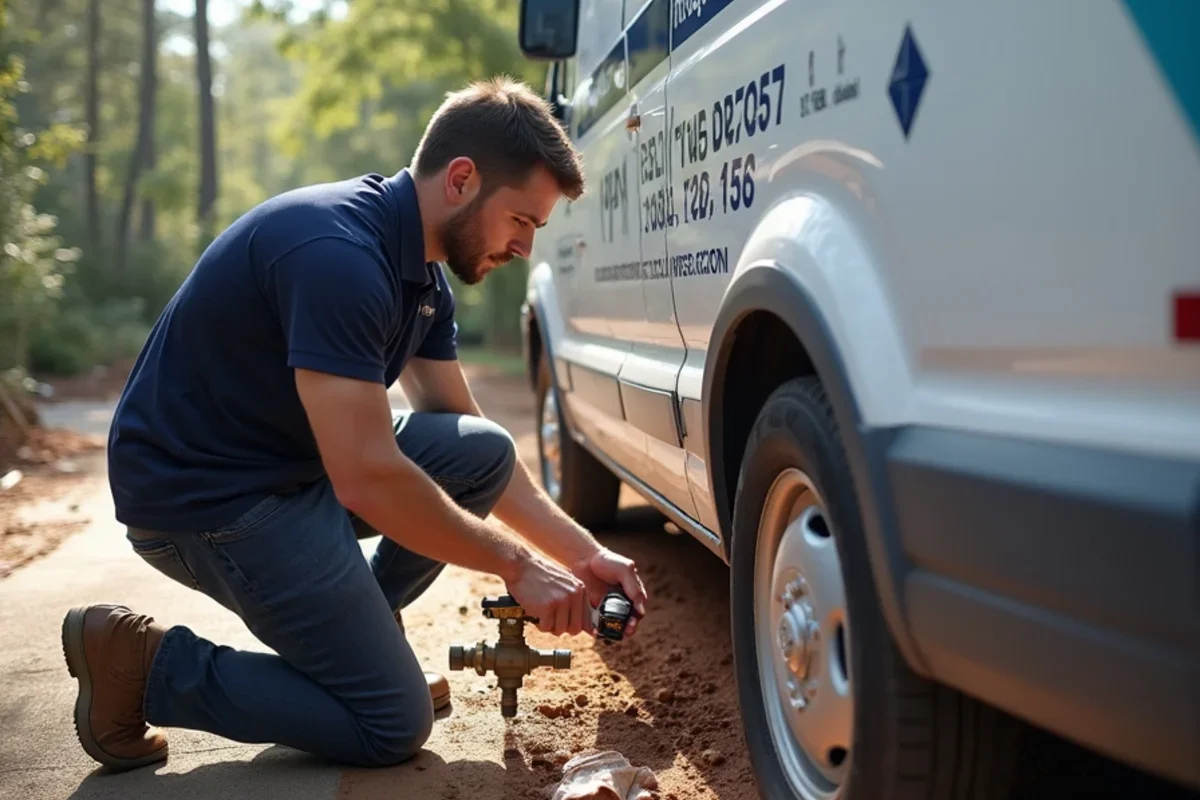
Locating and closing your home’s main water shut-off valve is the single most urgent task. In newer Atlanta suburban homes across Sandy Springs, Alpharetta, and Johns Creek, the main shut-off is typically located in the basement, garage, or near the water heater. It is usually a red or yellow ball-valve lever that requires a quarter-turn perpendicular to the pipe. In older homes or properties on slab foundations, the valve may be located at the municipal curb meter box near the street, requiring a five-sided water meter key or heavy adjustable wrench.
Once the main valve is shut, immediately open an outdoor hose bib or lowest-level basement faucet to bleed residual water pressure from the plumbing lines, diverting water away from the interior leak site.
Minutes 5 to 15: Electrical Hazard Elimination & Safety Triage
Water and electricity create lethal conditions. If water from an attic pipe burst has travelled down interior wall cavities, through light fixtures, or pooled near baseboard outlets and floor electrical plugs, do not step into standing water until power is killed. Walk to your electrical service panel and switch off individual circuit breakers supplying the flooded zones. If the panel itself is wet or unreachable without wading through water, contact Georgia Power or your local utility to shut off power at the meter.
Minutes 15 to 30: Detailed Photographic & Video Documentation for Insurance
Before you extract water or move saturated furnishings, spend ten minutes capturing clear photographic and video evidence. Insurance adjusters require undeniable proof of the water’s origin, initial depth, and migration path. Take wide shots of flooded rooms, close-ups of water weeping between hardwood plank joints, waterlines against drywall baseboards, and soaked furniture legs. Record a continuous video walkthrough with verbal commentary describing the date, time, and visible damage.
Minutes 30 to 60: Mechanical Water Extraction & Area Rug Removal
Every minute standing water rests on finished hardwood increases subfloor absorption. Towels and household mops are completely inadequate for a major plumbing rupture. Deploy a heavy-duty 10-to-16 gallon wet/dry shop vacuum with a wide floor squeegee nozzle, making continuous passes across the flooring to extract bulk liquid.
Immediately remove all area rugs, runner mats, and wet fabrics from the wood. Wet area rugs act like airtight plastic wraps, trapping evaporating vapor and driving it deeper into the wood grain while rapidly destroying the floor finish. Lay the rugs outside or on garage concrete to dry.
Physics of Water Spread Under Solid Hardwood Floors
To understand why a surface-dry hardwood floor can buckle catastrophically three days after a leak, homeowners must understand how hardwood flooring assemblies interact with liquid water and water vapor.
Capillary Action and the Sponge Effect of Tongue-and-Groove Joints
Solid 3/4-inch hardwood planks (such as red oak, white oak, or maple) are milled with precision tongue-and-groove profiles. When liquid water covers the surface, capillary force draws moisture into the micro-gaps between boards. The sides and unfinished bottom faces of solid hardwood planks absorb moisture five to ten times faster than the urethane-coated top surface. As the bottom fibers of each board absorb water and expand laterally while the top remains relatively dry, the board curves upward at the edges, a phenomenon known as cupping.
Saturated Underlayment: The Trapped Moisture Reservoir
Underneath standard nail-down hardwood sits a layer of asphalt-saturated felt (tar paper) or silicone building paper. While designed as a vapor retarder against crawlspace humidity, in a plumbing flood this paper traps hundreds of gallons of water against the plywood or OSB subfloor. The water cannot evaporate upward through the polyurethane floor finish, nor can it easily drain downward. This sandwiched water pocket keeps the bottom of the wood submerged long after the room’s surface appears completely dry.
Hydrostatic Vapor Trapping: Slab-on-Grade vs. Crawlspace Joists
The structural substrate beneath your floor dictates the drying strategy. In homes built over crawlspaces or basements, moisture can sometimes be attacked from below by removing saturated insulation and running industrial dehumidifiers in the crawlspace. However, in homes built on concrete slabs, trapped water creates severe hydrostatic vapor pressure beneath glued or floated floors, dissolving adhesives, rotting engineered wood veneers, and blowing planks right off the concrete.
Hardwood Salvage Timeline & Mitigation Milestones
Hardwood water restoration operates on a strict timeline governed by psychrometric science and IICRC S500 standards. The table below illustrates the critical salvage milestones following a burst plumbing pipe:
Hardwood Salvageability Milestones Following Burst Plumbing Pipes
| Elapsed Time | Wood & Subfloor Condition | Structural Damage Risk | Salvage Probability | Mandatory Action Required |
|---|---|---|---|---|
| 0 to 2 Hours | Surface water active; minimal subfloor penetration | Low; superficial finish wetting | 95% Salvageable | Continuous wet-vac extraction; area rug removal; HVAC fan activation |
| 2 to 24 Hours | Tongue-and-groove joints swell; initial cupping begins | Moderate; subfloor saturation | 75% to 85% Salvageable | Deploy commercial injection drying mats and industrial LGR dehumidifiers |
| 24 to 48 Hours | Subfloor saturated; lateral expansion jams walls | High; baseboard crush, fastener popping | 40% to 55% Salvageable | Remove perimeter baseboards; cut expansion relief slots; inspect crawlspace |
| 48 to 72 Hours | Microbial germination; wood cellular distortion | Severe; floor buckling, tenting off joists | 15% to 25% Salvageable | Controlled selective plank removal; antimicrobial wash; structural joist drying |
| 72+ Hours | Active black mold colonization; delamination | Critical; subfloor rot, structural framing decay | < 5% Salvageable | Mandatory complete demolition down to framing; full insurance replacement |
Can Water-Damaged Hardwood Be Saved Without Demolition?
The common assumption that all flooded hardwood must be ripped out and thrown into a dumpster is outdated. With modern drying technology, experienced restoration contractors can save solid hardwood floors that were submerged under inches of clean plumbing water, provided extraction begins within 24 to 36 hours.
The Science of Negative-Pressure Injection Mat Systems (Injectidry)
At Diamond Epoxy Pros, our primary weapon for saving water-damaged hardwood is the negative-pressure injection mat system (such as Injectidry or Dri-Eaz FloorDry). We seal large, clear vacuum panels over the wet hardwood floor using non-marking gasket tape. High-pressure commercial vacuum units pull an intense vacuum through the face of the boards, drawing air down through the expansion gaps at the wall perimeter, underneath the subfloor, and up through the tongue-and-groove joints.
This continuous negative-pressure airflow pulls liquid water and saturated vapor directly out from beneath the subfloor paper without requiring a single nail to be pulled. When combined with commercial Low-Grain Refrigerant (LGR) dehumidifiers that drop room relative humidity below 30%, this system extracts up to 25 gallons of water per day directly through the wood grain.
When Demolition and Floor Tear-Out Become Unavoidable
While solid 3/4-inch hardwood can frequently be restored, certain conditions make tear-out legally or structurally mandatory:
- Engineered Hardwood Delamination: Engineered wood relies on adhesive plies. Saturated multi-ply cores quickly delaminate, blister, and separate, making restoration impossible.
- Particleboard or Oriented Strand Board (OSB) Subfloor Swelling: When OSB absorbs water, its edge binders break down permanently, swelling up to 30% thicker without ever shrinking back.
- Category 2 or Category 3 Contaminated Water: If the burst pipe involves sewage backup, drain lines, or water standing over 72 hours, biohazard safety mandates full demolition.
- Extreme Vertical Buckling (Tenting): When expanding planks run out of perimeter clearance and buckle 3 to 6 inches into the air, the fasteners have pulled completely out of the subfloor framing.
Navigating Georgia Homeowners Insurance Claims for Burst Pipes
Plumbing freeze bursts and sudden pipe failures are among the most common and costly property claims in Georgia. Successfully navigating the claim process requires understanding your policy language and avoiding common adjuster pitfalls.
Sudden & Accidental Water Discharge vs. Continuous Leak Exclusions
Standard HO-3 homeowners insurance policies in Georgia explicitly cover water damage resulting from "sudden and accidental" discharge of plumbing systems. A pipe that freezes overnight and bursts in the morning is almost always a covered loss. However, insurers will aggressively deny claims if they find evidence of long-term, slow leakage or deferred maintenance. Proving that you took immediate emergency action to shut off the valve and called a certified mitigation contractor directly supports your coverage.
Documenting Moisture Maps & IICRC S500 Psychrometric Logs
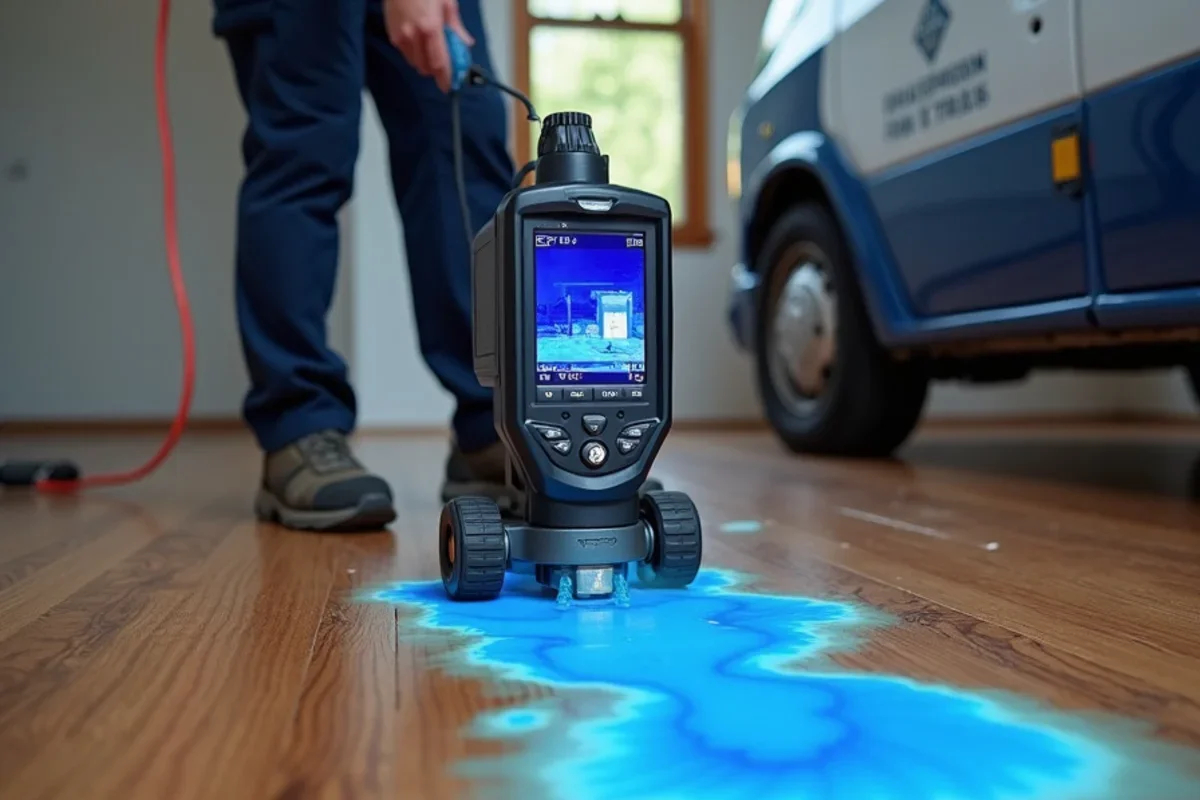
Never let an insurance adjuster determine whether your hardwood is dry simply by running their hand across the surface. Professional flooring restorers maintain daily psychrometric drying logs, recording moisture content (MC) readings using calibrated non-invasive and pin-type meters (such as Tramex and Delmhorst). Unaffected wood in Atlanta homes typically sits at 8% to 10% MC. Saturated wood reads 28% to 40% MC. The floor is only certified dry when moisture content returns to within 2% to 4% of the dry standard.
Direct-to-Carrier Coordination & The Georgia Continuous Flooring Principle
Under Georgia insurance claim guidelines and the principle of reasonable uniformity, if water ruins 30% of a continuous, uninterrupted hardwood floor that flows through a hallway, dining room, and living room without threshold transitions, the insurer must compensate for bringing the entire visible floor area to a uniform appearance. If undamaged sections cannot be matched precisely, the policy may cover sanding and refinishing the entire adjoining floor plan.
Precision Board Lacing & Avoiding the Premature Sanding Trap
When a portion of the floor cannot be saved, our craftsmen execute seamless board replacement using the classic "weave-in" or "lacing" technique. We remove damaged planks in a staggered, random pattern, tongue-and-groove matching new kiln-dried solid oak planks into the existing field, and blind-nail them securely to the subfloor.
Frequently Asked Questions
- In warm, humid Atlanta conditions, mold spores germinate on wet cellulose within 24 to 48 hours of water exposure. Aspergillus, Penicillium, and Stachybotrys (black mold) thrive in the dark, damp sandwich layer between your hardwood and subfloor. Deploying commercial injection drying mats and antimicrobial washes within the first 24 hours is essential to prevent permanent microbial contamination.