
Epoxy Garage Floor Cost in Atlanta: 2026 Price Guide
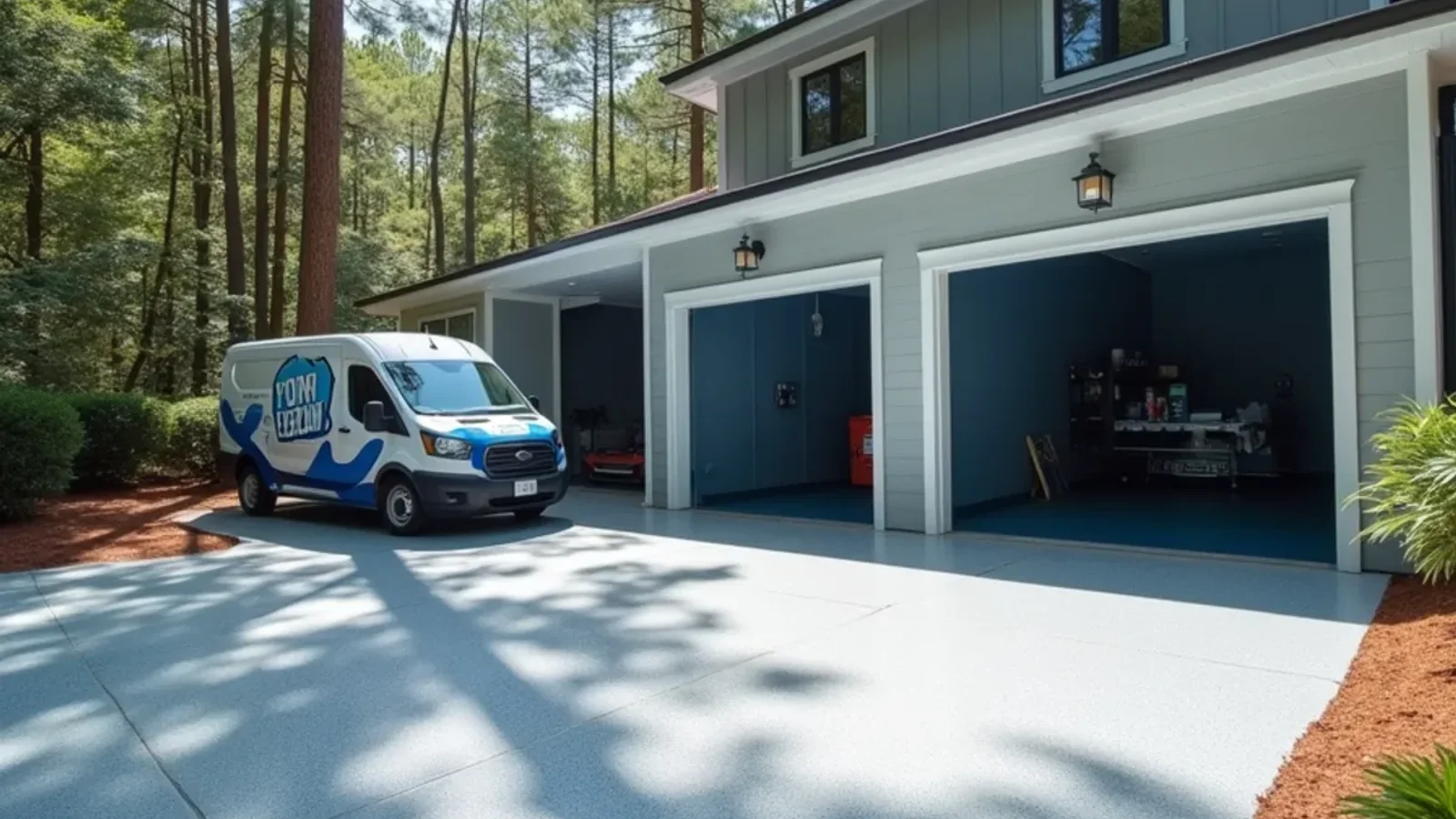
A professionally installed garage floor coating is one of the highest-return aesthetic and functional investments an Atlanta homeowner can make. Beyond transforming a dark, stained, and dusty concrete box into a seamless, brightly lit extension of your living space, an industrial coating permanently seals concrete against road salt, motor oil leaks, battery acid, and relentless hot-tire pickup. However, navigating garage flooring estimates across metro Atlanta can be frustratingly opaque, with advertised quotes swinging from $1,200 to over $8,000.
In 2026, turnkey professional garage floor coatings across Fulton, Cobb, DeKalb, and Gwinnett counties realistically range from $5.50 to $8.50 per square foot for multi-coat commercial full-broadcast flake systems, and $7.00 to $11.00 per square foot for designer 3D metallic finishes. Understanding what separates a true 30-mil industrial floor from an inferior DIY hardware store paint kit empowers you to make an informed investment that lasts the lifetime of your home.
Get a Free On-Site Flooring Consultation
Speak directly with Pedro and the Diamond Epoxy Pros crew. We inspect your subfloor or concrete slab, test moisture levels, and provide a clear, itemized quote in writing.
- 5★ on Google (22 reviews)
- Fully Insured
- Free Written Estimates
- Lifetime Delamination Warranty
- Employees Only (No Subcontractors)
- Serving Metro Atlanta since 2023
2026 Atlanta Garage Floor Coating Price Benchmarks: 1-, 2-, and 3-Car Garages
Square Footage Pricing Tiers and Baseline Dimensions
Most residential garages in North Georgia adhere to standardized builder footprints. A standard single-car garage measures roughly 240 to 300 square feet, a two-car suburban garage spans 400 to 500 square feet, and an executive three-car garage covers 650 to 900+ square feet. Professional contractors price projects on a sliding square-foot scale: smaller single-car garages incur slightly higher per-square-foot rates ($6.50 to $9.00/sq. ft.) to absorb fixed crew mobilization and diamond tooling setup costs, while expansive multi-bay garages achieve economies of scale ($5.50 to $7.50/sq. ft.).
Detailed Itemized Turnkey Cost Matrix
The table below details realistic turnkey investment ranges for typical metro Atlanta residential garages in 2026, covering full mechanical surface preparation, crack mending, basecoats, flake broadcast, and UV-stable topcoats.
2026 Turnkey Garage Floor Coating Cost Matrix in Metro Atlanta
| Garage Size / Footprint | Typical Dimensions (Sq. Ft.) | 100% Solids Flake Epoxy System | Premium Polyaspartic Full Flake System | Designer 3D Metallic Epoxy Floor |
|---|---|---|---|---|
| 1-Car Garage (Townhome/Bungalow) | 240 – 300 sq. ft. | $1,500 – $2,100 | $1,800 – $2,550 | $2,200 – $3,100 |
| 2-Car Garage (Standard Suburban) | 400 – 480 sq. ft. | $2,400 – $3,300 | $2,800 – $3,950 | $3,400 – $4,800 |
| 2-Car Garage + Storage / Workshop | 500 – 600 sq. ft. | $2,900 – $3,900 | $3,400 – $4,800 | $4,200 – $5,800 |
| 3-Car Garage (Standard Executive) | 650 – 750 sq. ft. | $3,800 – $5,100 | $4,400 – $6,100 | $5,400 – $7,500 |
| 3-Car Garage + Oversized RV Bay | 850 – 1,100 sq. ft. | $4,800 – $6,800 | $5,600 – $8,200 | $7,000 – $10,500 |
Cost Breakdown: What Goes Into a Professional Quote?
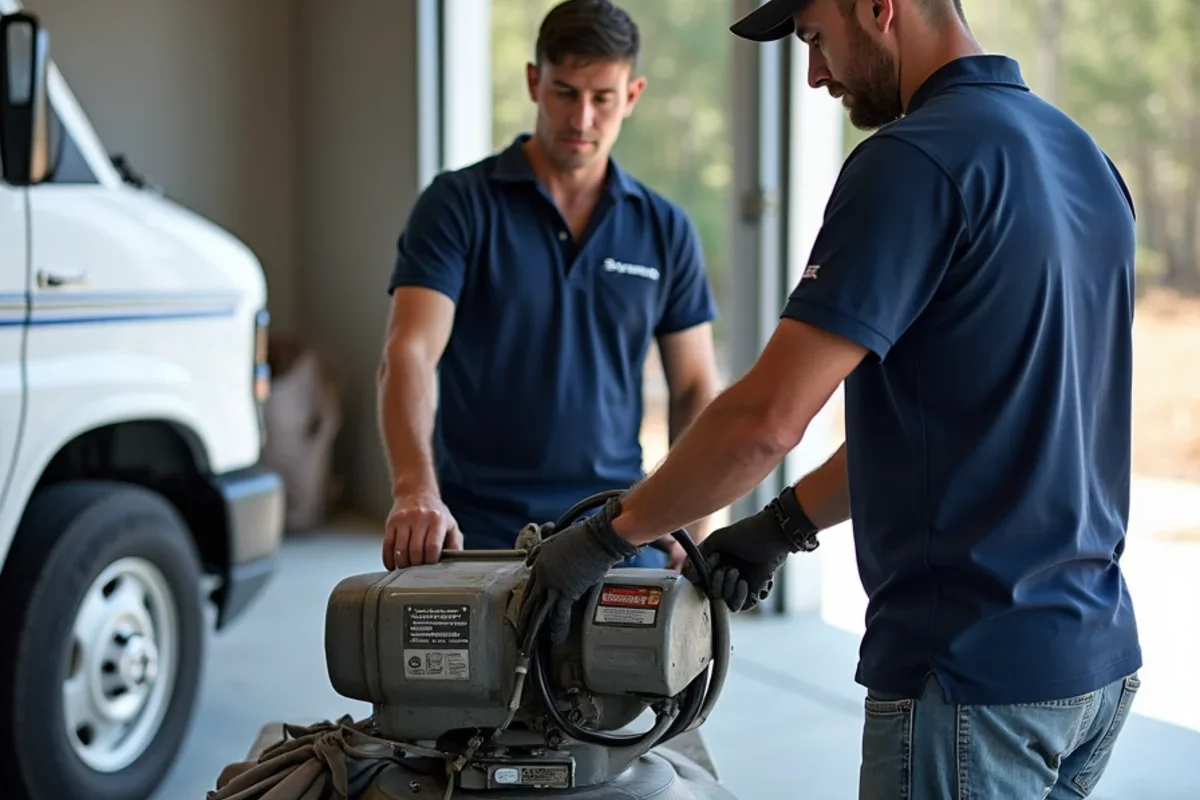
When evaluating estimates, homeowners often wonder why quotes differ so drastically between contractors. The difference almost always boils down to mechanical preparation, polymer solids percentage, and total cured dry film thickness (DFT).
Planetary Diamond Grinding vs. Acid Etching ($2/Sq. Ft. Scam)
Over 70% of long-term coating failures stem directly from improper surface preparation. Low-cost contractors quoting $2.50 to $3.50 per square foot inevitably use muriatic acid washing rather than mechanical grinding. Acid etching only cleans loose surface dirt; it does not profile the dense concrete cream or remove curing compounds. When hot tires park on the floor, the coating rips away in clean sheets (hot-tire pickup).
Professional installers invest in heavy 600-pound three-phase planetary diamond grinders connected to pulse-jet HEPA extractors. This equipment mechanically grinds away the top 1/32-inch of weak concrete paste, creating an ICRI Concrete Surface Profile of CSP-2 to CSP-3 (resembling 80-grit sandpaper). This mechanical tooth opens concrete capillaries, allowing 100% solids epoxy primers to anchor deep into the substrate.
Slab Condition: Polyurea Crack Routing and Oil Extraction
Older Atlanta homes in Sandy Springs, Decatur, and East Point frequently have settling cracks, spalls, and decades of embedded motor oil. A comprehensive estimate itemizes surface remediation: diamond crack chasing with V-groove blades, rapid-cure semi-rigid polyurea injection, and solvent degreasing. Patching hairline cracks typically costs $4 to $8 per linear foot when billed separately, but reputable installers include minor crack repair in their turnkey base rate.
Vertical Stem Walls, Step Treads, and Expansion Joints
Garages built on sloping lots or stem wall foundations feature 4-inch to 24-inch vertical concrete perimeter curbs. Coating these vertical walls requires hand-grinding and gel-epoxy application to prevent sagging, typically priced at $6.00 to $12.00 per linear foot. Entry steps into the mudroom and exterior weather aprons extending under the garage door also require specialized non-slip profiling.
System Comparisons: Flake, Quartz, Metallic, and Polyaspartic Chemistries
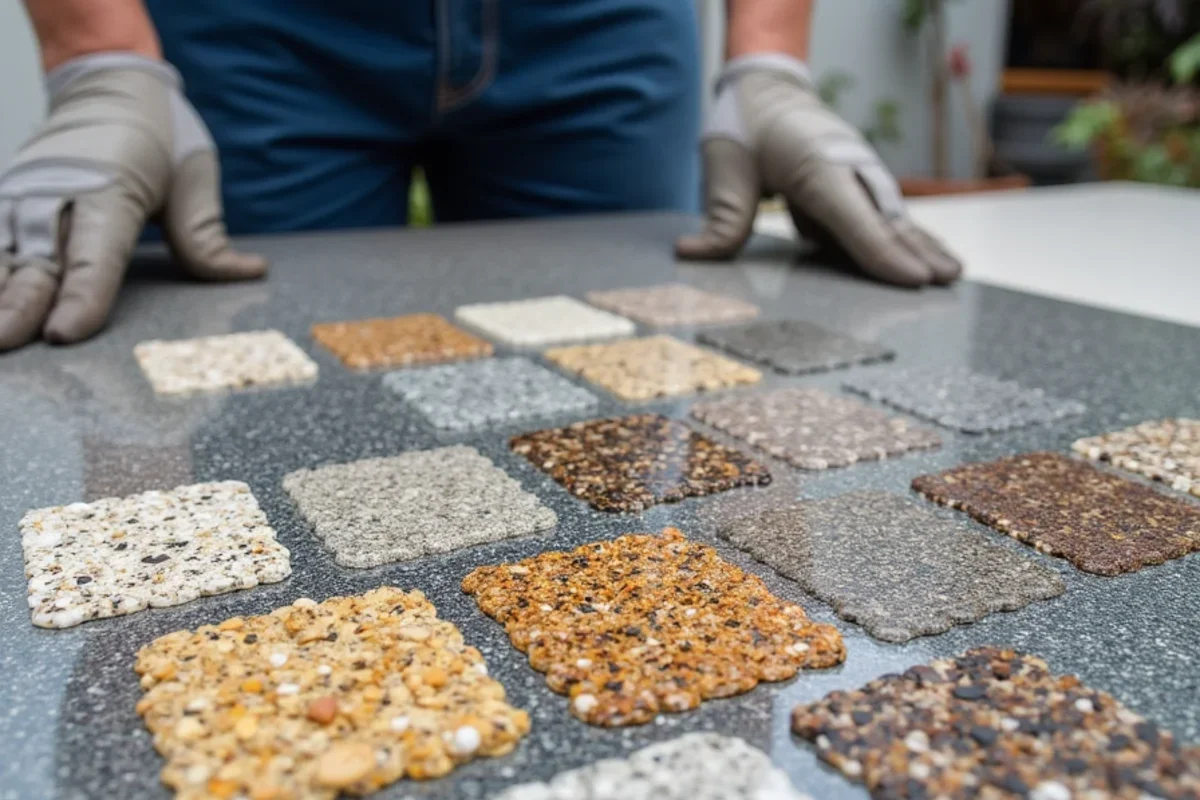
The chemical formulations selected for your basecoat and topcoat dramatically impact both longevity and project cost.
Full Broadcast Vinyl Flake vs. "DIY Paint Look"
A true commercial flake system utilizes a "full broadcast to refusal"—meaning technicians cast 0.15 to 0.20 pounds of decorative vinyl color chips per square foot into the wet basecoat until the entire floor is buried in flakes. This creates a dense, multi-colored mosaic layer measuring 25 to 35 mils in thickness that completely hides concrete imperfections and provides permanent slip resistance.
In contrast, DIY kits provide a tiny 1-pound sprinkle bag designed to create a "partial broadcast" (random specks on thin gray paint). Partial broadcast systems offer zero build thickness, leaving the thin basecoat exposed to tire abrasion and chemical staining.
Polyaspartic vs. Polyurethane Topcoats: Hot-Tire Pickup & UV Defense
While epoxy makes an exceptional, deeply penetrating basecoat primer, standard epoxy makes a terrible topcoat. Traditional epoxy amberizes and turns yellow when exposed to sunlight entering an open garage door, and softens under hot car tires. Premium installations utilize an aliphatic polyaspartic clear topcoat. Polyaspartic chemistries offer 4x the abrasion resistance of standard epoxy, 100% UV stability, and complete hot-tire pickup resistance.
Moisture Vapor Barrier Primers: Protecting Against Georgia Clay
Metro Atlanta’s dense red clay soils retain high moisture levels year-round. Concrete slabs lacking proper underslab plastic vapor retarders suffer upward moisture vapor emission. If moisture testing (ASTM F2170) reveals elevated slab humidity, an ASTM F3010 compliant epoxy moisture mitigation primer ($1.00 to $1.75/sq. ft. upgrade) is essential to block vapor pressures from blistering the coating.
Turnkey Installation Protocol: What to Expect on Installation Day
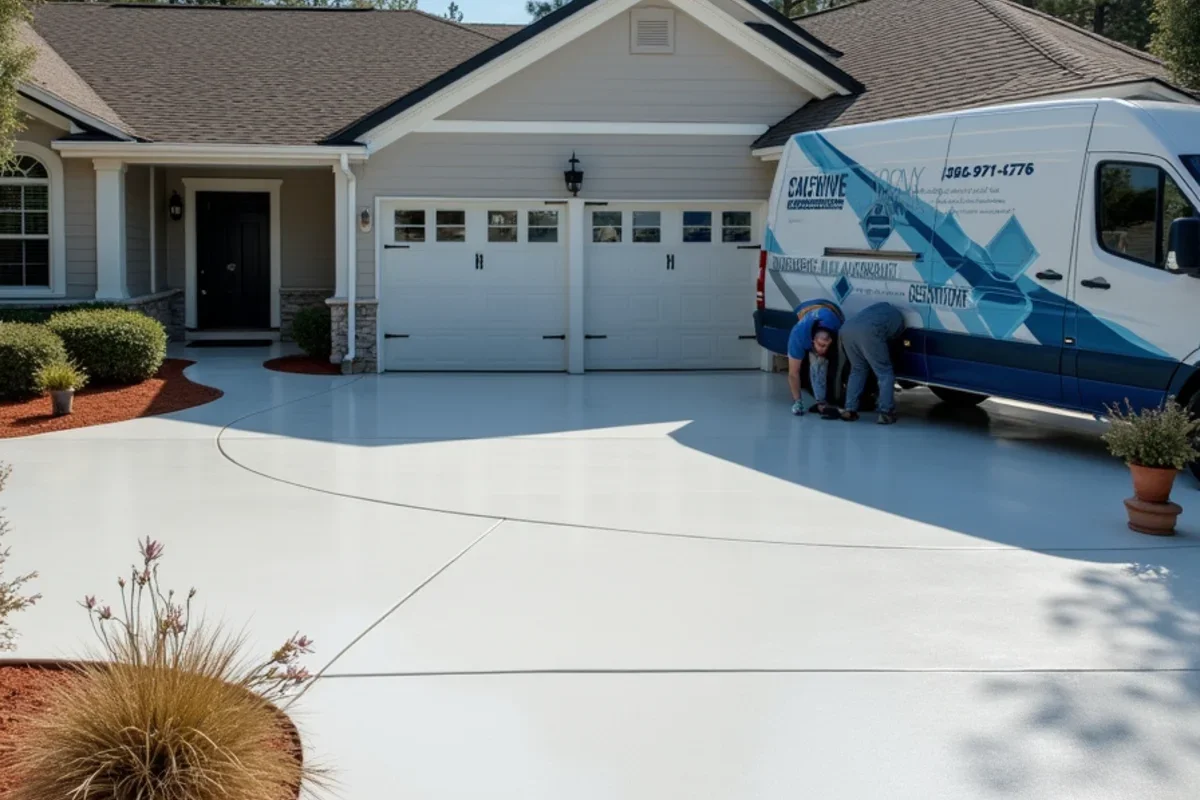
Professional installation requires meticulous sequencing across two focused days:
- 1
Day 1 Morning (Prep & Repair)
Crew arrives with trailer-mounted planetary diamond grinders. Slab is profiled to CSP-2, perimeter edges hand-ground with dustless shrouds, cracks routed and filled with polyurea, and slab vacuumed with industrial HEPA units.
- 2
Day 1 Afternoon (Basecoat & Flake Broadcast)
100% solids pigmented epoxy basecoat is squeegeed and back-rolled at 10 to 12 mils thickness. Flake chips are immediately broadcast by hand to complete rejection (100% coverage). The garage door is closed to cure overnight.
- 3
Day 2 Morning (Scrape & Vacuum)
Technicians scrape excess flakes with floor blades in two perpendicular directions, softening the texture. The floor is vacuumed thoroughly to capture loose chips.
- 4
Day 2 Midday (Polyaspartic Topcoat)
Aliphatic clear polyaspartic topcoat is squeegeed and cross-rolled at 12 to 14 mils with aluminum oxide anti-slip texturing broadcast throughout high-traffic walking paths.
ROI and Value: Resale Impact and Long-Term Durability in Atlanta Homes
Appraisal Appeal Across Fulton and Cobb County Neighborhoods
In upscale communities throughout Alpharetta, Roswell, Sandy Springs, and East Cobb, a showroom-grade garage floor has transitioned from a luxury perk to an expected standard. Real estate professionals estimate that an immaculate epoxy garage floor delivers an immediate 80% to 110% return on investment at resale by dramatically boosting buyer curb appeal and signaling meticulous structural property maintenance.
Maintenance Savings and Household Cleanliness
Bare concrete produces continuous fine white dust as cement paste abrades under tires, tracking dusty footprints into your home. A sealed polyaspartic flake floor eliminates concrete dusting entirely. Cleaning requires nothing more than a leaf blower for dry leaves, or an occasional foam squeegee and mild dish soap washdown.
Frequently Asked Questions
- A standard 2-car garage in metro Atlanta (typically 400 to 500 square feet) costs between $2,800 and $4,200 for a turnkey commercial-grade full-broadcast flake system. This pricing includes mechanical planetary diamond grinding, HEPA dust containment, routing and polyurea crack filling, 100% solids epoxy basecoat, full flake broadcast to refusal, and a heavy-duty aliphatic polyaspartic clear topcoat.