
Tile Installation Cost per Square Foot in Atlanta
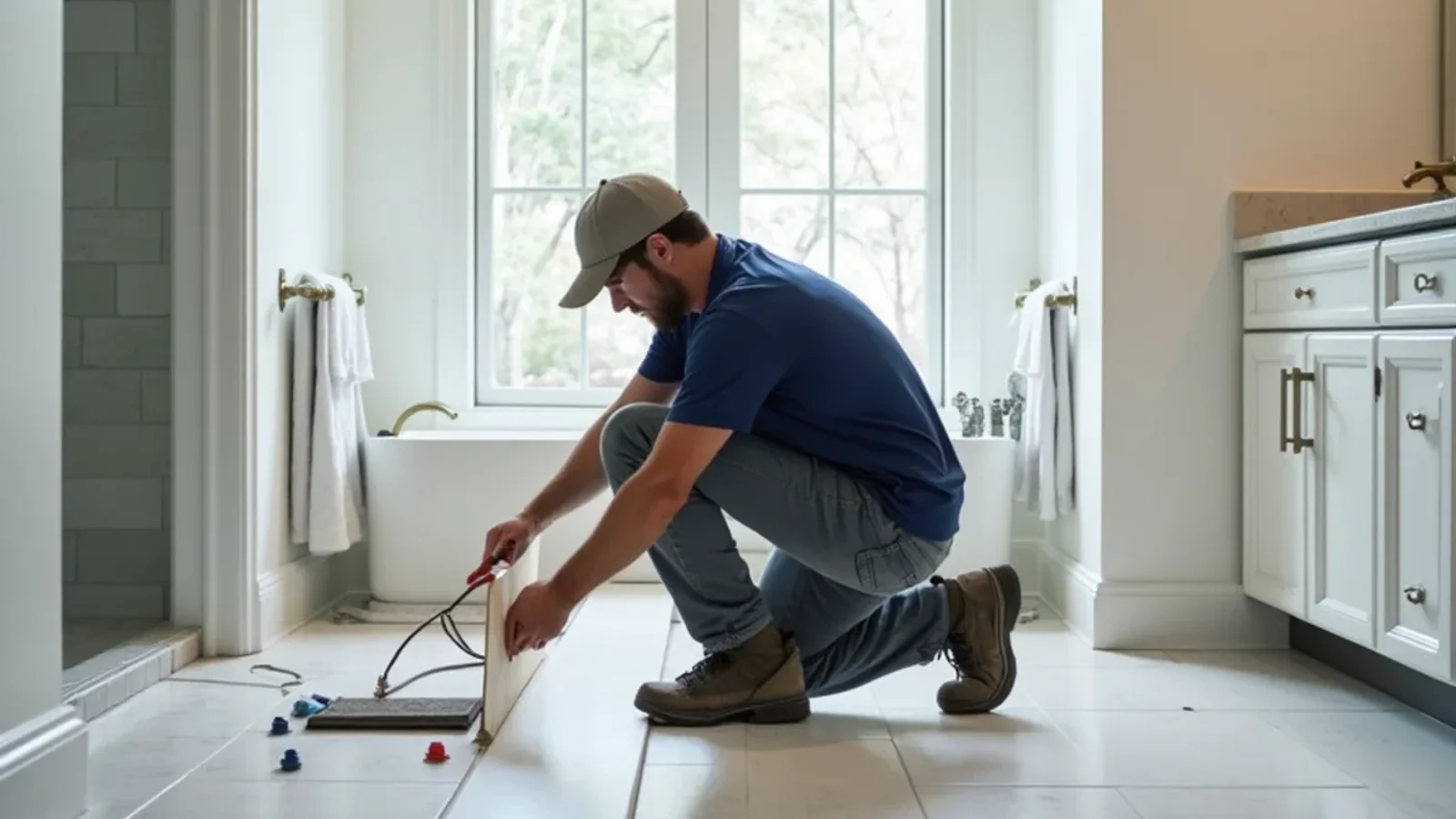
Tile floor installation is an artisan trade that bridges structural civil engineering and meticulous visual craftsmanship. When installed over an engineered, deflection-free subfloor with modern uncoupling membranes and modified thin-set mortars, a glazed porcelain or natural stone floor will easily endure 40 to 50 years of relentless foot traffic, pet claws, and standing moisture. However, pricing a tile project in metro Atlanta requires looking far beyond the retail price on the tile carton.
In 2026, total turnkey tile floor installations across Fulton, DeKalb, and Cobb counties realistically range between $10.00 and $25.00+ per square foot. While ceramic tile in a rectangular utility room sits on the lower end ($10.00 to $14.00/sq. ft.), luxury large-format porcelain (24x48 inches) or imported Italian Carrara marble in a master bathroom suite regularly reaches $18.00 to $30.00 per square foot once substrate preparation, Schluter-DITRA waterproofing membranes, and epoxy grouting are calculated.
Get a Free On-Site Flooring Consultation
Speak directly with Pedro and the Diamond Epoxy Pros crew. We inspect your subfloor or concrete slab, test moisture levels, and provide a clear, itemized quote in writing.
- 5★ on Google (22 reviews)
- Fully Insured
- Free Written Estimates
- Lifetime Delamination Warranty
- Employees Only (No Subcontractors)
- Serving Metro Atlanta since 2023
2026 Atlanta Tile Installation Cost Matrix: Materials and Labor Tiers
Standard Ceramic vs. Glazed Porcelain vs. Large-Format vs. Natural Stone
Tile materials vary dramatically in density, water absorption rates, and installation complexity. Standard non-porcelain ceramic ($1.50 to $3.50/sq. ft. material) is softer and easier to cut with manual snap cutters, but it absorbs 3% to 7% water, making it unsuitable for wet curbless showers. Glazed through-body porcelain ($3.50 to $7.00/sq. ft.) is fired at extreme temperatures (over 2,200°F) to achieve a near-zero water absorption rating (under 0.5%), delivering extreme frost and scratch resistance.
Large-Format Tile (LFT)—defined by the Tile Council of North America (TCNA) as any tile with at least one edge exceeding 15 inches, such as 12x24, 24x24, and 24x48 inches—requires specialized medium-bed polymer mortars, back-buttering, and mechanical leveling clips. Natural stone (marble, travertine, slate) costs $8.00 to $20.00+ per square foot for material alone and requires diamond wet sawing, pre-sealing, and double the subfloor joist stiffness.
Turnkey Cost Breakdown per Square Foot in Metro Atlanta
The table below details typical turnkey installed price ranges across metro Atlanta in 2026, including tear-out, underlayment, setting, and finishing.
Material and Labor Cost per Square Foot for Atlanta Tile Projects
| Tile Material & Format | Material Cost / sq. ft. | Certified Setting Labor / sq. ft. | Prep & Underlayment / sq. ft. | Total Turnkey Range / sq. ft. |
|---|---|---|---|---|
| Standard Ceramic (12x12) | $1.50 – $3.50 | $6.50 – $8.50 | $2.00 – $3.00 (cement board) | $10.00 – $15.00 |
| Glazed Porcelain (12x24) | $3.50 – $7.00 | $8.00 – $11.00 | $2.50 – $3.50 (DITRA membrane) | $14.00 – $21.50 |
| Large-Format Porcelain (24x48) | $6.50 – $13.00 | $10.50 – $14.50 | $3.50 – $5.00 (leveling pour) | $20.50 – $32.50 |
| Natural Carrara Marble / Travertine | $8.50 – $18.00 | $11.00 – $16.00 | $3.50 – $5.00 (double subfloor) | $23.00 – $39.00 |
| Mosaic Tile (Shower Floor Hex) | $6.00 – $14.00 | $12.00 – $18.00 | $4.00 – $6.00 (mortar pan slope) | $22.00 – $38.00 |
Critical Substrate Preparation: Why Tile Fails Without Engineering
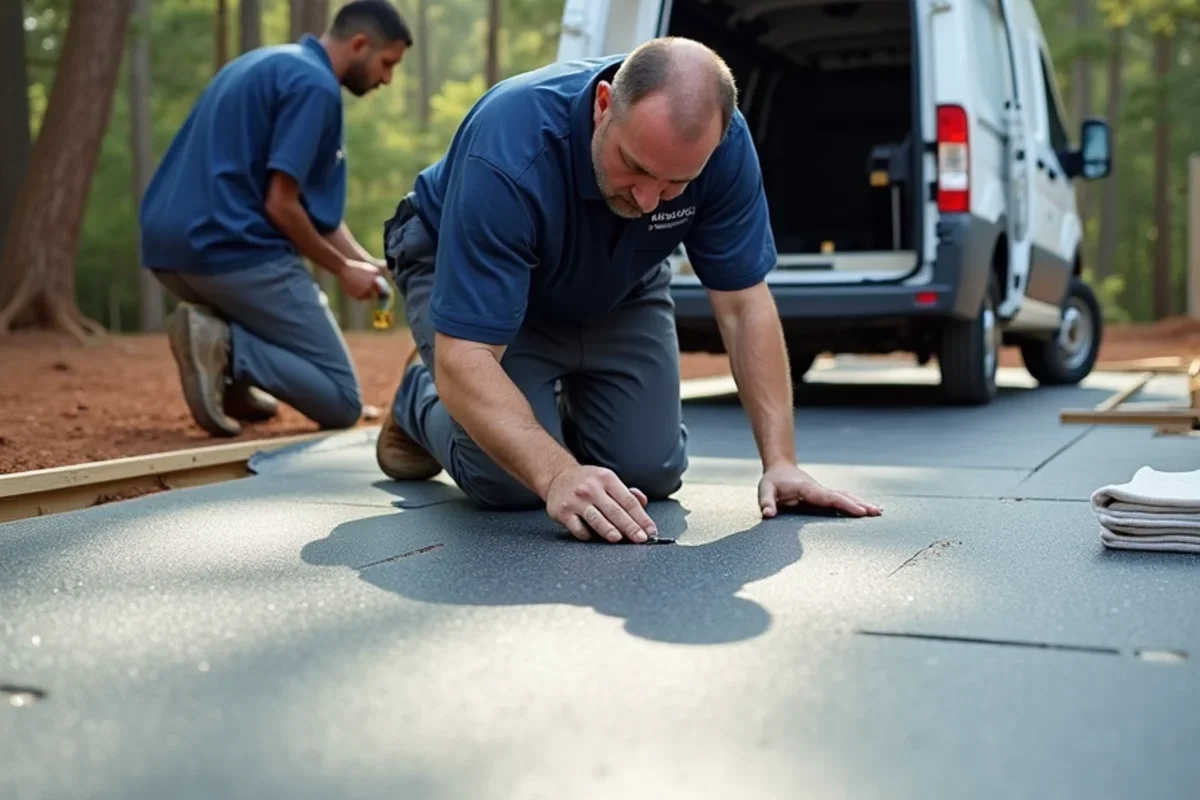
The single most common mistake made by inexperienced contractors is setting tile over structurally inadequate subfloors. Tile and cementitious grout are rigid, brittle ceramics with zero tensile elasticity. If the underlying subfloor bends, vibrates, or shifts seasonally, tile will crack along grout lines or shear off the thin-set bed.
Subfloor Deflection Standards: TCNA L/360 vs. L/720
The TCNA Handbook for Ceramic, Glass, and Stone Tile Installation mandates strict structural deflection limits. For ceramic and porcelain tile, the floor joist system must achieve an L/360 deflection rating under design live and dead loads—meaning total deflection cannot exceed the joist span length divided by 360 (no more than 1/2-inch across a 15-foot span).
For natural stone like marble or limestone, the standard doubles to L/720 (no more than 1/4-inch across 15 feet). In older mid-century Atlanta ranch homes in Decatur, Sandy Springs, and Belvedere Park, 2x8 joists spanning 14 feet often fail L/360. Installing tile without sistering joists or adding a second layer of 1/2-inch exterior-grade plywood beneath the underlayment guarantees cracked tiles within 18 months.
Uncoupling Membranes (Schluter-DITRA): Preventing Concrete Crack Telegraphing
In slab-on-grade homes and basements, poured concrete shrinks and forms hairline settlement cracks. If tile is mortared directly to concrete, these cracks "telegraph" straight up through the tile. We install Schluter-DITRA uncoupling membrane ($2.50 to $3.50/sq. ft. installed). DITRA’s geometrically configured grid structure allows in-plane horizontal movement between the slab and tile, isolating the tile assembly from foundation settling while providing a 100% waterproof barrier.
Bathroom Subfloor Remediation: Toilet Flange Rot and Joist Sistering
In residential bathroom remodels across metro Atlanta, removing existing vinyl or old tile frequently uncovers black rot in the subfloor around the toilet wax ring and bathtub apron. Cutting out rotted 3/4-inch subflooring, sistering damaged joists with structural 2x10 lumber, and installing new exterior-grade plywood typically adds $350 to $750 per bathroom, an essential step to prevent a new toilet from rocking.
Large-Format Tile (LFT) Dynamics and Mechanical Lippage Systems
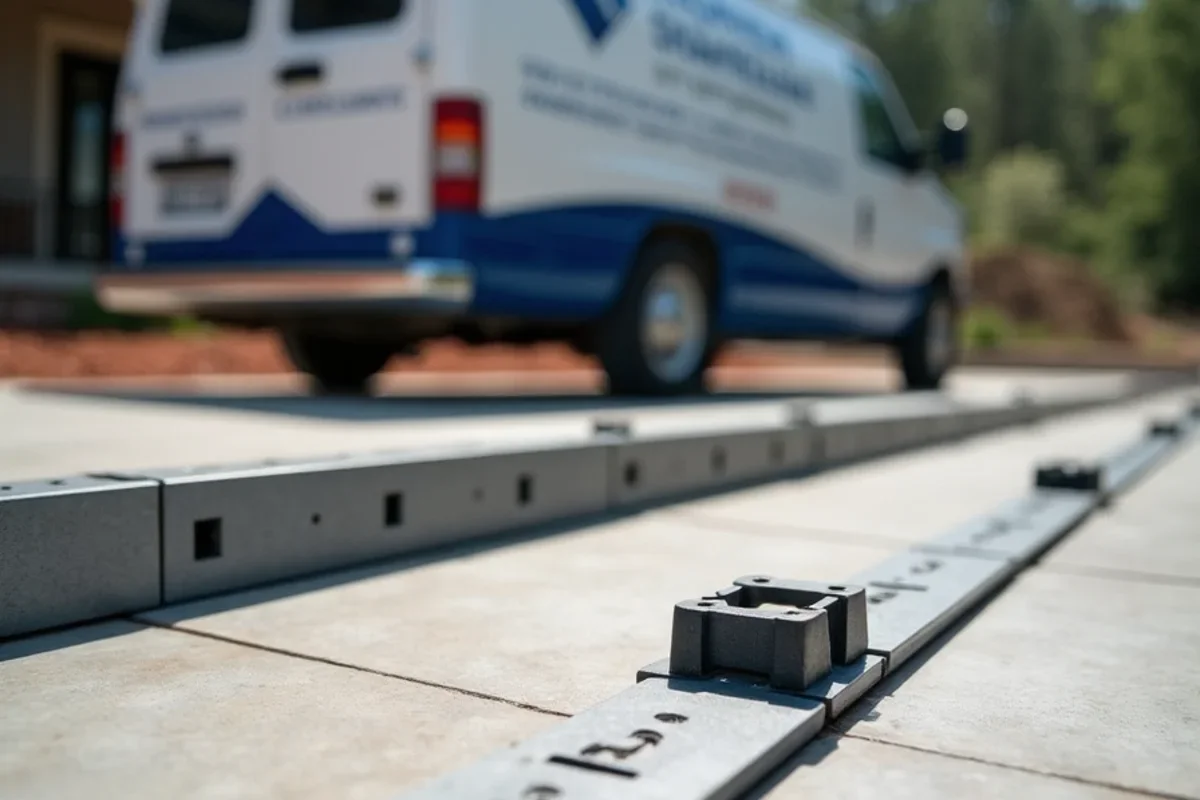
The overwhelming trend in modern Atlanta bathrooms and open living spaces is large-format porcelain (12x24, 24x24, and 24x48 inches). While large tiles reduce grout lines and create sleek stone aesthetics, they demand extreme installation precision.
Back-Buttering and Polymer-Modified Medium-Bed Mortars
Standard thin-set mortar shrinks as it cures. Under a large 24x48-inch tile weighing 35 pounds, thin-set shrinkage pulls the tile downward unevenly, creating severe lippage (where one tile edge sits higher than its neighbor). Furthermore, large tiles naturally possess slight inherent manufacturing camber (curvature in the center).
To overcome this, certified installers use ANSI A118.4 / A118.15 polymer-modified large-and-heavy-tile (LHT) medium-bed mortars (such as Mapei Ultraflex LHT or Custom Building Products ProLite). The mortar is applied with 1/2x1/2-inch square-notch trowels combed in straight parallel lines, and the back of every individual tile is "back-buttered" with a flat skim coat of mortar to achieve 95%+ solid mortar coverage.
Mechanical Leveling Clips (Tuscan / Raimondi Wedges)
Achieving a dead-flat floor requires two-piece mechanical leveling systems. Plastic spacer clips are inserted beneath tile edges, and calibrated wedges are forced through the clip with leveling pliers. The mechanical clamping force pulls low tile edges up while pressing high edges down, locking all tiles into perfect coplanar alignment while the mortar cures. Leveling systems add roughly $0.75 to $1.25 per square foot in disposable clip hardware and labor, but permanently eliminate stubbed-toe lippage.
Grout Engineering: Cementitious vs. High-Performance Epoxy Grout
Traditional cementitious sanded grout is porous and absorbs dirty mop water, coffee spills, and shower soap scum, requiring annual chemical sealing. Upgrading to 100% solids epoxy grout (such as Laticrete SpectraLOCK PRO) or pre-mixed urethane grout adds $1.50 to $2.50 per square foot. However, epoxy grout is 100% waterproof, permanently stain-proof, and will never crack, powder, or discolor, completely eliminating future maintenance.
Room-by-Room Cost Profiles: Bathrooms, Kitchens, and Foyers
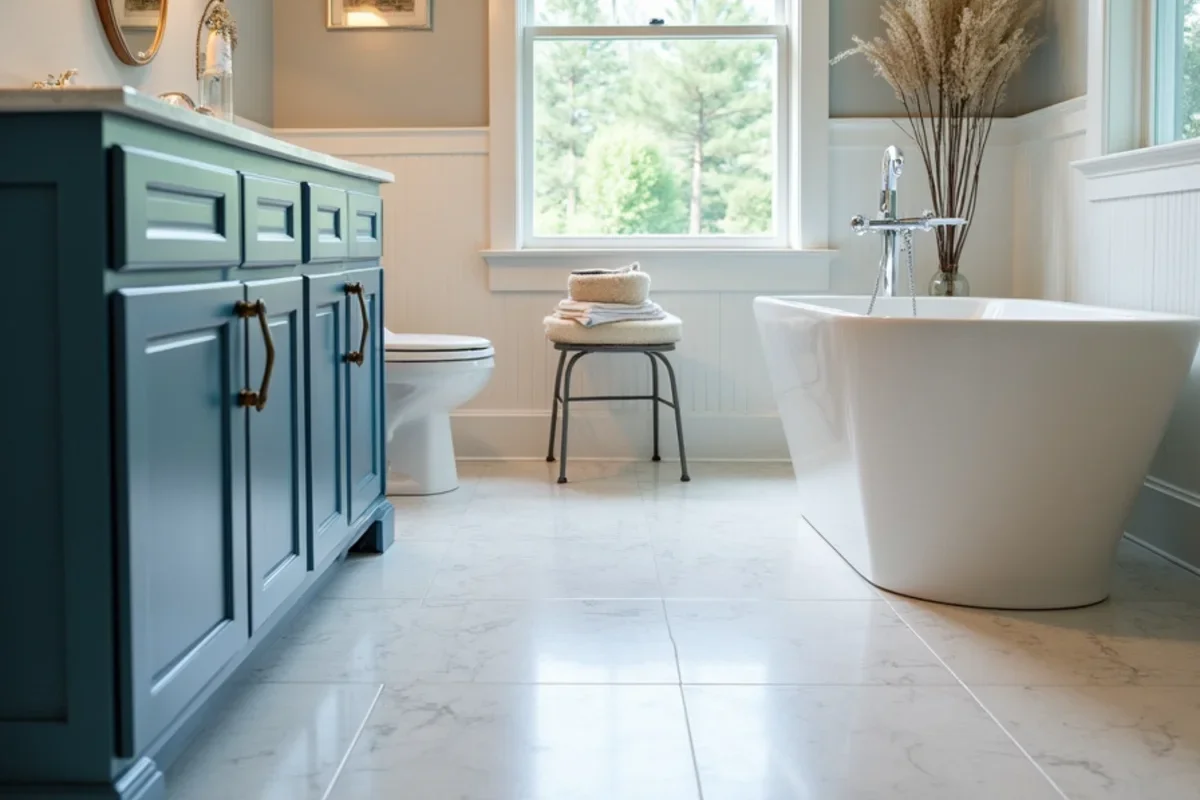
Tile installation pricing varies significantly depending on room geometry and architectural complexity.
Master Bathroom Suites: Curbless Showers and Radiant In-Floor Heat
Bathrooms represent the highest labor intensity per square foot due to tight clearances around toilet flanges, vanity kick-plates, and tub decks. A standard 60-square-foot secondary bathroom floor typically costs $1,400 to $2,200 turnkey. In luxury master suites, adding electric radiant floor heating cables (like Schluter-DITRA-HEAT) adds $12.00 to $18.00 per square foot, providing luxurious heated stone floors controlled via smart digital thermostats.
Kitchens, Mudrooms, and Open Foyers
Expansive open areas (300 to 800 square feet) achieve better labor efficiency than bathrooms, bringing setting labor down to $7.50 to $10.50 per square foot. However, appliances must be carefully disconnected and moved on air-sleds, and refrigerator ice-maker supply lines must be safely shut off during floor demolition.
Evaluating Contractor Quotes: Red Flags and Essential Questions
Perimeter Movement Joints: Color-Matched 100% Silicone
A critical indicator of professional tile craftsmanship is the treatment of changes in plane. Where the tile floor meets baseboards, tub aprons, or vertical wall tile, rigid cement grout must NEVER be used. Building structures naturally expand and contract at different rates on horizontal vs. vertical planes. Hard grout in corners will crack and crumble within months. Professional installers leave a 1/8-inch movement joint and tool in color-matched 100% silicone sealant.
Essential Questions to Ask Before Signing an Estimate
- What uncoupling or crack isolation membrane is included in the base quote?
- Does your bid include directional troweling and mechanical leveling clips for tiles over 15 inches?
- What specific ANSI-rated polymer-modified mortar will be used for setting?
- Is old floor tear-out, dust containment, and toilet removal/re-setting itemized in the price?
Frequently Asked Questions
- Tiling an average 50-to-70-square-foot bathroom floor in metro Atlanta typically costs between $1,400 and $2,800 turnkey. This price includes tearing out the existing flooring, inspecting and repairing the subfloor, installing Schluter-DITRA uncoupling waterproofing membrane, laying quality 12x24 porcelain tile with mechanical leveling clips, and applying stain-resistant grout and perimeter silicone.